CORONAT MASK 2026
Preparing for the invisible enemy
Agenția Media a Armatei, 30.09.2026, 14:30
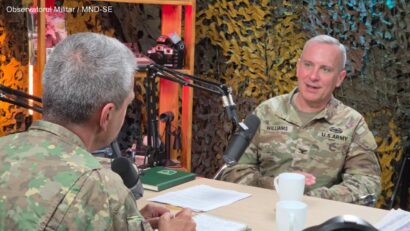
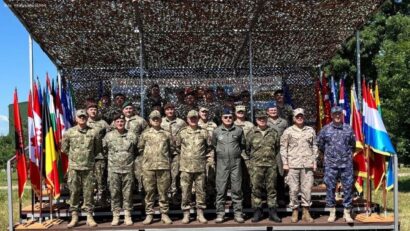
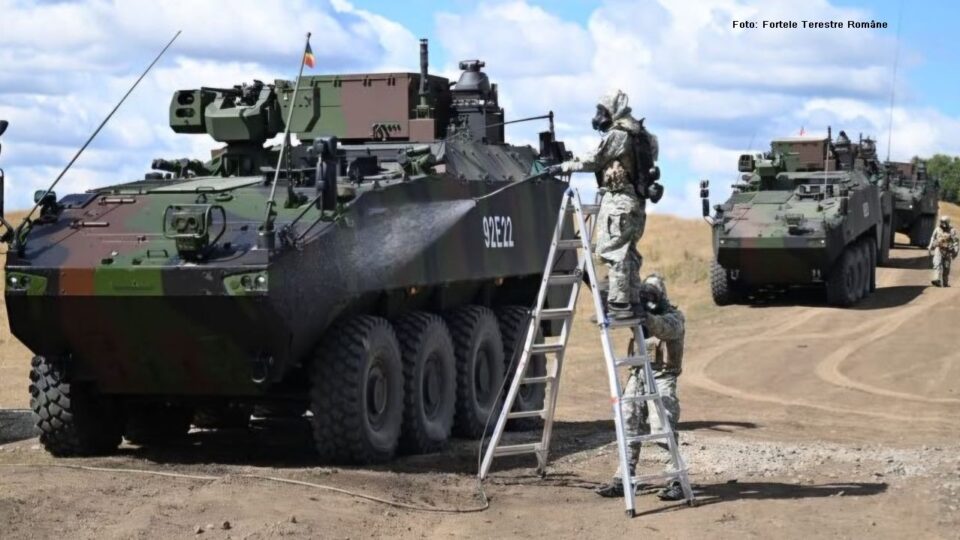
When we talk about defence, we most often think of things we can see: military equipment, airplanes, ships, armed soldiers. But there are also threats that cannot be seen: chemical, biological, radiological and nuclear threats. In short, CBRN. How are they detected and what is the response in such a situation? These questions were answered in the CORONAT MASK 2026 exercise, held in Romania. For 10 days, approximately 750 troops from 11 countries worked together in reconnaissance, sampling, decontamination and analysis scenarios. One of the military on site was Lieutenant Voiteh Iudas from the Czech Republic:
“We were here with troops from the Czech Republic, Lithuania and Spain. We had several types of teams: for decontamination of personnel, vehicles and the wounded, reconnaissance teams and sampling teams. In one scenario, first we establish the decontamination area, then we conduct reconnaissance of an area where there is a possibility of CBRN contamination. After that we send the teams to take samples, and these are taken to the lab for testing.”
The next stage of the mission follows: the lab tests. Sample must be brought in and tested to find out exactly what substance was used. Mobile labs were also used in the exercise, including British capabilities for identifying biological agents, says Corporal Hamer Powell, from the UK:
“Our lab was used to collect and monitor biological agents throughout the exercise area. We received the samples from the teams in the field, processed them and analysed them. We were very impressed with the way they were collected and packaged. The samples were handed over to us in excellent condition. We also tested to see what would happen if a sample was incorrectly packaged or if there was a leak. But, in the case of the samples received from the teams, they were very well put together.”
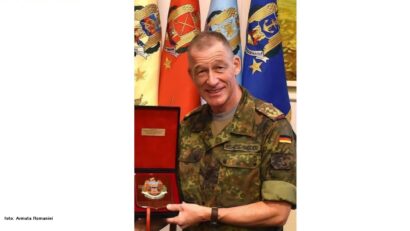
The goal of the exercise was not only to see what each team can do separately, but also also the ability of soldiers from different armies to work together, to compare their procedures and to adapt to each other. Colonel Theodor Spânu, chief of the CORONAT MASK 2026 exercise, speaks about this interoperability:
“We had in mind goals related to ensuring interoperability between the CBRN defence structures involved in the exercise. Also, to test and verify the military’s ability to carry out specific activities, missions in working conditions with real chemical agents and with low-activity radiological sources.”
In order for the exercise to be as close as possible to reality, there were also sequences in which the military worked with real chemical agents, in a controlled environment. This meant that each procedure was completed with utmost attention. Lieutenant John Cannon, from the US, took part in one such sequence:
“We had an exercise with real agents, where you have to be very careful about what you are doing. Everyone has to be focused and follow the procedures. It was a demanding situation, but we had a very good team. We were able to take the sample and successfully take it to the lab. It was a good opportunity to work with soldiers from several countries. The communication was very good and we certainly learned a lot from the allies who participated in the exercise.”
Between all these stages, there must be communication, trust and the same understanding of the mission. This is because, in a real situation, when a CBRN threat arises, there is no time to learn how to work with the ally next to you. You have to have done it before. That is the interoperability that the soldiers practiced at CORONAT MASK 2026: an exercise around a threat that you cannot see, but to which you must be prepared to react. (AMP)