Romania. The Eastern Flank: Multinational Training Program at the Land Forces Academy
Military interoperability is not merely a technical term, but an essential prerequisite for collective security.
1autor, 06.05.2026, 14:00
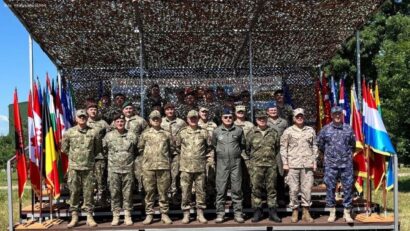
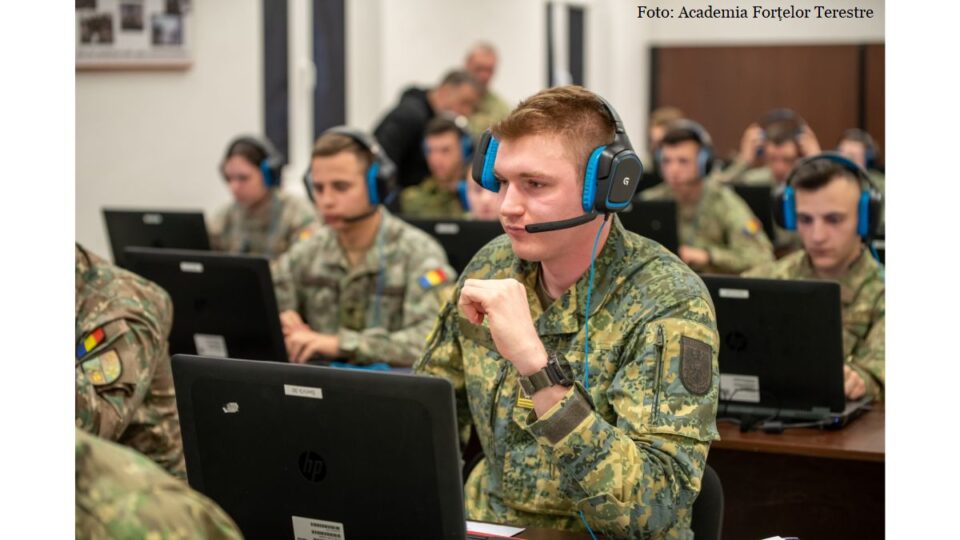
Military interoperability is not merely a technical term, but an essential prerequisite for collective security. In an increasingly complex international context, the armed forces of NATO member states must be able to act together quickly, efficiently, and without error. In short, this means that military personnel from different countries can communicate without barriers, use compatible equipment, and follow the same procedures in the field. Thus, in crisis or conflict situations, the response is coordinated and unified. An international module on this topic, “Interoperability in Military Operations,” was conducted for Romanian military cadets, third-year students at the “Nicolae Bălcescu” Land Forces Academy in Sibiu (central Romania), who are participating in the “Military Leadership” program, alongside colleagues from partner military institutions in 14 countries, including Austria, North Macedonia, the United States, and the Republic of Korea.
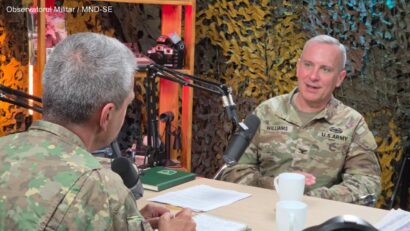
We spoke with Colonel Marian Coman of the Land Forces Academy, who accompanied the cadets in the field to put their training into practice, to learn what this module entails and why training in this area is important: quote “In the first stage, they go and conduct an exercise in the virtual environment on VBS (Virtual Battlespace); subsequently, the platoons swap places and go into the field together with their partners from the combat group deployed in Cincu (the center). These are French, Belgian, and Spanish instructors. Since this is an academic module and is conducted in a common manner at the other partner academies, we will ultimately have to conduct the examination part with them as well. Basically, everything they have accumulated in terms of training and education will, of course, be verified in an exam, and they will receive the necessary grades.” said colonel Marian Coman.
From the discussions with the instructors we learnt that the young students are very receptive and enthusiastic about working alongside cadets from other partner countries, overcoming certain barriers, such as the language barrier. Bojan Blazeski is from North Macedonia and is a student at the “General Mihailo Apostolski” Military Academy in Skopje; this is his first time he participates in such training, and he is very interested in everything that is happening: he says that quote “It’s challenging to learn new things, to see how people work here at the Academy in general, and how their courses are conducted. It’s important for soldiers from different countries to train together to see how everyone works, so we can improve together. It’s a great experience to learn about the opinions and knowledge of other students from different countries.” Said Bojan Blazeski.
Also visiting our country for the first time is cadet Paul Neureiter, a student at the Theresian Military Academy in Austria, who described this experience as extraordinary: “I came here to Romania through the Erasmus program to learn about the culture, new combat techniques, and life here in Romania. For me, interoperability means working together with a different nation, with different perspectives, to find a common solution to a problem. So far, the challenging part has been writing a scenario for this course, but we’ve managed quite well; we worked together, learned a lot of things from each other that we can use, so we’ve had good training and know how to prepare for this week. For me, it’s very interesting because I’ve never done this before, and it’s a new chance to see how other communities, other cultures, and other military personnel operate, and I think it’s a wonderful opportunity to be here.” said Paul Neureiter.
The module, which was successfully completed, provided a valuable experience for the young cadets who participated, giving them the opportunity to develop their tactical skills and strengthen their team spirit within a multinational operational framework. Such exercises highlight, once again, the importance of interoperability—the glue that binds the armed forces of multiple nations into a unified structure, capable of acting in a coordinated, resolute, and effective manner in the face of any challenge. (Anca Făgăraș) (trad. LS)