Via Eminesciana
A cultural route tracing the places linked to the life and legacy of Mihai Eminescu
Ana-Maria Cononovici, 08.09.2026, 12:27
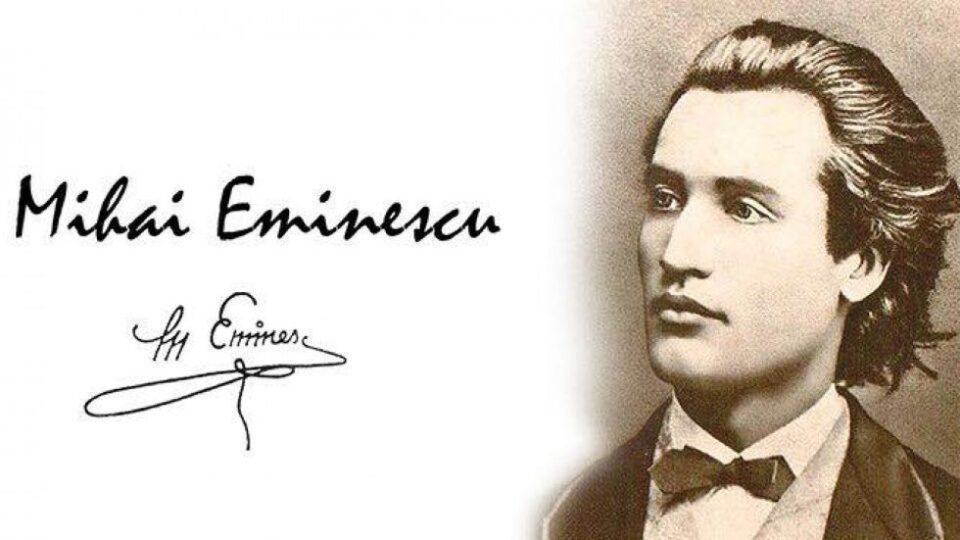
A pillar of Romanian culture, the poet Mihai Eminescu can also be seen as a unifying force for Romanians, as suggested by Camelia Manea, an associate professor at the University of Science and Technology, Politehnica Bucharest, Faculty of Educational Sciences, when she invites us to discover a possible Via Eminesciana. An experienced traveler, Camelia Manea has herself often visited the places where Mihai Eminescu once walked, searching for traces of his passage through these locations.
Why a “Via Eminesciana”? Camelia Manea, associate professor at the Faculty of Educational Sciences explains:
“I realized that we should commemorate the events that took place years ago by trying out this innovative idea. We don’t have cultural routes in Romania. Abroad, there’s this beautiful tradition of honoring notable figures and the small stops they made around the world. It is a route that unites the hearts of Romanians. This year, happily, marks the 160th anniversary of the formative journey from Chernivtsi to Blaj. Eminescu set out under rather harsh circumstances for a 16-year-old; on January 24 (Old Style) 1866, Aron Pumnul died; his classmates—and, above all, Eminovici, as he signed his name at the time—published a pamphlet: “The Tears of the Gymnasium Students at the Grave of Their Beloved Teacher.” Also in 1866, on February 25, Iosif Vulcan marked Eminescu’s debut in the magazine *Familia* in Pest with the poem “If I had.” Vulcan published the poem under the name Eminescu, expressing from the very beginning his disapproval of the Slavonic patronymic suffix. Then the magazine *Familia* published 12 of his poems, and that is how the destiny of a great champion of Romanian culture started taking shape.”
What stops would there be along this Via Eminesciana? Camelia Manea:
“I’ve traveled this route—in certain sections—several times, driven by this curiosity myself, and found myself journeying through the villages of Bukovina, from Chernivtsi southward, from Scorojineni, through Crasna, to Vicov, Marginea, and Solca—mythical places, areas of extraordinary beauty! The stop in Gura Humorului is remarkable! I continued on to Câmpulung Moldovenesc, then to Vatra Dornei. It’s very interesting that Eminescu demonstrated an extraordinary maturity; he left Chernivtsi because he could no longer continue his studies and wanted to go to Blaj to take his final exams. How did he travel? Where did he stay? There aren’t many accounts. Eminescu passed through Gura Humorului, where he was able to visit Humor Monastery; he also went to Voroneţ, the monastery founded by Princes Alexander the Good and Stephen the Great. The Câmpulung region is also charming, with its market town stretching along the Moldova River and the beautiful houses where he was hosted. A local legend says that Mihai Eminescu stopped at a peasant’s house in Sadova, where he collected folklore. I’ve been to Sadova, and indeed, the people there are extraordinary; if you’re thirsty and they see you’re not from around there, they’ll come to the gate with a cup of water. Today, in Câmpulung Moldovenesc, there is a street named after the poet; a bust by sculptor Ioan Lucian Murnu has been placed in the park, and the stone pedestal bears both the poet’s name and verses from the poem “La Bucovina.”
Camelia Manea also told us what other places could be included in Via Eminesciana.
“The next stop would be Vatra Dornei. Here, too, we find a bust of Mihai Eminescu, sculpted by Ion Ionescu. The name of the town, Vatra Dornei, is mentioned in the poem ‘Doina’; around 1875, Eminescu was deeply moved by this journey. Today, we see that in all these towns he passed through, there are busts, streets, parks, and commemorative plaques that recall the Via Eminesciana. And it would be a shame not to try to mark this route, which, as I was saying, unites the souls of the Romanians of Bukovina—including those who remain beyond the country’s borders—and those of the Romanians in Transylvania.”
Setting out on the Via Eminesciana, in fact, we encounter prominent figures who have left their mark on the cultural history of the Romanian people. (MI)