‘Braga’ producers in the old Bucharest
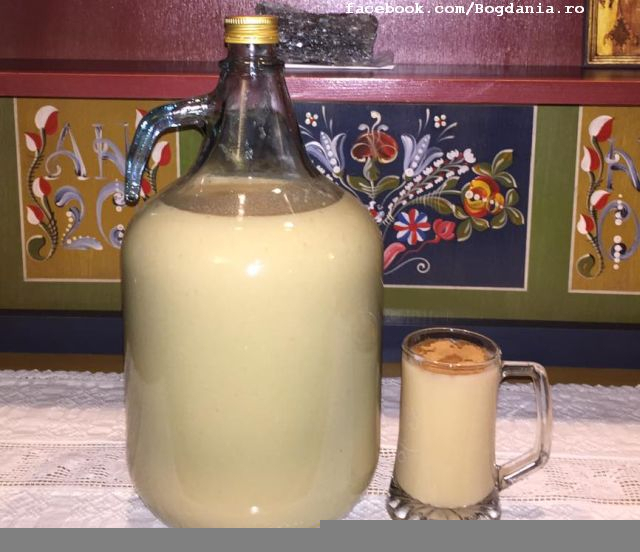
The oriental fermented millet drink called ‘braga was a very popular drink in the Romanian space for many centuries.
Christine Leșcu, 17.12.2022, 14:47
In Romanian, in informal conversations, people use the expression ‘ieftin ca braga, in a word for word translation ‘cheap as fermented millet drink, to say that something is very cheap, affordable to anyone. The expression was concocted starting from the popularity of the oriental fermented millet drink called ‘braga, a very popular drink in the Romanian space for many centuries thanks to its slightly sweet and acidic flavor. ‘Braga or ‘boza as it is called in Turkish and the Slavic languages used to be the favorite drink of the modest people of the old Bucharest, especially during the scorching summer days, when they used to drink it cold, with ice or sometimes accompanied by various pretzels which are still available in many street kiosks today. But the story of ‘braga was different.
With the modern world, but especially in the last part of the communist period, the soft drink once preferred by Romanians was no longer available. Only recently has it begun to be made again in marketable quantities, and the few surviving producers have brought out the old recipes for newer producers to take over.
One of them is Dragoș Bogdan, who will next outline the history of ‘braga consumption in the Romanian principalities: “In the past there was this expression ‘ieftin ca braga – the word for word translation being ‘cheap as fermented millet drink and in English meaning very cheap, which obviously referred to the low value of the product, but on the other hand it meant that everyone could afford it, so it was very popular and very common everywhere in the markets. In villages, those who made ‘braga offered it to the children playing in the street for free or bartered it for fruit, which they received from the childrens fathers on an established date. The millet drink – ‘braga was so cheap and its consumption was part of daily life that those who made it became regular visitors. In modern times, braga somehow competes with the soft drinks that, at the end of the 19th century and the beginning of the 20th century, begin to appear. These beverages were made in production units, small factories that used the recipes we know very well today, of soft drinks. They were individually bottled in recipients of various sizes. And then, this manner of advertising was adopted by the manufacturers of soft drinks, which were produced on automated production lines, not by human hand. So, their product met the sanitary requirements. Maybe that’s why ‘braga started to lose ground and was forgotten for a while. In Bucharest, especially, this happened also because it became the capital of Greater Romania, and the intention of the leaders was to make Bucharest a European capital. This meant that, in addition to the majestic, imposing buildings, there was also the idea of cleaning the streets of some of Bucharest’s itinerant trade. That is why, somehow, the ‘braga producers migrated to the border areas, settling on the city outskirts. After the Second World War and the establishment of the communist power, when all trade and production belonged to the state, some ‘braga producers did not want to join these production cooperatives or state food production units and made ‘braga more or less legally.
Towards the end of the 1980s, in Bucharest you could find braga only extremely rarely, maybe only in the houses of the old braga producers who made it for their own use. However, there were more chances to enjoy it in Galati, Brăila, Turnu Severin and Giurgiu, Danube regions where the ethnic communities had been more diverse and the cultural exchanges with the former provinces of the Ottoman Empire more intense.
But what is ‘braga made of? Dragoș Bogdan returns with details: “All ‘braga producers do pretty much the same thing, namely a fermented drink from boiled grains, which are then mixed with water and a sweetener, either sugar or honey. The drink is filtered a little and then left to ferment for a few days. ‘Braga should be sweet and sour and a little acidic. But each producer has its own recipe. Why? Because they do it according to their own taste. If one sees that adding or excluding an ingredient or changing an amount makes the drink better, then one will stick to that better version. So, recipes are not very strict when it comes to ‘braga, but the taste is more or less the same. Anyway, there are very few braga makers left in the country(…).
Wishing to share his passion for ‘braga with others, and out of a desire to reconnect with the fashionable oriental gastronomy of the capital’s past, Dragoș Bogdan opened his own braga pub in a historical area of Bucharest.
Dragos Bogdan: “It was a relationship that was built in time, because ‘braga requires a period of adaptation, of getting to know it, and, as you get to know it, more questions arise. So, between 2013-2014, I did some research in all the countries of the Balkans, the ones that used to be part of the Ottoman Empire, and I looked for ‘braga. I looked for recipes, consumption habits and I learned that, where I found braga, those I talked to, even though I didn’t know their language, treated me like a brother, like an acquaintance, like someone with whom they have something in common. And then I realized that braga is a vehicle that can transport us anywhere in the Balkans and make us feel closer to those we meet. Later, in 2016, I decided to open my own millet drink pub, with my own millet drink production, which I still have today.
For the time being, he owns one of the few places in Bucharest where you can drink fermented millet drink. (LS)