Bucharest’s inns
Inns were very popular in Bucharest in 16th and 17th centuries.
Christine Leșcu, 24.09.2023, 14:00
Massive structures built like citadels, with surrounding walls into which the guest rooms were built and inner courtyards for carriages and horses, inns increased in number in Bucharest in the 16th and 17th centuries. A market town, the capital of Wallachia was also an important transit place for the commercial routes going from the East to western Europe. Inns also feature in the records of the foreign travellers of the day, explains Gabriel Constantin, a curator with the Bucharest City Museum:
“The oldest historical mention of an inn is 1673. Earlier, in 1672, a foreign traveller noted the presence in Bucharest of Turkish, Greek, Italian, French and even English merchants who were coming here to sell their wares. So, the emergence of inns was connected to trade. There were different types of inns: princely, for merchants, and those related to the churches. Its a well-known fact that there used to be many inns in Bucharest. Each district had its own inn, but we must note that these were small inns used mainly for merchants coming from the countryside and who had only small businesses. But there were also big inns located close to the markets and which provided Romanian and foreign merchants with the best conditions for storing and selling their products. Inns begin to go out of fashion as transport routes were modernised. There was no longer any need to make provisions well in advance given that trains and ships would bring in goods within a relatively short period of time. At the same time, travellers and merchants begin to prefer new, modern buildings that were more comfortable and provided better conditions for the sale of goods. Thats how the history of Bucharests inns came to an end as engines of urban development, but those that kept up with the times and survived the more recent danger of demolition have preserved their charm intact.”
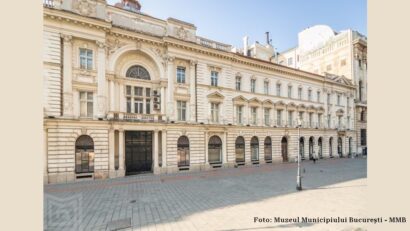
1828 is the official date for the decline of inns because thats when the first hotel to European standards opened in Bucharest. The modernisation of transport routes, river transport and railways, led to the gradual disappearance of this form of accommodation. Some of them were more famous than others, and are still remembered today: The Inn with Linden Trees, Manucs Inn, Hagi Tudoraches Inn, the Serban Voda Inn. What remains of the cellars of the Serban Voda Inn is still visible today next to the building housing the National Bank of Romania, which was built on the site of the former inn. Most inns were located within what is today the historical centre and where most of the capitals trading activities were taking place. Curator Gabriel Constantin explains:
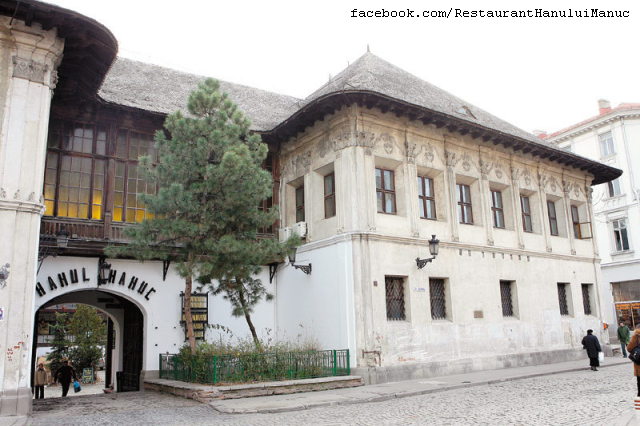
“Inns hide remarkable stories. One such story is that of Emanuel Mîrzăian, better known as Manuc Bei. We might actually say that what we know about his life is half true, half legend. He inherited a fortune from his father, but was very good at multiplying it. He cultivated links with the Ottoman world and also made many friends in Wallachia. He possessed remarkable qualities, mastered 12 languages, was tactful, diplomatic, and, above all, had a vision. He was friends with both the Russians and the Ottomans. He was a rich merchant who lent money right and left, including to important people in the Ottoman world and in Wallachia. It was in this context that he ended up mediating peace between the Russians and the Ottomans, with the peace treaty itself being signed in one of the rooms of Manucs Inn in 1812. Because he betrayed the Ottomans, however, he had to move to his estate in Bassarabia where he remained until his death. He was most probably poisoned by one of his aides, although the official version is that he fell off the horse while riding.”
Manucs Inn is today the only building of its kind still preserved in Bucharest, housing a hotel and restaurant. Hagi Tudorache was another well-known inn-keeper. Curator Gabriel Constantin tells us his story:
“He started from very low. He was born in the countryside. His name was Tudor Tudoran and was taken by his father to Bucharest to learn trade. He worked in the shop of St Georges Inn owned by Hagi Tudorache, who grew to like him and appreciate him for his qualities, so he left him his fortune provided he bore his name. So the young Tudoran became Hagi Tudorache. He focused on retail trade. He also invented travelling trade by covered carts, inside which there were shelves full of goods. They were travelling all over the country, providing the local population with almost everything they needed. Another thing that must be said about Hagi Tudorache is that he couldnt read or write and could barely even write his name. But he had an incredible memory and could remember every transaction he ever made and every sum he was owed. His sons learned the trade working alongside the other shop boys, as his father wanted them to know every detail about how a business is organised and also to teach them to appreciate the work the other employees were putting in and to be fair to them.”
To celebrate this part of the citys history, the Bucharest City Museum staged a temporary exhibition about inns, showcasing not only their history but also objects such vessels, coffers and vintage clothes that recreate the atmosphere of those times.