The Fine Arts Museum in Timisoara
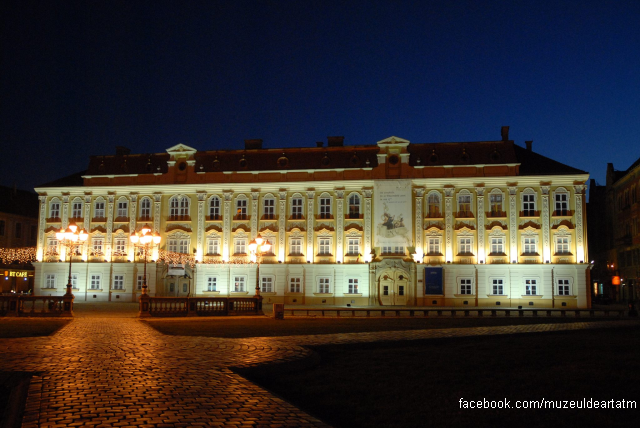
With its fine collection of Romanian and European art, the Museum is one of the main attractions in Timisoara.
Christine Leșcu, 03.11.2018, 14:27
At the end of 164 years of Ottoman
rule in Banat, the city of Timisoara became part of the Habsburg Empire in
1817, despite being under the occupation of the Austrian army as early as 1716.
The west of Romania thus entered a period of reconstruction under the House of
Habsburg. Emperor Carol VI signed the decree to found the Banat of Temeswar,
having Timisoara as the capital city of this new imperial province. The city
underwent major urban changes that would make it worthy of its new title.
One such change was the construction
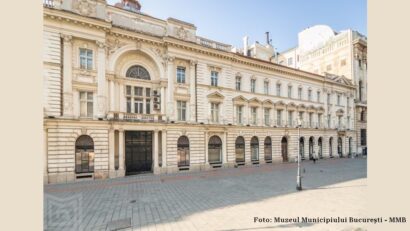
of the Baroque Palace in Union Square, located in today’s old city center, the
building that houses the Fine Arts Museum of Timisoara. We spoke to museum
director, historian Victor Neumann, about the early days of the Baroque Palace:
Construction works started in 1733
and ended in 1752. The palace became the official residence of the Governor,
then of the president of Timis County, serving as the de facto headquarters of
the Banat of Temeswar at the time, until 1779. During this period the palace
served as both the province’s headquarters and the governor’s residence. Many
public servants actually lived there. It was built by Austrian engineers
commissioned from Vienna. The entire surroundings were actually rebuilt, as the
authorities tore down every single element of the old Turkish citadel still
standing. Timisoara is one of the few European cities that were almost
completely demolished in order to be rebuilt in the 18th century.
All throughout this century
Timisoara’s appearance transformed radically, in line with the urban and
architectural standards of late Baroque, specific to many cities in Central
Europe. This particular style also come with a certain interior design: the
ground floor was reserved for administrative or commercial areas, the living
quarters always had street orientation, while access to the interior courtyards
was always made through vaulted corridors. These architectural prerequisites
were also applied to the Baroque Palace, whose architects remain unknown to
this day.
Under Habsburg administration, the
building took on several names and functions. It became the administrative
palace of the Timis Banat until 1778; after Hungary’s annexation of Banat in
June 1778 it served as the Prefect’s head office until 1848. After the
repression of the Hungarian Revolution in 1849, the palace housed the
government of the Timis Banat and the Serb Vojvodina. Victor Neumann again:
First and foremost, it is an area
of the city’s German and Serb administration. It has a ground floor and two
floors, two courtyards, annexes with stables and warehouses which existed even
in the 19th century. The chancellery of Banat and the military
cashier’s office were on the ground floor. In the 19th century and
the first half of the 20th century, it continued to be an
administrative seat. The Palace has housed the Prefect’s head office since the
region and the city of Timisoara became part of Romania in 1918. After World
War II, during the communist regime, the building was home to the University of
Agronomy and Veterinary Medicine and since 1990, it has been destined to house
the Art Museum. Actually, the museum has been housed here since 2006.
In the late 19th century,
the Baroque Palace underwent changes, looking as it does today. The change had
to cater for the taste of the time in that the style of the building had to be
emblematic for contemporary architecture. Therefore, restoration works were
carried out through stylistic purification over 1885-1886 by Jakob-Jacques
Klein (1855-1928), an architect and building contractor from Cernauti, a city
that currently belongs to Ukraine. Obviously, it was not the last change that
building underwent. Now, other restoration works are being carried out for the
Baroque Palace to regain its former glamour and the collections and exhibitions
of the Art Museum to be better promoted. There are collections of modern
Romanian art, icons from Banat, modern European art and a permanent exhibition
featuring painter Corneliu Baba.