
RRI Live!

Listen to Radio Romania International Live

The Museum of Art Collections

Bucharest is home to many treasures that the general public is unaware of.
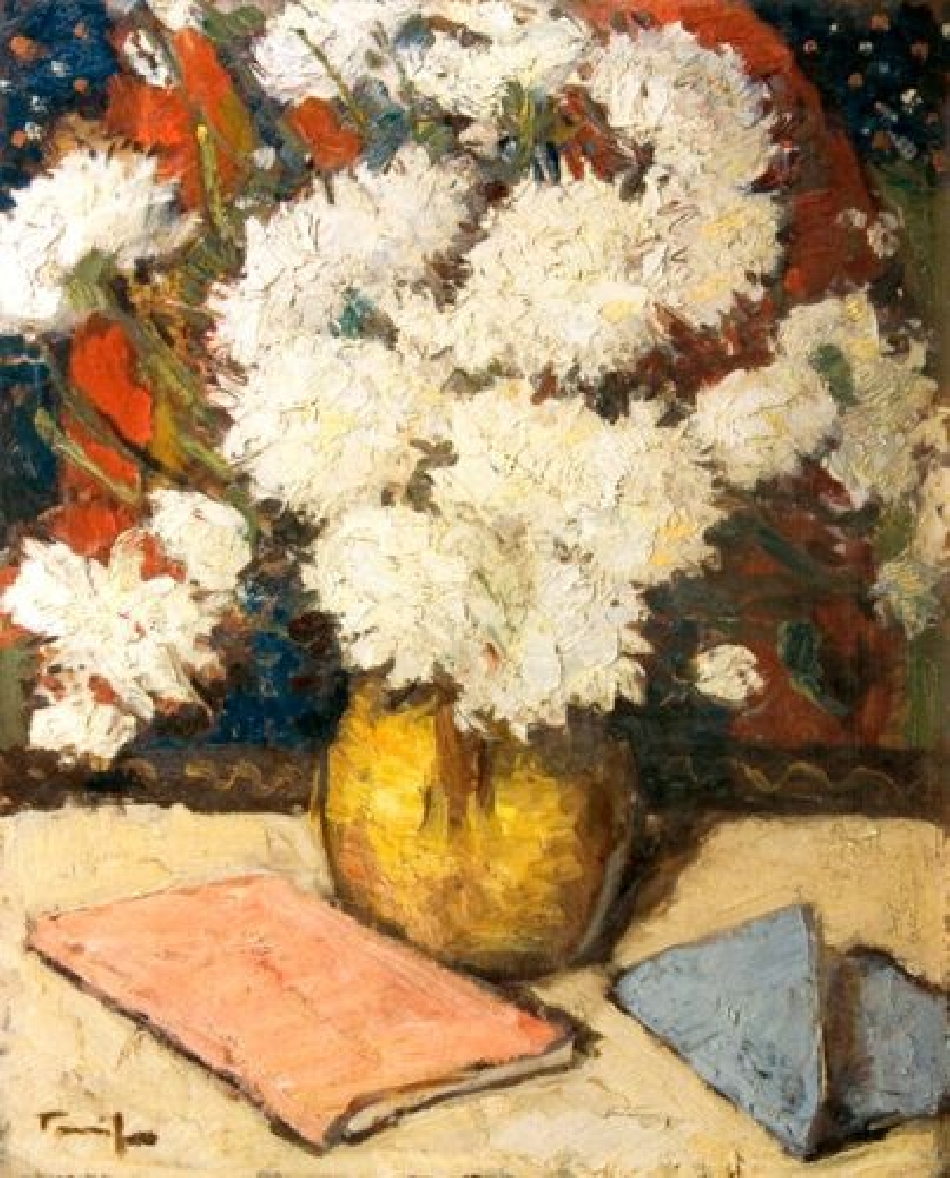
The Museum of Art Collections

, 16.11.2013, 14:06

Some of the art collectors, though, chose to reveal these treasures and even put them on display at the Museum of Art Collections in Bucharest. Located in downtown Bucharest, on the famous Victoria Boulevard, known in the old days as the Mogosoaia Bridge, the Museum stands surrounded by an eclectic entourage.


Next to it there stands the Romanian Academy, hosted by a sumptuous building inaugurated in 1989. Right across the street one can see the modernist, inter-war building of the Economy Ministry. The Museum of Art Collections is hosted by one of the oldest mansions in Bucharest. Dana Dragomir, the coordinator of the museum, told us a few things about the history of this building.


The Museum of Art Collections is hosted by the Romanit Palace, whose construction started in 1822 and lasted four years. It looked rather sumptuous back then, although it only had the central body. It was the property of Grigore Romanit, a Greek boyar who was very rich in early 19th century. In time, though, he lost his fortune and started renting the palace for the balls that were organized back then. That happened until 1850. After that, the palace repeatedly changed its owners, but none of them could afford to maintain it. In 1884 it was taken over by the Finance Ministry. It was then that two wings were added to the building.”


Right in front of the central body, between the two lateral wings, there is a fountain surrounded by a small green area, a genuine oasis in the middle of a busy capital. In August 1978, the building became home to the Museum of Art Collections, as part of the National Museum of Art. In the beginning the museum only had 13 collections, donated to the state by their previous owners. They were famous collections at the time, made up of pieces of furniture, crystals, ceramics, ivory and china. Of course the museum also has paintings, sculptures and graphic works, as Dana Dragomir explained.


One of the first collections was that put together by Dr. Iosif Dona, the first spa physician in Romania, who lived in the early 19th century. Another important collection is that of violin teacher Avachian, which had been compiled by himself and his cousins Beatrice and Hrandt Avachian. The charm of these collections lies in the fact that they are very unitary, showing the collectors’ taste. For instance, the Zambaccian collection, one of the first collections hosted by the museum, is famous for its Romanian and French impressionist paintings. We also have the Iosif Iser memorial collection, which includes paintings made by Iser himself, as well as other items such as Bohemian crystals, china objects and rugs. The collections create a very pleasant universe and allow viewers to get a glimpse of the every day life of a painter, for instance. This is something that we are trying to do at the museum, namely to recreate that atmosphere that each collector lived in.”


Some of the collections include items that are highly valuable. Dana Dragomir again:


Doctor Mircea Petrescu’s collection, for instance, includes a Henry II table, highly appreciated by art critics. Also, there are some masterpieces such as paintings by Nicolae Tonitza and Nicolae Grigorescu. It’s worth mentioning that most collectors were interested in Romanian paintings. That is why our museum can be seen as a place where the history of Romanian modern art has been recreated, starting with Theodor Aman up to the interwar period.”


The year 1986 saw the beginning of a long restoration process. One of the wings of the museum was closed and it was only renovated in 2003. In 2009 the whole museum was closed down, to be reopened this year. The museum is now hosted by a modernized building, where all the items can be properly stored. The number of collections has also grown, from 13 in 1978 to 44 today.

Sergiu Celibidache (1912-1996)
RRI Encyclopaedia Saturday, 24 January 2026

Archaeology in Glina, near Bucharest

Under the visible layer of today’s Bucharest and the capital’s surroundings lie much older traces of human habitation, which predate the...

Archaeology in Glina, near Bucharest
RRI Encyclopedia
RRI Encyclopaedia Sunday, 18 January 2026

Monuments from Soviet-occupied Bucharest

On pedestals, in imposing poses, they have to convey inspiring messages across generations. War heroes and heroines, kings and queens, politicians,...

Monuments from Soviet-occupied Bucharest
RRI Encyclopedia
RRI Encyclopaedia Sunday, 11 January 2026

The Corneşti Iarcuri Citadel

Just a few kilometers from Timișoara (western Romania), in the town of Cornești in the Banat Area, there are traces of one of the most spectacular...

The Corneşti Iarcuri Citadel
RRI Encyclopedia
RRI Encyclopaedia Sunday, 04 January 2026

Ion Monoran

The Romanian Revolution of December 1989 created modern heroes—the heroes of the anti-communist civic movements whose goal was for human beings to...

Ion Monoran
RRI Encyclopaedia Saturday, 27 December 2025

The Museum of Flutes from around the World

Ion Puican The Museum of Flutes from around the World is a cultural project initiated by the ISVOR Cultural Association, dedicated to the...

The Museum of Flutes from around the World
RRI Encyclopaedia Saturday, 20 December 2025

The Bucharest of Yesterday in Postcards

The transformations we see in today’s Bucharest are effects of the communist regime, of the bulldozers and cranes that tried to legitimize an...

The Bucharest of Yesterday in Postcards
RRI Encyclopaedia Sunday, 14 December 2025

The “Prof. Nicolae Minovici” Museum in Bucharest

  The building that houses the “Prof. Nicolae Minovici, Ph.D.” Folk Art Museum, affiliated to the Bucharest City Museum (MMB), is known to...

The “Prof. Nicolae Minovici” Museum in Bucharest
RRI Encyclopaedia Saturday, 29 November 2025

The Last Prince of Moldavia, Grigore Alexandru Ghica

The earthly remains of the last prince of Moldavia before the Union of the Romanian Principalities in 1859, Grigore Alexandru Ghica (1804-1857), have...

The Last Prince of Moldavia, Grigore Alexandru Ghica

Partners

Muzeul Național al Țăranului Român Muzeul Național al Țăranului Român
Liga Studentilor Romani din Strainatate - LSRS Liga Studentilor Romani din Strainatate - LSRS
Modernism | The Leading Romanian Art Magazine Online Modernism | The Leading Romanian Art Magazine Online
Institului European din România Institului European din România
Institutul Francez din România – Bucureşti Institutul Francez din România – Bucureşti
Muzeul Național de Artă al României Muzeul Național de Artă al României
Le petit Journal Le petit Journal
Radio Prague International Radio Prague International
Muzeul Național de Istorie a României Muzeul Național de Istorie a României
ARCUB ARCUB
Radio Canada International Radio Canada International
Muzeul Național al Satului „Dimitrie Gusti” Muzeul Național al Satului „Dimitrie Gusti”
SWI swissinfo.ch SWI swissinfo.ch
UBB Radio ONLINE UBB Radio ONLINE
Strona główna - English Section - polskieradio.pl Strona główna - English Section - polskieradio.pl
creart - Centrul de Creație Artă și Tradiție al Municipiului Bucuresti creart - Centrul de Creație Artă și Tradiție al Municipiului Bucuresti
italradio italradio
Institutul Confucius Institutul Confucius
BUCPRESS - știri din Cernăuți BUCPRESS - știri din Cernăuți

Affiliates

Euranet Plus Euranet Plus
AIB | the trade association for international broadcasters AIB | the trade association for international broadcasters
Digital Radio Mondiale Digital Radio Mondiale
News and current affairs from Germany and around the world News and current affairs from Germany and around the world
Comunità radiotelevisiva italofona Comunità radiotelevisiva italofona

Providers

RADIOCOM RADIOCOM
Zeno Media - The Everything Audio Company Zeno Media - The Everything Audio Company
























