Warsaw and Bucharest – two cities called the ‘Paris of Eastern Europe’
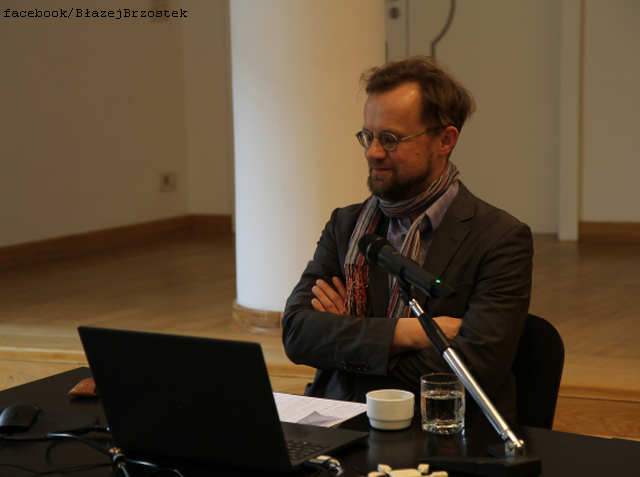
The Polish historian Błažej Brzostek launches the book The Paris of another Europe. Warsaw and Bucharest in the 19th and 20th centuries
Steliu Lambru, 12.08.2023, 14:00
Bucharest is seen today as an Eastern European city that took the model of a Western European city for its development. And what other model could be chosen if not Paris, the capital of France? In sign of appreciation for Bucharest people’s dedication to modernizing their city after the model of the capital of France, the capital of Romania received the nickname ‘Little Paris back in the 19th century, a flattering nickname that was kept for a long time. But Bucharest was not the only city that took Paris as a model for urban expansion. The capital of Poland, Warsaw, also received the same nickname, before Bucharest, and this same name for two cities that ardently sought to imitate Paris made the Polish historian Błažej Brzostek write the volume ‘The Paris of another Europe. Warsaw and Bucharest in the 19th and 20th centuries’.
The Polish historian wrote that there were differences, given the history of the two eastern capitals, although they shared the same nickname: We have differences in both spaces, in the Romanian and Polish cultural spaces. The first visible difference is the presence in Romania of a pattern or a concept of Balkanism, which does not exist in Poland. It is very important in Southern Europe in particular, and it is a negative one. On the other hand, we have the historical concept of Central Europe, which is positive, and very rarely is it negative. The historical concept of Central Europe is very urban, like the Balkan one, urban too, but in a different way. In urban planning, both concepts are extremely visible and extremely clear.
Poland and Romania were neighbors for a long time in history, and the relations between them were marked by the interests of the times. But, in the last hundred years, relations between the two countries have been excellent. A memorable episode took place in September 1939, at the outbreak of the Second World War. The then Romanian government led by Armand Călinescu allowed the passage of the authorities from Warsaw and of the Polish treasure through Romania to the West, so as not to fall into the hands of Germany. But even in the 19thcentury, when Poland no longer existed on the political map of Europe, the Polish presence in Romania had not been forgotten.
The nickname Little Paris was given to Warsaw before it was given to Bucharest. The ideas of revolutionary France entered Poland at the end of the 18th century, but the name Little Paris given to Warsaw had a negative connotation for the conservative Polish nobility. They opposed Western modernist ideas, and a long dispute began between the traditional and modernizing camps. The same separation of ideas will also produce in Bucharest, 30 years later, around 1830, two opposing camps, similar to the Polish ones.
Błažej Brzostek told us what role the French capital played here: Paris is a symbolic point, a point of reference for both cultures, in opposition to what was brought from the Orient, and to what was domestic. It was a modern problem of self-definition, and getting to know oneself. The question was: who are we truly? To be a Parisian was positive in many texts, especially in the 19th century, as was the case in the whole of Europe in general, or something negative. It was never neutral. The discussion was mostly related to elites, the ‘superimposed layer’, as Titu Maiorescu wrote, in a pre-modern society which aimed to modernize the masses in order to bring in civilization.
Little Paris meant, at first sight, urban organization and atmosphere, but not only. It was a type of social attitude, of clothing, of spoken language. Warsaw and Bucharest were called Little Paris, even though they were different, both in cultural heritage, and in imitating the French metropolis. As opposed to Warsaw, a city with aristocratic mansions, in Bucharest the transformation was more visible. In late 19th century, Bucharest was still an Oriental city, but the homes of the elites were Parisian houses. The young people who had been studying in France were bring Paris to Warsaw and Bucharest.
Here is Błažej Brzostek: In building the concept of Little Paris, when we seek the first moments it was used, or the essential moments in the evolution of this concept, the first impression is that there is a gap between Warsaw and Bucharest. This gap between Poland and Romania was large in the 18th century. Warsaw was the capital of a very large state, considered to be a major state on the map of Europe. Warsaw, along with Poland, gradually disappeared, and Romania gradually appeared. Warsaw has the major trauma of a lost function, and is the biggest source of written texts and ideas. In Romania it is the reverse. There is no trauma of a lost state, but there is another trauma, that produced by the construction of a modern state, and of a modern capital city. This trauma is highly visible especially in interwar texts, when Bucharest was remodeled and remade, with blockhauses, with high rises, with new boulevards, and this seemed to be a destruction of the patriarchal city.
We still remember with nostalgia nowadays the moniker Little Paris. Both capitals suffered tremendously from an urbanistic point of view during WWII and communism, and this trauma is something they still have in common to this day. (LS, CC)