Life between work shifts for foreign workers in Romania
Romania is attracting more and more foreign workers, including Asia.
Iulia Hau, 20.11.2024, 14:00
According to the latest survey conducted by the Centre for the Comparative Migration Studies, a little over 200 thousand foreign citizens were living in Romania at the end of October 2023, 87% of whom were holders of temporary residence permits. With a rejection rate of humanitarian protection applications of over 83%, the latter makes up for the least numerous group among foreign citizens living in Romania.
Due to the many opportunities it provides in terms of employment, education and leisure, the capital city Bucharest accounts for 26% of the total number of foreign citizens in Romania, followed by Ilfov county with 10%, Timiș county, in the west, with 7%, Cluj county, in the northwest, with 6%, and Constanta county, in the southeast, with 6%. The survey also shows that Nepali citizenship is the most numerous (accounting for 9%), followed by Turkish (with 8%), and Italian, Sri Lankan and Moldovan (with 7% each). While Italian, Turkish and Moldovan labour migration is the result of historical links and cultural and economic similarities, South Asian migration is the result of labour agreements and is yet insufficiently studied and understood.
A survey entitled “Bridging Communities: An exploratory study on labour migration in Romania” has analysed in detail the rights of Asian workers, their working and living conditions and to what extent these are respected. According to the Romanian Labour Code, immigrant workers should enjoy the same rights, working conditions, rest periods, social benefits, wages and protection against discrimination as Romanian citizens.
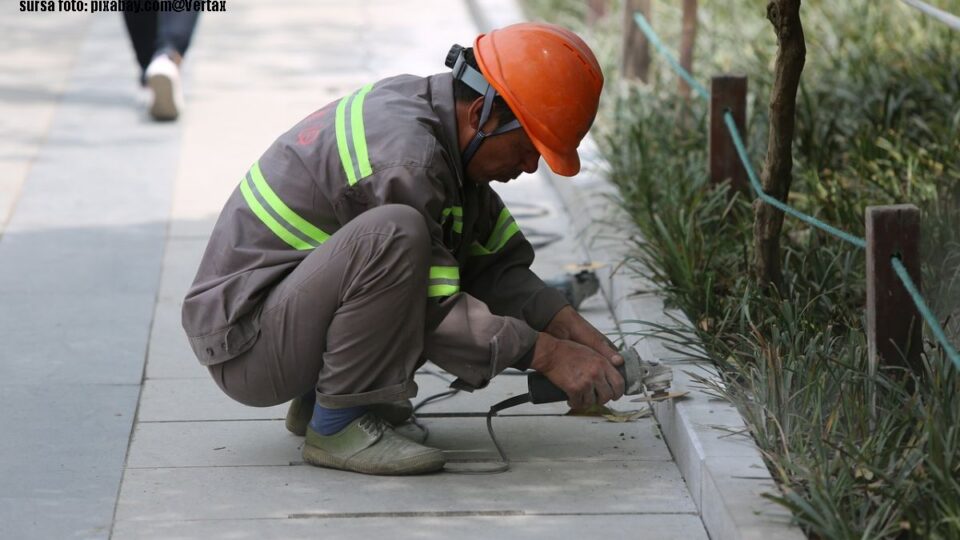
However, researchers found that workplace exploitation is the most frequently cited issue, and which has a major impact on the decision to re-migrate to other countries. Among the jobs most vulnerable to potential exploitation and rights violations are those of food delivery courier and kitchen worker. The risk of exploitation is even greater for those without valid work permits, for example the people waiting for the necessary documents to be issued.
Anatolie Coșciug, the coordinator of the study, believes that the state institutions should verify and ensure compliance with the legislation, including the rules related to the necessary qualifications and skills:
“According to the General Inspectorate for Immigration, workers must prove a number of things; either some qualification in their field or a practical test. There are a few things that clearly don’t work. One of them is mastery of the language; they must know Romanian or an international language and this is not the case. They just give a statement that they know, but we should have a practical test. Very often we see people come in and they don’t know or have no qualifications in that specific area. Which is unthinkable for countries like Germany, where this aspect is state-owned and over-controlled. You’re not allowed to bring in a worker who has to weld and doesn’t know how to weld. And there are a few other things, for example healthcare. The responsibility lies with the companies that bring the workers in, but they must be supervised, that is, they must be clearly controlled by public authorities in various forms.”
One aspect we know even less about when it comes to foreign workers is how they spend their free time, what music they listen to, where they hang out, and what small businesses owned by other members of their community facilitate their meeting together. In October, for example, a well-known performance venue in Bucharest known as Arenele Romane, the Roman Arenas, hosted a concert by the most popular band in Sri Lanka. It was a huge success, with people coming from all corners of Romania, from cities as far away as Arad, in the west of the country.
Similarly, a recently opened restaurant in the Pantelimon area of Bucharest has become a meeting and hangout place for the Sri Lankans living in the Romanian capital. The restaurant is owned by a young couple who arrived in Romania on work visas, aware of their community’s need for a place that represents their culture. In addition to traditional food, the restaurant hosts electronic music events, inviting DJs from the local Sri Lankan community and musicians from around Europe.
We often forget that recent arrivals bring with them more than labour. They bring music, cuisine, local businesses, a different lifestyle and way of being that slowly make their way and strengthen the community and ultimately enrich the host culture.