Can Romania Become Energy Self-Reliant?
Following the discovery of a big natural gas pocket in the Romanian sector of the Black Sea, Romanias energy self reliance no longer seems an unfulfilled dream. At least not for president Traian Basescu who has recently said that soon Romania will no lon
Eugen Cojocariu, 29.04.2012, 18:36
Following the discovery of a big natural gas pocket in the Romanian sector of the Black Sea, Romania’s energy self reliance no longer seems an unfulfilled dream. At least not for president Traian Basescu who has recently said that soon Romania will no longer depend on anyone for ensuring the energy amount necessary for domestic consumption. The prospect of Romania’s energy self reliance is reason for joy given that energy security is vital for any country.
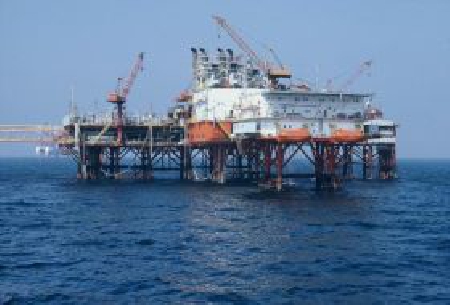
Recently the American company ExxonMobil and the largest Romanian company in the energy field, Petrom, in which the main shareholder is the Austrian group OMV, have announced they discovered an important amount of natural gas in the Black Sea. The pocket is estimated at 42-84 billion cubic meters, 3 up to 6 times the country’s annual consumption. The gas deposit was discovered during the first deep-sea drilling operations in the Romanian territorial waters started at the end of 2011.
The Romanian head of state visited the American drilling ship: “It’s clear that Romania has the prospect of being totally energy self-reliant and if the other 4 or 5 deposits in the Neptun area, which are to be prospected, contain equal amounts of gas, Romania could become a source of gas not only for itself but also for many other countries in Europe”.
But when is the gas deposit going to be exploited? The president says exploitation could start between 2015-2017 after prospecting operations come to an end. Domestic gas consumption is covered by domestic gas exploited by Romgaz and Petrom companies as well as by gas imported from Russia. Romania also participates in the Nabucco gas pipeline project supported by the EU, which intends to reduce Europe’s dependence on Russian gas imports. Nabucco will transport natural gas from the Caspian Sea area via Turkey- Bulgaria-Romania- Hungary to Western Europe, detouring Russia. Furthermore, Romania also owns a substantial unconventional gas reserve, namely shale gas. It counts on its exploitation that could reduce by 10% natural gas imports.
The president of the National Agency for Mineral Resources, Alexandru Patruti, pointed out that Romania’s natural gas reserve, estimated to ensure domestic consumption for another 15 years, could be completed in the future with shale gas. The big foreign energy companies among which the American company Chevron, the Canadian company Sterling Resources and the Hungarian company MOL have already showed interest in exploiting shale gas. Chevron, a world leader in this type of extraction, has already leased 2500 sq kms in the Barlad area (in the east) and last week the Romanian authorities granted them the right to explore and exploit another 3 areas in the south eastern county of Constanta.
Initially the American company had announced its intention to start, in the second half of 2012, the exploitation of the deposit near Barlad, but upon pressure by civil society, ecologists and the opposition, they stepped back. The Chevron representatives pointed out that by the end of the year they would undertake in Barlad only exploration works using conventional technologies while in the county of Constanta they would make earth physics studies. Shale gas extraction is criticized by experts because it uses the hydraulic fracturing process, a method that pollutes groundwater and causes earthquakes. The method is banned in some European states such as France and Bulgaria.
The Social Liberal opposition in Romania called for the drafting of an impact study of unconventional gas exploitation, for public debates on the effect on the environment and the population and for the passing of special legislation in the field. The president of the National Agency for Mineral Resources, Alexandru Patruti, said Romania is now in the stage of prospecting shale gas, which could last up to 10 years. On the other hand, he explained that hydraulic fracturing is a standard method used in the oil industry for many years, even in Romania.
According to Patruti, the main impact on the environment would be a possible contamination of groundwater, which could be caused by the failure to observe the right procedures regarding drilling technologies and cementing of drills. If they are not properly made tight they allow leakage of the liquid used in the hydraulic fracturing process in the groundwater. He has given assurances that the impact of this process can be controlled and minimized by observing good practices in the field.
At present there are public discussions in other European states as well regarding the exploitation of unconventional gas. This type of gas is regarded even by EU leaders as a possible alternative to Europe’s energy security, which is why they believe the possibility should be considered. In January 2012 a working group was set up within the EC, which also includes representatives from Romania. The group analyses information related to the impact on the environment of shale gas exploitation.