Mountain Roads in the Communist Regime
Building mountain roads was one of the failed projects of communist economy, inspired by the Soviet model.
Steliu Lambru, 06.10.2014, 13:18
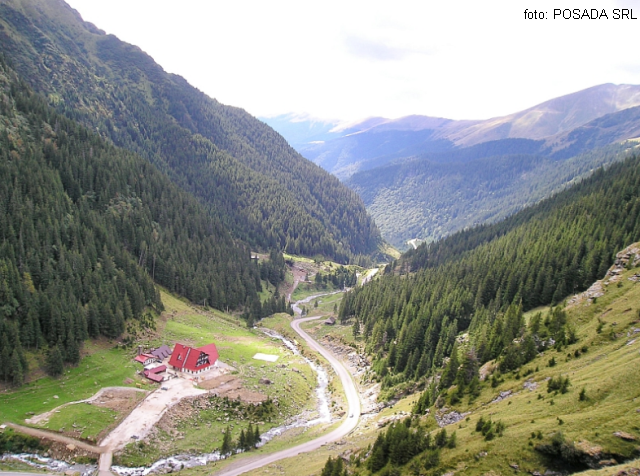
Right at the beginning of national road 7C, in the village of Bascov, Arges County, there starts one of the most spectacular roads in Romania, known as the Transfagarasan. It is 90 km long and it ends in Cartisoara, Sibiu County. The road is the emblem of an idea that dominated dictator Nicolae Ceausescu’s economic thinking in the 1970s, regarding strategic mountain roads. In reality, mountain roads, just like many other projects in communist economy, were just good ideas ending in bad results. Their huge costs and small profits turned them into just another part of the burdening legacy of the communist regime.
The idea of building such a road came to Nicolae Ceausescu in the late 1960s, after the USSR invaded Czechoslovakia, and the project was completed in 1974. Ceausescu believed that the access roads already existing in that part of the Carpathians could be easily blocked. Fearing a Soviet invasion, he ordered the building of a road across Fagaras Mountains, whose tallest peak reaches 2,042 meters in the Balea Lake area. The complicated mission of building the Tansfagarasan was assigned to the engineering division of the Romanian army.
Back then, when the Transfagarasan was planned and then built, Maxim Berghianu was head of the Planning Committee, the centralized institution in charge of drawing up strategic plans for the communist economy. In an interview to the Oral History Centre of the Romanian Radio Broadcasting Corporation, back in 2002, Berghianu recalled he did not agree with that grandiose project.
Maxim Berghianu: “I opposed the building of that road for four years, because it was a huge investment, generating no profits to the national budget. I was born in that mountain area and I knew that even in June and July the layer of snow can reach up to 5-6 meters. So, what would have been the point of such a road, always subject to erosion, draining waters and landslides? But they said it was a strategic project, and that was it. ‘You say we should not be able to cross Arges County to Transylvania on tanks?’ they asked me. I tried for about four years to delay that project, without saying anything, but in the end they did it. Vasile Patilinet, the guy in charge of the army, the Securitate, justice and everything that was strategic, convinced Ceausescu it was a must.”
The ambition to build mountain roads was growing back then. Maxim Berghianu recalled how the communist authorities had planned to also build another mountain road, east of and parallel with Transfagarasan.
Maxim Berghianu: “He wanted to build another one, starting from Sambata de Sus, also in Arges County. I managed to slow down Patilinet a bit, as we were kind of friends, and I told him, ‘all people in this country curse you for ruining the most beautiful access to Fagaras Moutnains, and for trying to destroy an entire forest on the banks of a splendid mountain river. Isn’t it enough that we have Transfagarasan and we keep it closed? Cool down a little, please!’ So he did not go to Ceausescu with that project. I myself had found out about it accidentally, when I happened to be in the area and I saw people cutting down trees. I wanted to know what was happening and I found out that there was a plan for a road cutting through the mountains to Arges. The Forestry Ministry was felling down the trees, as Patilinet was now working for the Ministry of Forestry and Woods. I knew about Transfagarasan because I had been trying for years to stop it, blaming either the lack of money or something I had forgotten, all sorts of reasons. But Ceausescu never forced me to include it in the investment plan. It was a proposal coming from the Army and the Forestry Ministry.”
Building those mountain roads, and other strange and useless projects, alongside a general thinking aimed at absolute sovereignty and the early payment of foreign debts, led to the collapse of communist economy in the 1980s. Here is Maxim Berghianu again:
Maxim Berghianu: “Their decision to no longer give money for imports of equipment and parts, that’s what destroyed the economy. Plus Ceausescu’s obsession with paying the foreign debt before the deadline, which nobody had ever done in the entire world. Important industries such as iron and steel, or the chemical sector, no longer benefited from imports of spare parts for modern equipment. He also limited the import of new technology. And as things go in this field, you cannot keep a piece of equipment more than 4 or 5 years. It’s no longer like in the 18th and 19th centuries. Machines and equipment must be renewed at least every six years. We could not do that because there was no money. He had invested money in those huge, megalomaniac projects, which meant nothing in terms of revenues to the national budget. And without national revenue, there were no funds for extended production, so at the end of the day there was no money left for rollovers.”
Building mountain roads was one of the failed projects of communist economy, inspired by the grand model of Marxism Leninism, one more stone in the road to hell, always paved with good intentions.