Romania proclaims its independence
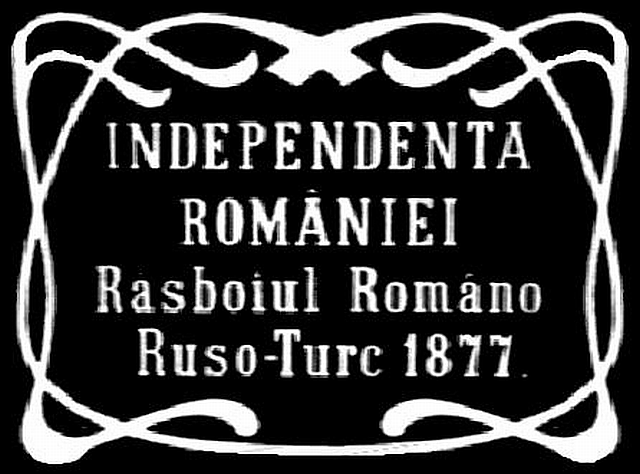
On May 10th, 1877 Romania proclaimed its independence and became one of the 20 European nations enjoying this status
Steliu Lambru, 31.07.2017, 12:31
The country’s independence was obtained due to a favourable turn of events at international level and was also the result of more than 50 years of sustained efforts by the Romanian society. Romania’s independence was achieved following the Russian-Turkish war of 1877-1878 that the Romanian army took part in. Historian Sorin Cristescu with the Spiru Haret University of Bucharest, tells us more about the international context in the years preceding the war.
Sorin Cristescu: “The international context had been sketched years before, in the sense that a revolt against the Ottoman rule, that had imposed heavy fiscal burdens, broke out in 1875 in Bosnia-Herzegovina, and later in Bulgaria. The revolt was quelled in a terrible manner, which made Europe’s superpowers take some safety measures, in several stages, and prompted Russia to start a war against the Ottoman Empire. The Russians were expected to win the war, as they were the favorites, but one of Russia’s goals was also to take back the three counties in southern Bessarabia. The opposition accused the Romanian Government of treason for being willing to give up the three counties. The situation was very complicated for Romania. Titu Maiorescu said that the Liberal government was the only one able to overcome such difficult times in a position of strength.”
Romania does not have a written Declaration of Independence, or a formal Proclamation in this respect. Historian Sorin Cristescu tells us why.
Sorin Cristescu: “This is how the people in power decided to handle things. On May 9th an interpellation in Parliament was scheduled both at the Senate and the Chamber of Deputies. Mihail Kogalniceanu, a foreign minister at the time, the one who had signed the Romanian-Russian Convention and who had to take upon himself the blame for Romania’s losing the three counties, answered the questions. The second day, on May 10, marking 11 years since Carol’s coming to Bucharest, the country’s independence was officially proclaimed and celebrated. At a later date, communist-written historiography separated May 9th from May 10th and made the latter a holiday. So Romania’s independence was proclaimed and celebrated on May 10th, 1877.”
Was Romania prepared for the ensuing war? Sorin Cristescu again at the microphone.
Sorin Cristescu: “Putting things in perspective, the war was hard to imagine for a country with a limited potential and budget. But independence had been Carol’s goal since he came to the throne in Bucharest. A series of preparations had been made, German Krupp artillery had been purchased, the first of which had been paid for by Carol himself, with his own money. But of course, we can hardly speak of proper preparations for the war. The general atmosphere, however, was very special, as the Austrian-Hungarian reports show. They spoke of Carol I like being like a horse striking the ground with his hoof, anxious to go to war and eager to be crowned king. When the Austrian-Hungarian diplomatic representative asked Romanian to fight on the side of the Turks, against the Russians, Carol answered that such thing was impossible. The Turks had been treating Romanians badly ever since Carol came to the country. Under the circumstances, a decision to fight alongside the Turks would have been highly unpopular, while fighting against them would have ensured Carol the nation’s full support. So there was a special state of mind across the country.”
Following the war of 1877-1878, Romania earned its independence and reclaimed the province of Dobruja. Historian Sorin Cristescu believes that, all in all, Romania won more than it lost.
Sorin Cristescu: “Dobruja was received in exchange for the three counties in southern Bessarabia. Romania could have obtained more, had the Romanian leaders signed off on the exchange. Romania could have also got Southern Dobruja, and several areas on the right bank of the Danube. But since the Romanian leaders did not sign, Dobruja was all that the country got. Signing off for the three counties in southern Bessarabia was not possible. Had Romania laid no claim on the three counties it received in 1856 at the European Congress in Paris, what right would it have had to claim the whole territory between the rivers Niester and Prut that Russia seized in 1812, that is the whole of Bessarabia? Romania definitely won something important by obtaining Dobruja, a rather arid and less fertile area, but which offered it access to the sea, which would completely change Romania’s economic and political history. From this point of view, the war was a win for Romania and a stage in the country’s history that could not have been avoided.”
In 140 years of independence, Romania went through significant changes; it experienced both democratic and totalitarian regimes and also several types of economic development. The independence won with great sacrifice in the last quarter of the 19th century continues to be a milestone in the country’s history.