Romulus Rusan
Romulus Rusan was born in 1935 and died in 2016, aged 81.
Steliu Lambru, 20.07.2026, 13:30
The name of the writer Romulus Rusan is synonymous with the recovery of the memory from the years of communism, a memory that suffered severely before the revolution of December 1989 due to repression and censorship. Together with his wife, the poet Ana Blandiana, he created a true private institution through which the Romanian and foreign public was given back the right to know uncensored history.
Romulus Rusan was born in 1935 and died in 2016, aged 81. Trained as a mechanical engineer, Rusan also had a talent for the art of writing. He made his debut in the literary magazine “Steaua” at the age of 19 with a text of literary criticism. He also wrote film reviews, short prose, travel impressions and was the author of interviews. He published 16 books, one of the most successful being “America ogarului cenușiu” – America of the greyhound, published in 1977, an essay about the American continent. After 1989, he was a founding member of the non-governmental organization Civic Alliance and of the Sighet Memorial, a vast project that transformed the prison in the town of Sighetu Marmației into a museum of communist repression. He established and coordinated the oral history program within the Sighet Memorial, an institution that also hosted symposia, conferences, summer schools, editing of magazines and volumes of documents, and interviews with those who suffered between 1945 and 1989.
At the Sighet Memorial, many personalities of the current world gave lectures such as the British historian Dennis Deletant, the French historians Stephane Courtois and Thierry Wolton, and the Russian dissident Vladimir Bukovski. Romulus Rusan was the scientific director of the International Center for Studies on Communism within the Memorial to the Victims of Communism and the Resistance, a governmental body that studies, documents and supports public awareness of the history of communism in Romania. He received prizes from several institutions and was decorated in 2000 with the national Order “For Merit” in the rank of knight for outstanding artistic achievements and for the promotion of culture.
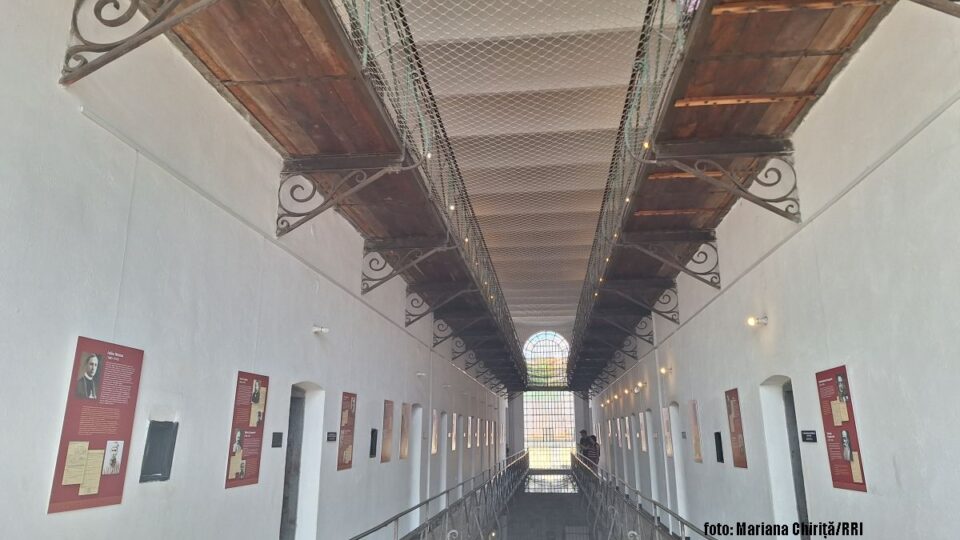
In several public appearances, Romulus Rusan summarized the circumstances in which the famous Memorial was born: “Because it was a free prison, so to speak, that is, decommissioned more than a decade ago, our colleagues from Sighet told us that it would be possible to request that building to refurbish it, because it was a ruin. It was a dilapidated building. Then, we could establish the museum inside and make an architectural arrangement in the cemetery in memory of the dead from that prison and from all over the country. On the other hand, Sighet, although it was a small prison compared to Gherla, to Aiud, to the Canal, to Pitești, had a special emotional density because the interwar elite, the elite of Greater Romania, the founders of modern Romania had been exterminated there: Iuliu Maniu, the Brătianu family members, the priests, the peasants, the military, top personalities in the fields of science, literature and interwar journalism. Most of those exterminated were exterminated in Sighet. So these two conditions, the fact that the prison was available and that the elite had been exterminated there, made Sighet a place that I had set in my mind from the very beginning as the right location for the Memorial to the Victims of Communism.”
The Sighet Prison was built in 1897 as a common law prison during the Austro-Hungarian administration. After 1945, political prisoners began to be brought here, kept in inhuman conditions and many of them died there. It was also known as the “ministers’ prison”. In 1977, it was decommissioned and entered a process of degradation. In 1994, the prison entered an extensive refurbishment program to be transformed into a museum, opened in 2000. The entire space of the prison is dedicated to pain, suffering and contemplation and works of art can also be seen. The statuary group “The Cortege of the Sacrificed” by sculptor Aurel Vlad is today iconic for the museum’s identity. Also part of the Memorial is the Poor Cemetery where political prisoners who died here were buried.
The specifics of the Civic Alliance as a citizen organization and its involvement in building the first memorial to the victims of communism in Sighet were decisive in what became the first memorial of this kind in the world. What the Civic Alliance meant for what the Sighet Memorial is today was explained by Romulus Rusan: “The Civic Alliance was at the heart of the project and, from the very beginning, the advantage of the project was that it was one of civil society. Since then, more memorials have been made, even if later, but they were made by the state, either by state museums or even by the government, as happened with the House of Terror in Budapest. The fact that the Civic Alliance existed allowed us to start the oral history project all at once, across the country, in more than 15 counties. It was about recording the memories of those who had gone through the Gulag. We had no other options at the time.”
After his death, the poet Ana Blandiana established an award named after Romulus Rusan, an award gala that has reached its fifth edition. And the winner of 2025 is the writer Smaranda Vultur for the literary memoir book “French people in Banat, people from Banat in France” (”Francezi în Banat, bănățeni în Franța”). (LS)