The 35th anniversary of the Romanian revolution
The Romanian anti-communist revolution is a defining moment in the country's recent history and still subject to discussion and historical research.
Steliu Lambru, 23.12.2024, 14:00
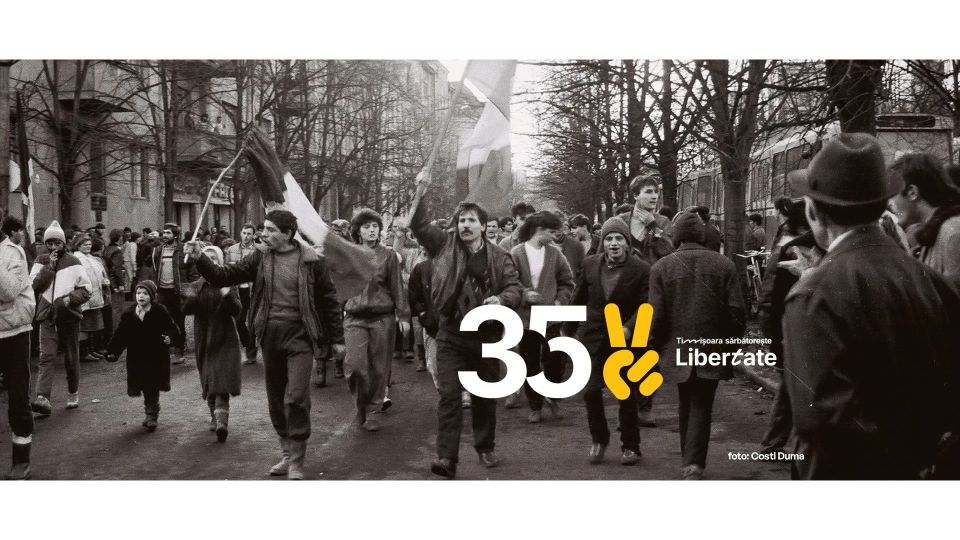
A small protest began on December 16, 1989 in Timișoara that would lead to an avalanche of demonstrations across the country. This will result, on December 22, in the ousting of Nicolae Ceaușescu and his regime, but some 1,150 people were killed and 4,100 wounded in the process. Of those who died then in Timișoara, the regime tried to make the bodies of 44 of them disappear: they were taken to Bucharest, put in the ovens at the crematorium, and their ashes thrown into the sewer in the Popești-Leordeni village, in the south of Bucharest.
The people who rose up in Timișoara fought against the regime that had come to power after 1945 and for their rights and for a better life. On December 16, 1989, very few people could ever imagine what would happen in the following days. The journalist Mircea Carp, one of the former directors of the Free Europe radio station, recalled, in a 1997 interview given to the Oral History Center of the Romanian Radio Broadcasting Corporation, the feverish expectations that everyone had:
“After the events in Brasov in 1987, in 1988 and 1989 the Iron Curtain began to fall, with lots of things happening in quick succession, in East Germany, Poland, Hungary, and Czechoslovakia. Only in Romania things seemed to stand still, nothing was moving. Ceausescu seemed to be very much in control of the situation, so much so that he was even able to go on an official visit to Iran, from where he returned after he was told serious things were happening back home. But Ceausescu never believed that his position was at risk.”
Europe in 1989 was seething, and the emergence of Solidarity on the Polish political scene in the spring was the signal for the return to life. By December, throughout Central and Eastern Europe, the wind of change could not be stopped. For Mircea Carp, the start of the Romanian revolution in Timișoara was a fulfillment of a burning desire, but also a shock:
“December 1989 came and with this first spark, the events in Timisoara. I have to say that they took us by surprise in terms of the moment when they happened, because, of course, we had prepared both mentally and in terms of the content of our shows for a possible regime change in Romania. But, in itself, the 16th and the following day, the 17th of December 1989, came unexpectedly for us. As for me, I was taking a few days off, I wasn’t even in the office those days. My colleague Sorin Cunea was the first to broadcast on the airwaves what was happening in Timisoara. Starting from December 18, we organized ourselves and started working in teams and working 24 hours a day. We worked in teams of 3 or 4 people, non-stop, preparing all these shows in a hurry based only on information we had from press agencies abroad and from some people who had been travelling back from Romania.”
The Romanians who had lived for so many decades in fear and humiliation had a very important moral support in the Romanian language radio stations. Mircea Carp said that during the days of the outbreak in Timișoara, he and his station did their duty as best they could:
“The moment when the revolution started, and we were on alert, the other radio stations and Free Europe, maybe first of all Free Europe. But, in any case, we did not effectively contribute to the start of the events of December through incendiary broadcasts, through broadcasts that would encourage the population to rise up against the regime. Maybe it would have been better, maybe it would have been worse. My point of view is that the American government, I’m talking about Voice of America or Free Europe, would in no way have allowed our radio stations to encourage an action that would lead to a bloody revolution, a revolution that would to cost human lives and destruction.”
On December 16, 1989, 35 years ago, the book on Romania’s recent history began to be written in Timișoara.