The Archeological Reservation at Targsorul Vechi
Targsorul Vechi, a village 70 km away from Bucharest, is like any old village in Prahova County, but that is just at first sight. Historians tell us otherwise.
Steliu Lambru, 25.11.2013, 13:49
Targsorul Vechi is a place that has been inhabited for ages, boasting at least 600 years of documented history. Proof of that is the local archaeology park, where experts from the Vasile Parvan Institute of Bucharest are digging for artifacts. The reservation is even more important by the fact that school children come here to lend a hand to the grownups in the dig.
Targsorul Vechi has been documented as far back as the reign of Mircea the Elder (1386- 1418), considered the founder of the place. Bogdan Ciuperca is the head of the team that digs in Targsorul Vechi, and he introduced us to the earliest known facts about the dwelling.
Bogdan Ciuperca: “600 years ago, in a document found in Mircea the Elder’s chancellery, a commercial treaty between Wallachia and the burg of Brasov, the village of Targsor is mentioned, by its Slavonic name as such, and by its Latin name, which is Novum Forum. The two names are very significant. On the one hand we have the Slavonic name, Targsor, which is a diminutive, it means Small Town Fair, as compared to the name of the capital of the kingdom back then, Targoviste, which means Large Town Fair. The Latin version indicates that it was a new place, most probably established during the reign of Mircea the Elder. This ruler did a lot for Wallachia, and has everything to do with the emergence and development of Targsor.”
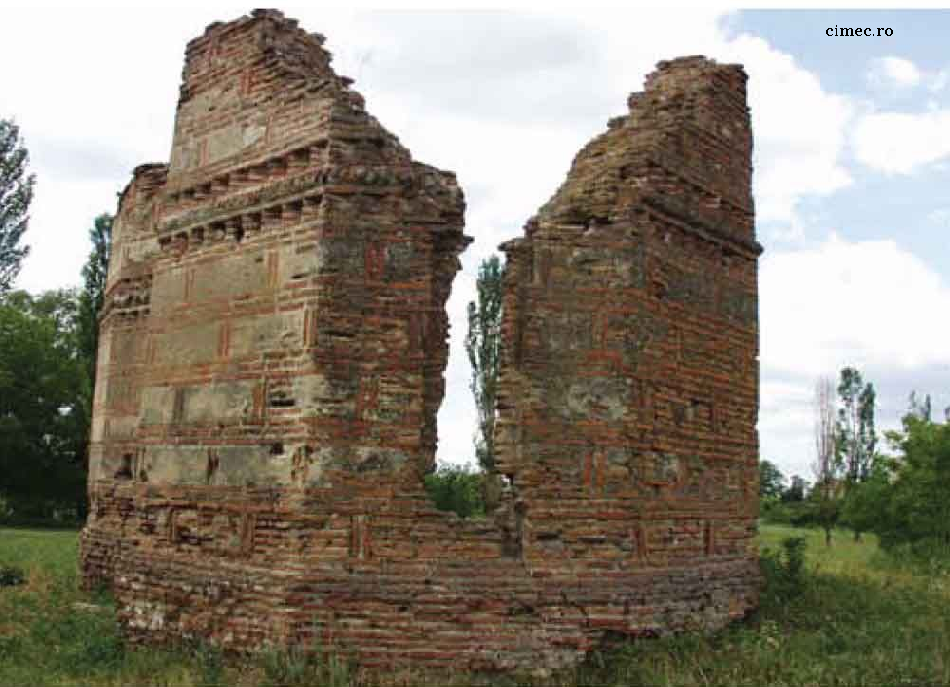
The archaeological dig has not yielded much, but it is enough to draw the attention of a history aficionado. The oldest traces of habitation are stone tools from the later Paleolithic. The Neolithic period is a blend of Cris, Boian and Gumelnita cultures, with painted ceramics. The Glina, Monteoru and Tei bronze cultures are followed by two Iron Age cultures, Halstatt and La Tene. The first ruins of buildings date back to the Roman era, a castrum and baths, built in the second century AD. The castrum was part of a fortified line stretching to the north, towards the sub-Carpathian area of Wallachia, built during the Dacian wars of 101-102 and 105-106 AD, with the purpose of controlling access ways to and from the Carpathian arch.
Dating back to the following century are the necropolises and funeral complexes which yielded ceramics, vestment accessories, jewelry and weapons belonging to Sarmatian tribes, of Iranian origin, which passed through in their migration.
Bogdan Ciuperca told us how Targsorul Vechi grew in economic importance during Mircea the Elder’s reign: “Targsorul was a princely fair, built on royal domains, and granted significant commercial privileges. It was also a customs, and in 1413 they were taxing the carts of fish caught in the marshes of Braila, going to Transylvania. Targsor has an important economic history. It was one of the three largest commercial fairs of Wallachia, and the main trading partner of the burg of Brasov. We can say that Targsorul Vechi is Mircea the Elder’s town, because he is the first ruler to document it. Paraphrasing historian Nicolae Iorga, Targsorul is ‘the Ploiesti before Ploiesti’. Before Ploiesti came into existence, there was Targsor, and Ploiesti owes its existence to it. Another connection with the illustrious ruler was Vlad the Impaler, aka Vlad Dracula, Mircea’s grandson, who in 1456 started his reign here after defeating the army of Vlad II, and was anointed ruler of Wallachia.”
The St. Nicholas princely church was erected by Vlad the Impaler in 1461, as Targsorul vechi is considered one of the main secondary residences of Wallachian rulers. Only the old foundation and the scriptorium have been preserved. In 1667, it was rebuilt by prince Antonie, who set up here Turnu Monastery, which was renovated and painted by order of ruler Constantin Brancoveanu around 1700. You can still see a good part of the walls and some of the original painting. In 1570, Alba church was built here, and in late 16th century, and during the rule of Mihnea Turcitul, the Red Church was built. Civil architecture is represented by the mansion of the Moruzi family, on the west north west edge of the reservation. It was erected in the early 20th century, in neo-Romanian style. The Moruzi family was the last owner, and they built there a modern farm on the Western model.