The reign of Constantin Brancoveanu
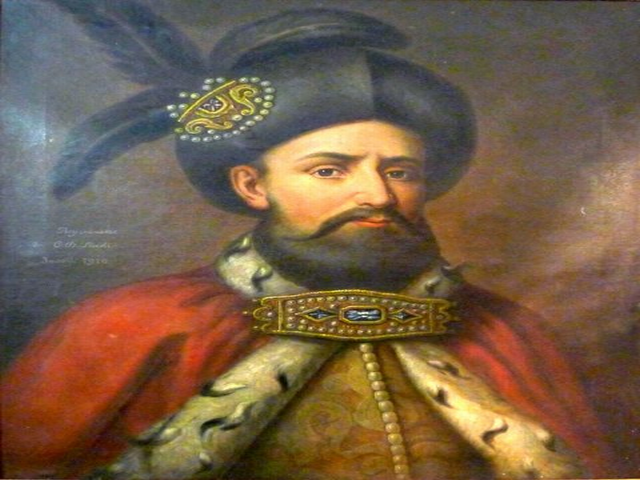
Constantin Brancoveanus reign (1688-1714) was relatively long given the political instability of the times. Apart from the reforms he initiated and the boost he gave to cultural life, he is best remembered in history books for his tragic death.
Steliu Lambru, 11.08.2014, 13:03
Around 15th of August 1714, Brancoveanu, who was 60 at the time, was beheaded together with his four sons and his aide Ianache Vacarescu, after 5 months of detention in the Ottoman capital, Istanbul. We asked Bogdan Murgescu, who teaches the history of the Ottoman Empire at the Faculty of History of the Bucharest University, to give us a general description of Constantin Brancoveanu’s reign:
Bogdan Murgescu: “Constantin Brancoveanu was seen as a good administrator. We know of his attempts at fiscal reform and his efforts to keep a better account of public money. From a treasury record kept over a period of 10 years we find that he was very careful about how the money was spent. We also know that he was an economical man, so he increased both the treasury funds and his own wealth. The Turks referred to him as ‘the gold prince’ because he was believed to be very rich. Part of his wealth was in his own country, in the form of property and money, and another was deposited abroad, for example in Venice. He also built many churches and princely residences and supported the development of culture.”
Constantin Brancoveanu was known to be a strict tax collector, something that earned him a lot of opposition. Bogdan Murgescu explains: “Taxes are not a popular thing in any society. Pressures were naturally exerted on taxpayers. We know from the treasure record that noblemen were sometimes even forced to take out loans in order to give money to the treasury. Apart from this, the stability ensured by his reign was very important, because the ruler generally did his best to prevent his country from being affected by the wars taking place around its borders. He wasn’t very successful in this respect in the first part of his reign, when his country saw an Austrian invasion. Later, however, Wallachia was generally spared foreign military intervention and therefore destruction, being able to enjoy relative prosperity.”
Critics mainly blamed Brancoveanu for his so-called “Turkophilia”, at a time when Wallachia could have taken advantage of the aggressive anti-Ottoman policy initiated by Austria.
Bogdan Murgescu once again: “Brancoveanu was criticised for many things, depending on what part of his reign we’re looking at, because his was a very long reign that lasted 25 years and 4 months. In the beginning, he was criticised for not joining the Christians against the Ottomans. He ascended to the throne at a time when Serban Cantacuzino was inclined to join forces with the Austrians, but then the Austrian army entered Wallachia. Brancoveanu opposed the Austrians and fought along the Ottomans. Another controversial moment was in 1711, when the metropolitan bishop and some of the noblemen plotted against the ruler and part of the army joined the Russians. Brancoveanu was again very cautious and basically kept Wallachia on the side of the Ottoman Empire.”
Under the circumstances, Brancoveanu’s tragic death at the hands of the Turks is all the more surprising and, according to the historian Bogdan Murgescu, still somewhat of a mystery: “Brancoveanu’s execution presents us with a problem. He was deposed from the throne and then taken to Istanbul, kept in prison and tortured to reveal where he kept his wealth. His execution is difficult to understand from an Ottoman perspective. There is no clear indication as to what the Ottomans blamed him for, apart from the fact that he had accumulated a lot of wealth and had been maintaining ties with the neighbouring states, albeit not so close as to pose a threat to Ottoman dominance. We still don’t have a convincing explanation why the Ottomans decided to kill him and his entire family. Historical records point to no clear justification for this deed. There are records of the complaints made against him, including from Romanian noblemen, but his execution was an excessive measure even for Ottoman standards.”
Romanian clerical voices spread the idea that Brancoveanu died as a martyr, because he would not renounce the Christian faith, but historians are sceptical about this explanation, says Bogdan Murgescu: “According to a common practice at the time, someone who was convicted to death but converted to Islam before his execution could be pardoned. However, it is hard to believe that Brancoveanu was executed merely because he was a Christian. The Turks appointed Stefan Cantacuzino, also a Christian, to take Brancoveanu’s place. And when Stefan Cantacuzino and his father were themselves executed, the Turks appointed Nicolae Mavrocordat, who was also a Christian. So there was never any question about changing the way in which Wallachia was governed.”
Constantin Brancoveanu and his sons were canonised by the Romanian Orthodox Church in the early 1990s.