The Romanian military fleet in WWII
The history of the Romanian military fleet begins in the middle of the 19th century
Steliu Lambru, 07.10.2024, 13:02
The history of the Romanian military fleet begins in the middle of the 19th century, when, after the union of the two principalities of Moldova and Muntenia, the commercial river fleets of the two are also united. Until then, the Romanian principalities had not had fluvial and maritime military fleets because they did not have this right, being under the control of the Ottoman Empire, nor did they have access to the sea. With the year 1878, after Dobrogea became part of the Romanian state and it opened up to the seas and oceans, the history of the Romanian maritime fleet also began.
The Romanian fluvial military fleet participated in the Russo-Romanian-Turkish war of 1877-1878 through military operations on the Danube. The Romanian ships commanded by Nicolae Dumitrescu-Maican and Ioan Murgescu installed dams on the river, attacked Ottoman ships, bombarded the Ottoman positions on the southern bank of the Danube, and even managed to sink two Turkish monitors.
Over the following period, the Romanian Navy continues to develop and benefit from programs to equip it with combat ships. In 1907, four monitors and eight river patrol boats entered service for the monitoring and defense of the Danube. In the campaign of the First World War, the military fleet on the Danube was engaged in the battle of Turtucaia in 1916, and in the withdrawal of the Romanian army from Dobrogea. The following year, 1917, the Romanian military ships on the Danube commanded by Constantin Bălescu bombarded the German artillery positions in the city of Tulcea, and supressed the rebellion of the Russian ships in the Danube Delta.
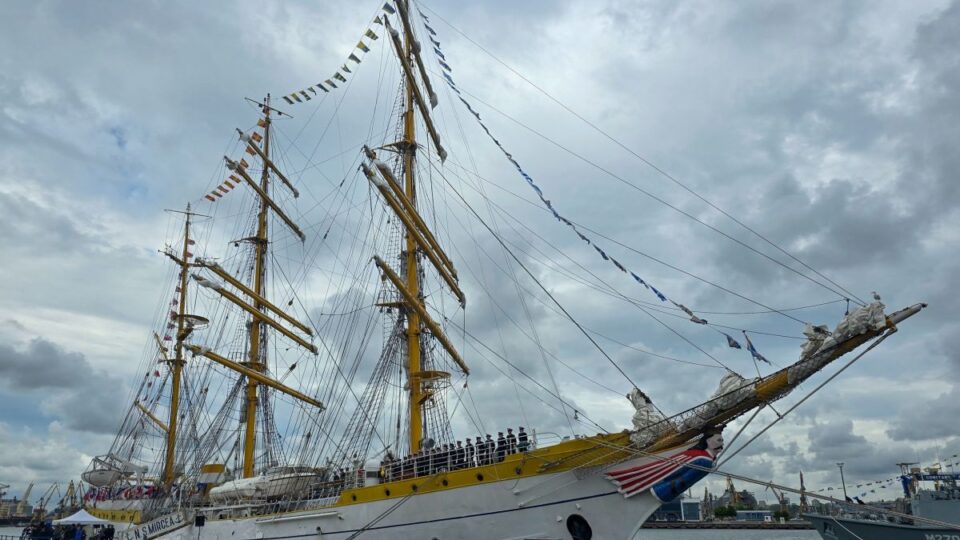
After 1918, the upgrade of the Romanian military fleet continued. New types of military ships entered service for the maritime fleet, such as the destroyers Mărășești, Mărăști, King Ferdinand and Regina Maria, the first Romanian submarine, Delfinul, and the second generation training ship Mircea.
In the Second World War, the Romanian military navy engaged with two large units, the Sea Division and the Danube Division. The Sea Division had 4 destroyers, 3 torpedo boats, 3 minesweepers, one submarine, 3 torpedo boats, 8 , and a flotilla of seaplanes. The Danube division consisted of 7 monitors and 6 patrol boats. The Romanian Black Sea coastline was defended by a barrage of mines 12 nautical miles away and coastal artillery. Due to the disproportion in favor of the Soviet navy, the Romanian navy had a defensive attitude in the first phase of the war. On June 26, 1941, a few days after Romania entered the war for the liberation of Bessarabia and Bucovina annexed by the Soviet Union in 1940, the destroyers Mărăști and Regina Maria and the Dobrogean coastal batteries sank the Moskva, the flagship of the Soviet flotilla that was approaching the Romanian shore, and damaged the destroyer Kharkov. With the movement of the front to the east, the Romanian military navy moves to actions supporting the land troops who were fighting in Odessa and Sevastopol. Until August 23, 1944, Soviet ships no longer approached the Romanian shore, but Soviet submarines were real dangers. A large-scale operation in which the Romanian military navy was involved was the evacuation of Romanian and German troops from the Crimean peninsula, called “Operation 60,000”. Sources show that approximately 36,000 Romanian soldiers, 584,000 German soldiers, 720 Slovak soldiers and 25,000 Soviet prisoners and citizens were rescued as a result of that operation.
After August 23, 1944, when Romania went over to the Allied side, the Romanian navy came under Soviet control, and their ships and personnel were arrested. In 1999, the officer Nicolae Koslinski, the son of Admiral Gheorghe Koslinski, who died as a political prisoner in the Aiud prison in 1950, told the Oral History Center of the Romanian Broadcasting Corporation how he was on the torpedo boat Vulcanul on the night of September 4 to 5, 1944.
“Around 4:30 in the morning, hearing some noises outside, I jumped out of bed, took my gun and put it in my pants pocket. I went to the door where the phone operator on duty informed me that some Russians were coming. And indeed, in the larger bedroom where I was sleeping, a Russian entered with a balalaika [Russian submachine gun] pointed at me, followed by others, who asked me to give them my pistol. First I told them dobrîi vecer and they looked a little surprised, then they asked me for the gun. I raised my hands and said nyet pistol. A Russian non-commissioned officer came to me, felt my pocket. But probably, the pistol being a small Beretta type, and with my handkerchief over it, he didn’t realize it was there. He looked at my hand that held my belt rolled up, and he threw that away, he thought it was a gun. He said to get dressed, said that we were going to a meeting at the maritime station.”
The Romanian ships are taken to the USSR. On the way, for unknown reasons, the gunboat Dumitrescu and the submarine Porpoise sink. After a few years, the Soviet authorities returned to the Romanian government 23 ships, most of them old and non-functional, including two destroyers, several torpedo boats, and several gunboats. But it should be noted that men from among the ranks of the Romanian navy also participated in the anti-communist resistance movement, such as Admiral Horia Macellariu.