Ecotourist destination in Pădurea Craiului
Pădurea Craiului can be the perfect place to take refuge to in nature.

Daniel Onea, 13.02.2025, 14:00
Themed paths and hiking paths, caves, old wooden churches, Via Ferrata, off-road running and mountain bike routes and traditional food are just some of the ingredients of an unforgettable holiday. Whether with families, friends or colleagues, for relaxation or adventure, Pădurea Craiului can be the perfect place to take refuge to in nature. Situated in the west of Romania, the area boasts dense forests and gentle hills, as well as a wealth of karstic phenomena and the biggest density of caves in the country.
Paul Iacobaș, the manager of the Centre for Protected Areas and Sustainable Development, tells us more about where exactly this area is located:
“Pădurea Craiului lies to the north-west of the Apuseni Mountains, into Bihor county. To the north, it is bordered by the river Crișul Repede, which flows from Cluj county to Bihor, with its gorges and karstic plateaus, an area known as Damiș-Ponoraș. The Beiuș depression, or the Beiuș Country, as we like to call it here in Bihor, lies to the south. This is a truly special ethnographic area. Westwards, to Oradea, we find a hilly area, and to the east, lie Valea Iadului and Mount Vlădeasa, which are also part of Apuseni Mountains. Basically, it’s a country between two rivers, Crișul Repede to the north and Crișul Negru to the south.”
This region has in time become one of the most diverse nature destinations in Romania, packed with interesting sites:
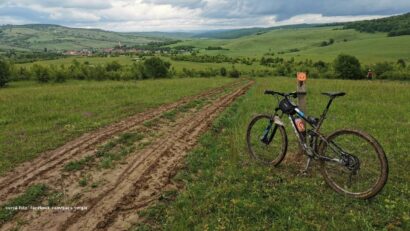
“I’m referring, first of all, to the caves, many of which are accessible to visitors. We also have a network of more technical caves that can only be visited with a guide and with special caving equipment. There is also a number of Via Ferrata routes, a rafting course, and many areas for practicing cyclotourism and mountain biking. The rocky sides of Pădurea Craiului are perfect for rock climbing. Tourist can also go hiking and educational trails are available to children, as well as adults. Last but not least, the area is good for mountain running, for which we have a developed infrastructure and, lately, the horse-back riding business has also developed a little, so there’s also that for tourists. It’s important to note that the area is also suitable for relaxation, whether it’s in the garden of a local guesthouse, often a traditional house that has been restored, or in a tent on glamping sites and campsites.”
A Via Ferrata route means climbing rock walls, stepping on metal pieces, firmly fixed in the rock, secured with specific equipment, by a metal cable. In short, maximum adventure with minimum risks. The Via Ferrata routes in Pădurea Craiului offer challenging experiences to both beginners and the most experienced. Viorel Lascu, cave diver and mountaineer, tells us more about the history of the via ferrata trails:
“The history of the Via Ferrata dates back to the Second World War, when Italian troops had to cross from one side of the mountain to the other. They created iron steps with cable. After the war, they started to be used as tourist trails. Thus, from one place to another, the Via Ferrata route was developed. In recent years, it has become very popular. We have designed routes in this area, many for professionals, but the number of professional climbers has decreased, there are not so many anymore. However, the Via Ferrata area can be accessible to everyone who is fit enough and has a minimum of training. You don’t have to be a professional. Next to those iron steps, there is a cable we call “the cable of life”. It starts from the bottom, from the beginning of the route, to the exit of the route. For their own protection, tourists wishing to go on Via Ferrata must have a harness with silencer, silencer, helmet and, if they want to, gloves.”
At the start of the trails, you will also find a small QR code. By scanning it with your phone, you’ll find out all the details. It’s something that helps the tourists, cave diver and mountaineer Viorel Lascu says. There are many trails, of various degrees of difficulty, for advanced, beginners, but also for children.
“We have a trail, for example, made before the two professional tracks, called Piticot. It’s for children, and it’s 20 meters high at most. I see the parents standing on the sidelines and cheering them on, but they don’t realise that 20 meters is a lot. It’s as high as a four-story building. But gradually you start to get used to it. Those who finished the small routes a few years ago have already moved on to the big ones. The big ones reach heights of 40, 60, 80 meters. The vast majority of routes are approximately 150 meters long. Each Via Ferrata route is different, because the rock is different. All are beautiful, all must be tried. We’ve noticed that there are already people who want to experience all Via Ferrata routes in Romania.”
Pădurea Craiului is also crossed by a European route of wooden churches, says Paul Iacobaș, manager of the Center for Protected Areas and Sustainable Development:
“We are specifically referring to two historical monuments: the wooden church in Beznea and the wooden church in Valea Crișului, both located near Crișul Repede, in the northern part of the area and easily accessible. But there are others. For example, there is still a wooden church in the northern area at Josani, in the village of Măgești. There are also churches in the southern part. Even if they are not that valuable, because they are not listed as a historical monument, they are very interesting because of the architecture and the paintings inside, the age and the fact that they have lasted for so long.”
On the page of the ecotourism destination padureacraiului.ro, you will find detailed information on all tourist activities available in the area, both above and beneath the ground.