Via Valahia – A unique Trail
Traveler's Guide takes you on a trip to Via Valahia
Daniel Onea, 22.10.2026, 14:00
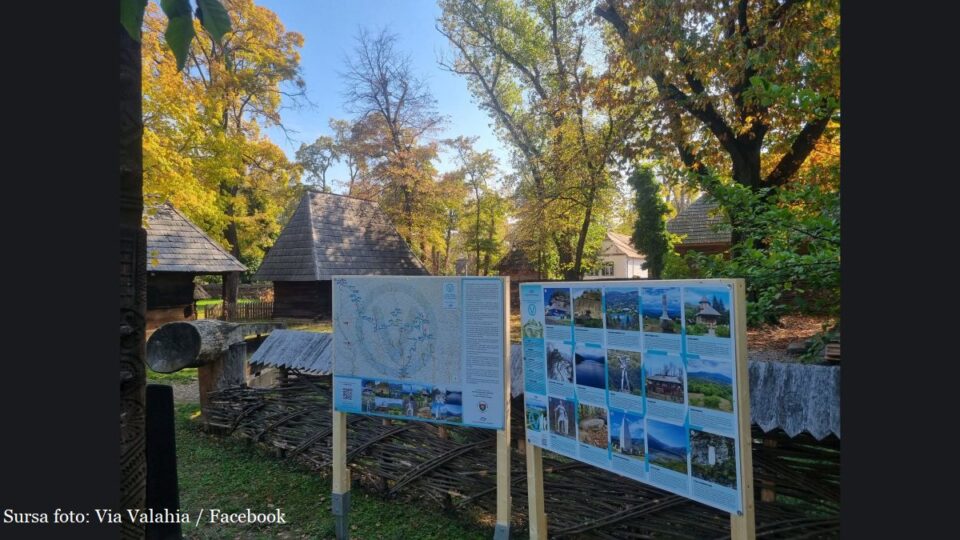
The southern area of the Făgăraș Mountains is attracting an increasing number of tourists thanks to its spectacular landscapes and new initiatives to promote local heritage. The region’s most ambitious project, “Via Valahia,” launched in 2020 by the Vidraru Mountain Association, has grown into a network of approximately 150 kilometers, connecting the Argeș Valley with the Land of Loviștea. It is a journey designed to showcase history, nature and traditional landmarks. All the routes can be found at viavalahia.ro, where visitors can also explore detailed maps and video presentations.
The idea emerged from a practical need, but also from a desire to revitalise local communities, explains Mihai Răvescu, a founding member of the Vidraru Mountain Association.
Mihai Ravescu: “The lack of hiking trails was one of the starting points for developing this project, while the second was the desire to connect various attractions across Argeș County. We therefore identified the main points of interest: Corbi, Nucșoara, Brădet, Corbeni and others. That is how we began developing the project called Via Valahia, which consists of an easy hiking route designed for families and people of all ages. Alongside enjoying physical activity, tourists can discover the history of the Romanian people.The first completed section connects Corbi and Nucșoara, both communes with a rich history. In Corbi, visitors can find Corbii de Piatră (the Stone Ravens), one of the oldest rock-hewn churches in Romania. Nucșoara is historically known for its anti-communist resistance; it is home to the memorial house of ElisabetaRizea. Geographically, the commune is also home to Lake Învârtita, the largest lake in Romania formed in gypsum.”
The commune of Nucșoara has become a genuine tourist magnet. In addition to the lake, visitors are drawn to the Partisans’ Altar and the unique “Forest of Immortal Stories” project, where centuries-old beech trees can be “heard” by scanning QR codes. The human dimension plays a central role in the development of the area, adds Mihai Răvescu.
Mihai Ravescu: “Obviously, there is still much more to discover, including local traditions, producers and craftspeople, all of which we intend to promote along the way. Via Valahia is not just about hiking; it is also about people. On the project’s website, we highlight local residents and the area’s resources so that every tourist can get to know them better.”
Attracting travel agencies and including the trail in the 2026 calendars of guided hikes have boosted the local economy and prompted improvements to access infrastructure. Visitors are invited to explore the Brădet–Nucșoara section, an easy route of approximately 10 kilometres. The trail has been designed to be accessible to everyone, emphasises Mihai Răvescu, a representative of the Vidraru Mountain Association.
Mihai Ravescu: “At Corbii de Piatră Monastery, there are several local guides who, although they may not have official certification, tell fascinating stories that take visitors more than 800 years back in time. This monastery is a genuine ‘miniature Meteora’ of Romania.Afterwards, I would encourage tourists to follow Via Valahia to Nucșoara, where they can visit ElisabetaRizea’s house and Lake Învârtita. From there, they can climb a nearby, easily accessible peak, offering magnificent panoramic views of the Vâlsan Valley and the Doamnei River.The route continues towards the Vâlsan Valley, where visitors can learn about the asprete, a fish considered a relic of the Cretaceous period. Next comes the church in Brăduleț, regarded as the younger sister of Cozia Monastery, followed by the ethnographic museum in Galeșu. All these attractions are easily accessible, both on foot and by car, and offer a pleasant way to spend an afternoon.”
Beyond the villages steeped in history, Via Valahia also includes mountain landmarks that satisfy the appetite for adventure outside the warmer months. Dumitru Grecu, president of the Transfăgărășan Tourist Association and a promoter of tourism in the area, explains more about these attractions, which fit seamlessly into the region’s cultural and tourist circuit.
Dumitru Grecu: “There is a trail that becomes even more spectacular as the water freezes. It is the Valealui Stan trail, probably one of the three most spectacular hiking routes in Romania. Many hiking and adventure enthusiasts come here to explore it. Then, of course, there is the Transfăgărășan. Although the alpine section is closed during winter, visitors can still travel almost as far as the restricted section. When snow falls, large numbers of tourists arrive to enjoy the scenery and the small ski slopes set up on an ad hoc basis. In addition to these attractions, there are numerous experiences connected with folk traditions and local cuisine.”
Another key point along the itinerary is an impressive infrastructure project located near a historic monument with international renown. As travellers continue along the route, the natural landscape is complemented by an outstanding feat of engineering and a medieval fortress that has captured the curiosity of people around the world. Local legends intertwine with documented history, turning the area into a major attraction for enthusiasts of both mythology and historical fact. DumitruGrecu tells us more about these two important landmarks, which are an integral part of the tourist experience in southern Romania.
DumitruGrecu: “Among the area’s outstanding attractions are Lake Vidraru and the Vidraru Dam. The dam is an imposing structure dating from the 1960s, a spectacular sight that never fails to delight visitors.The lake itself is also an attraction during winter. Boat trips are organised, offering an even more impressive experience when the snow-covered mountain peaks can be seen in the distance.The Poenari Fortress is also located in this mountainous area and has already become part of the international tourist circuit. Many foreign visitors come to see it, as it is a famous destination associated with the legend of Dracula. It is the only truly original fortress reconstructed by Vlad the Impaler in 1462.”
Thus, the southern Făgăraș Mountains demonstrate how unspoilt natural areas can become thriving tourist destinations. By exploring the different sections of Via Valahia, from guided hikes in Nucșoara to the magnificent landscapes of the Stan Valley and the Vidraru Dam, visitors can discover a sustainable tourism experience in Argeș County that directly supports rural communities.
(bill)