Fianancial decisions from the ruling coalition
Romania's ruling coalition reaches agreement on raising the minimum wage from 1st July 2026.

Roxana Vasile, 18.12.2025, 13:50
Romania’s four-party ruling coalition reached an agreement on Wednesday on increasing the minimum wage from July 1, 2026, to 4,325 lei, the equivalent of approximately 865 euros. The coalition also agreed on a 10% cut in expenditures in the central administration, without affecting the level of basic salaries. With respect to the local administration, a previous decision was maintained to reduce the number of existing posts by 30% across the country, with a maximum brake of 20%, which means an actuial cut of 10%.
By December 31, the coalition is due to establish the new local taxes and fees, some of which are expected to double, that the population will have to pay to the state starting next year, with decisions in this regard to be communicated to the public finance directorates. The Liberal Prime Minister Ilie Bolojan said this measure should have been taken three years ago, and was also part of Romania’s commitment under the National Recovery and Resilience Plan, but those who were in government previously did not want to stir discontent.
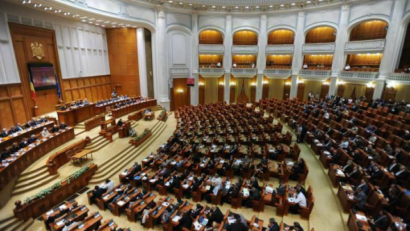
Because the austerity measures taken since summer to reduce Romania’s abysmal budget deficit have mainly been shouldered by the population, the four ruling parties, PSD, PNL, USR and UDMR, have now announced that they are also considering a 10% cut in the otherwise very substantial lump sum senators and deputies receive, as well as in the level of subsidies received by political parties.
The minimum turnover tax will be reduced to 0.5% from January 1, 2026 and will be eliminated altogether in 2027. The governing coalition said it would provide a detailed account of the measures envisaged to stimulate the economy before the adoption of the budget bill for next year, so that they would be included in the budget.
The minimum turnover tax should be eliminated and the minimum wage should be raised to match the inflation rate, says financial analyst Adrian Codirlaşu, the president of the CFA Romania Association, an organisation of investment professionals. In his view, the tax is bad for both employees and businesses, which is why some companies in the car industry and other trading companies have already announced their departure from Romania.
As for ordinary citizens, the most severely affected are, of course, people with low incomes, for whom paying for food or utilities is becoming a major problem. At a macro level, the sharp decrease in consumption in recent months could push Romania into a technical recession, signalling an economic slowdown that may affect investments and the labour market.
Trade unions are not satisfied with the measures and explanations provided by the government. They say that at the moment, every party in the coalition is proposing measures to solve the problems of its respective voters, rather than measures to boost the economy and the labour market.