A slower decline in consumption
Political tensions are raising uncertainty in the Romanian economy
Bogdan Matei, 08.05.2026, 14:00
Higher VAT, local taxes and fees that have tripled in some places, record inflation for an EU member state, a slew of small and medium-sized enterprises going bankrupt, mass layoffs at large companies, constant fluctuations in the fuel and currency markets—nothing has encouraged Romanians’ appetite for consumption lately. However, the decline slowed down in March compared to the trend in the first two months of this year. It remains, however, in the red for the eighth consecutive month, according to data provided by the National Institute of Statistics. According to the source, as a seasonally adjusted series, which accounts for the number of working days and eliminates predictable periodic influences such as holidays, weather, or vacations, retail sales fell by 3.2% in March compared to the same period in 2025, but rose by 2.6% compared to February. The decline was driven by a 7.4% drop in non-food sales and a 3% drop in food and beverage sales.
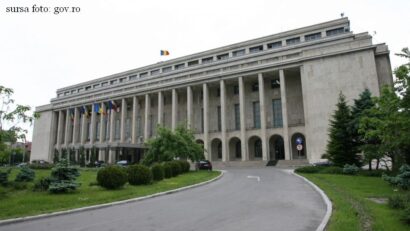
The European Union’s statistical office, Eurostat, has announced that Romania and Germany are the only European Union member states where retail trade volume declined in March. Following the ouster, via a no-confidence vote, of the government—which had been described as pro-Western and had become a minority coalition of the PNL-USR-UDMR, led by Liberal Ilie Bolojan—everything is now shrouded in political uncertainty, which is amplifying economic turmoil. The national currency, the leu, appreciated very slightly against the euro on Thursday, for the first time in the past week. On Wednesday, it had reached a historic low of nearly 5.3 lei per euro.
The Spokesperson for the National Bank, Dan Suciu, warns that the leu exchange rate will continue to be volatile and states that everything depends on the political class. Dan Suciu:
“It’s a period of instability; you can feel it in the markets, it’s a turbulent time. The markets are waiting for many answers regarding Romania’s political and financial situation. In the coming period, we will likely see exchange rate fluctuations, probably in both directions, but until we have clear answers regarding Romania’s political and financial stability, tensions may continue. This is a situation we are navigating; we are trying to manage it at the National Bank with all the resources and tools at our disposal, but the answers lie elsewhere—not at the National Bank—to reassure the markets. We do not put forward figures or levels; we must find an optimal solution for the given situation, taking into account all the resources we have and all the constraints under which we operate; those related, as I said, to finding an answer to the question regarding governance and financial-political stability.”
However, leading figures from the parliamentary parties acknowledge that they have not yet found a formula for a new government capable of governing the country.