Budget deficit decreases in Q3
Romania’s budget deficit has declined this year, but this reduction must not compromise people’s living standards, the government in Bucharest says.
Sorin Iordan, 04.11.2026, 14:00
Romania’s budget deficit narrowed to 3.81% of GDPin the first nine months of 2026, down from 5.31% in the same period last year, the Ministry of Finance announced. The deficit reached around €14.6 billion, roughly €4.5 billion below the level recorded in the first nine months of 2025. The Ministry of Finance noted that, alongside the deficit reduction, public investment grew by approximately 30% to over €20 billion, with more than 65% financed through European funds.
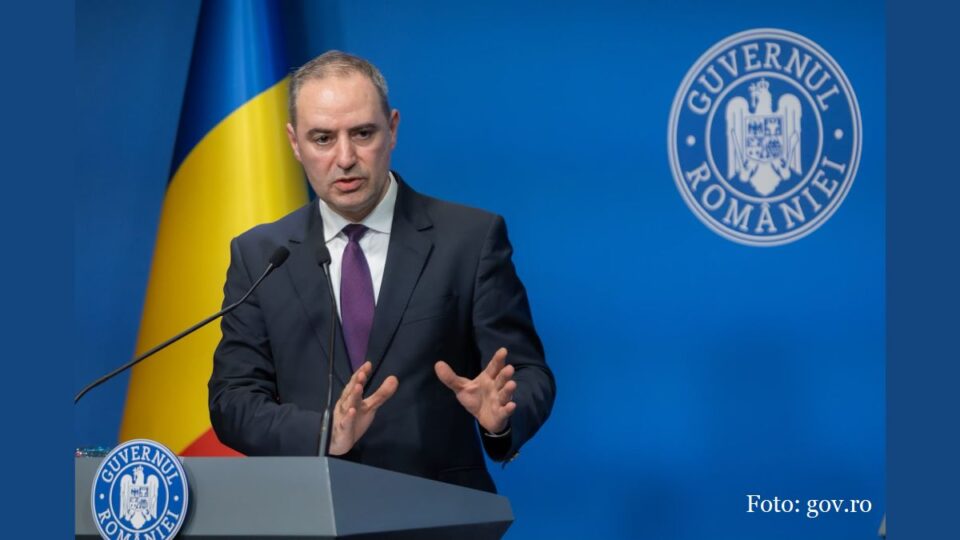
However, Finance Minister Alexandru Nazare warned that reaching the year-end deficit target of 6.2% depends on receiving the final tranches of the National Recovery and Resilience Plan (PNRR), which will bring approximately €4 billion into the state treasury. He emphasized that interest on public debt, which has exceeded 3% of GDP, exerts significant pressure on the budget.
“Our public debt has grown, accelerating over the past five years at an incredible pace. What, essentially, is public debt? It’s a sort of sack into which we throw each year’s deficit, and the larger the deficits, the heavier the sack becomes, harder to carry and incurring higher costs. And here we are, reaching 3% or slightly over 3% in interest costs, meaning that practically half of this year’s forecasted deficit consists solely of interest payments. It is becoming increasingly difficult to bear. It is therefore imperative that we do everything in our power to lower financing costs.”
Alexandru Nazare stated that next year, Romania must continue fiscal consolidation, targeting a budget deficit that moves down toward 5%. He pointed out that reducing the deficit would free up resources for the private economy, noting that the Bucharest government is counting on encouraging private investment through measures such as eliminating the minimum turnover tax by the end of this year, introducing investment incentives, and launching an administrative simplification package for businesses.
Romania must continue fiscal consolidation to reduce its budget deficit and align with the trajectory agreed upon with the European Commission, but the adjustment cannot be made by ignoring the hardships faced by the public, stated Romanian Prime Minister Luca Niculescu. He recently held a series of meetings with representatives from both the business community and trade unions. Unions are pushing for an increase in the minimum wage in 2027, while employer associations are requesting a wage freeze.
In an interview with the public broadcaster, the Prime Minister noted that purchasing power has already been impacted, and new austerity measures could exacerbate social tensions. Luca Niculescu announced that the Ministry of Finance will present an evaluation of the fiscal and budgetary situation in two to three weeks, which will serve as the basis for determining upcoming economic measures. (VP)