Discussions on Romania’s National Recovery and Resilience Plan
The Romanian Government has completed the revision process of the National Recovery and Resilience Plan (NRRP).
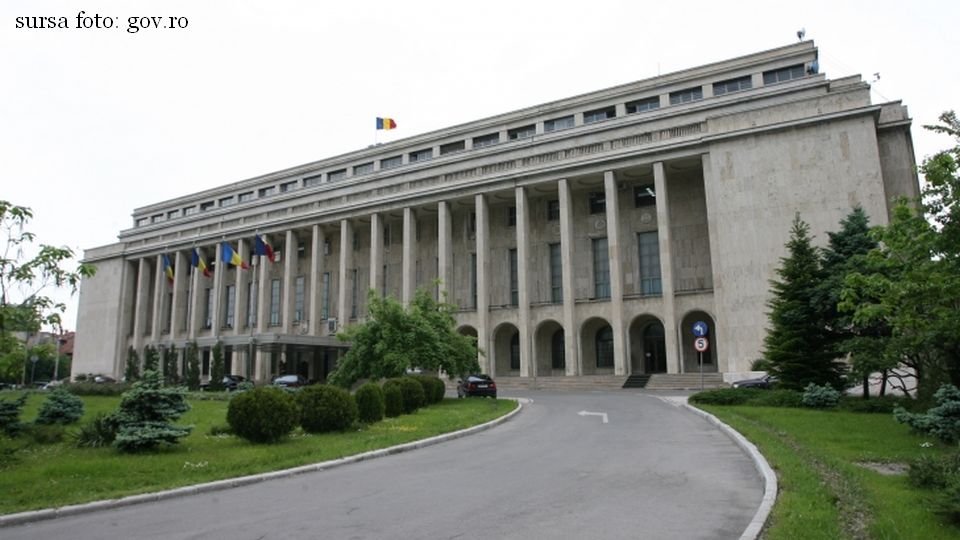
Mihai Pelin, 17.07.2026, 12:35
The revision process of Romania’s National Recovery and Resilience Plan (NRRP) has been completed following the latest round of negotiations with the European Commission. The Plan has now entered its final implementation phase, during which all projects and administrative procedures must be accelerated in order to meet the agreed milestones and fulfil Romania’s commitments by 31 August.
The revision was primarily aimed at aligning investments and reforms with their actual stage of implementation, enabling Romania to absorb as much European funding as possible while avoiding the loss of allocated resources. To achieve this, the ministries and public institutions responsible must, in the coming weeks, complete all supporting documentation, legislative acts, administrative procedures and audit requirements necessary for submitting Payment Request No. 5. They must also demonstrate to the European Commission that the agreed reforms are irreversible, that EU funds have been spent in accordance with the rules, and that there is no risk of double financing for any project.
According to the timetable agreed with the European Commission, the new payment request will be submitted at the beginning of August, following the formal approval of the revised NRRP by the Council of the European Union. After the Commission’s assessment, Romania is expected to receive approximately two billion euros, which will finance investments in infrastructure, healthcare, education, energy and digitalisation.
Analysts warn, however, that Romania’s ongoing political uncertainty could jeopardise billions of euros in NRRP funding due to the lack of political consensus required to establish a new government. Although the leaders of the former governing coalition—PSD, PNL, USR and UDMR—signed an agreement this spring committing themselves to supporting the reforms included in the NRRP, that agreement is now widely regarded as little more than a statement of intent.
Several reforms worth more than 4.5 billion euros are awaiting parliamentary approval in the coming weeks. Their adoption is essential if Romania is to secure the corresponding European funding. Among them is the Urban Planning Code, which President Nicușor Dan recently discussed with representatives of the parties that formed the former governing coalition. The participants reached a consensus on advancing the initiative. The legislation is expected to simplify and harmonise the rules governing spatial planning, construction permits and urban development.
Another key reform included in the NRRP is the Unified Pay Law, which has been strongly criticised by trade unions that have announced a series of strikes. Employees argue that their incomes have been reduced, that staff shortages remain unresolved, and that some provisions expected to be included in the new legislation are a cause for concern.
Trade union representatives recently met with interim Prime Minister Ilie Bolojan to present their observations and proposals regarding the draft Unified Pay Law. According to Ilie Bolojan, the objective is to establish a fairer, more predictable and fiscally sustainable public-sector pay system, by gradually correcting the existing wage disparities. (EE)