Getting ready for winter
Romania is getting ready for the upcoming cold season with natural gas storage above the EU average
Daniela Budu, 16.09.2026, 13:50
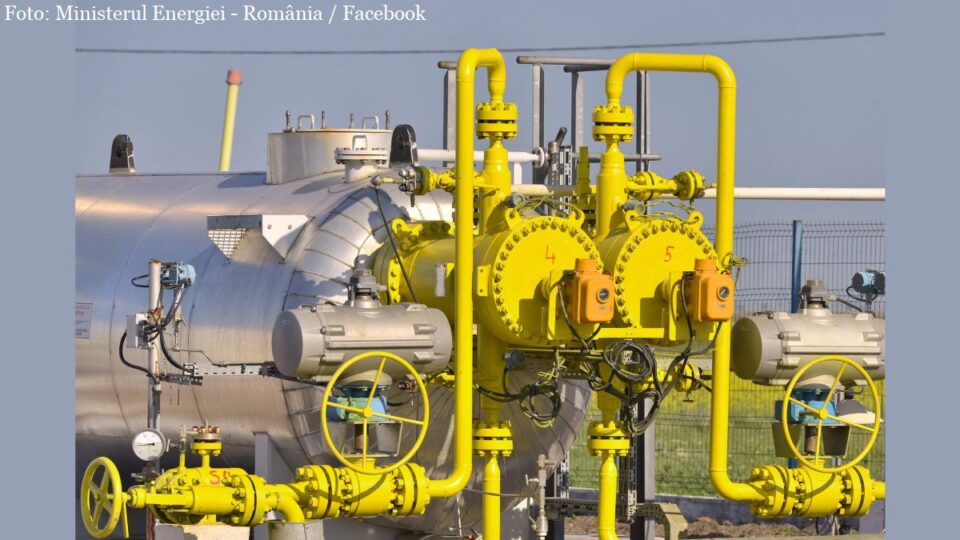
Europe is getting ready for a difficult winter marked by pressure on the international markets and higher gas and energy prices. The Energy Ministry in Bucharest is announcing upon the Energy Command dedicated to the natural gas sector, that Romania reached a degree of filling its natural gas deposits over 76%, the equivalent of 2.4 billion cubic meters, above the EU average of 68 %.
According to a communiqué by the field ministry, authorities want to reach the 80% level by October 1, an objective also confirmed by the operators who must build stocks and who say they are on schedule to meet that goal.
‘The Energy Ministry is monitoring the storing process so that Romania may enter the cold season with the right level of gas and with all the necessary measures aimed at getting continuity and safety in terms of gas supply. Preparations for the winter of 2026-2027 are taking place against a difficult background marked by price hikes in natural gas and reduced stocks as compared to previous years,’ a communiqué says. We recall that in Romania natural gas prices for household consumers have been capped until April 2027, though companies are paying market prices.
Cristian Bușoi, State Secretary with the Energy Ministry, has recently confirmed that according to the first forecasts, the upcoming cold season is going to have some ‘cold spells’, but has given assurances the authorities have been continuously monitoring the process of ensuring the right gas stocks.
In another development, according to the latest data released by the National Institute of Statistics, the final electricity consumption in Romania dropped by 4.3% in the first 7 months of 2026, as compared to the same period last year, whereas the domestic production dropped by 2.9%.
According to experts, for the energy market, a drop in the population’s energy demand is a relevant factor in assessing the domestic consumption and production need for the following period.
We recall that Romania has been in a state of energy alert since August 1, after the shutdown of the first reactor at the nuclear power plant in Cernavoda, due to the low level of Danube’s waters. It was followed by the second reactor’s shutdown on August 13th. In normal exploitation conditions, the aforementioned two units account for roughly 20% of Romania’s electricity production. Part of the difference has been covered with electricity obtained from burning gas. Due to the drought and Danube’s low level, the state of alert in Romania’s energy sector has been extended until September 30th. The Danube’s water level has dropped to alarming levels at its entrance in Romania, way under the multiannual average of September. This low level is bearing on the functioning of the country’s national energy system and the water supplies for the nuclear power plant in Cernavoda, south-eastern Romania.
(bill)