The European Political Community Summit in Dublin
Russia has destroyed the peace established on the European continent after the Second World War, European leaders meeting in Ireland to discuss ending the war in Ukraine have declared.
Sorin Iordan, 13.11.2026, 14:00
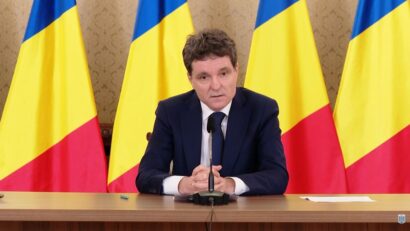
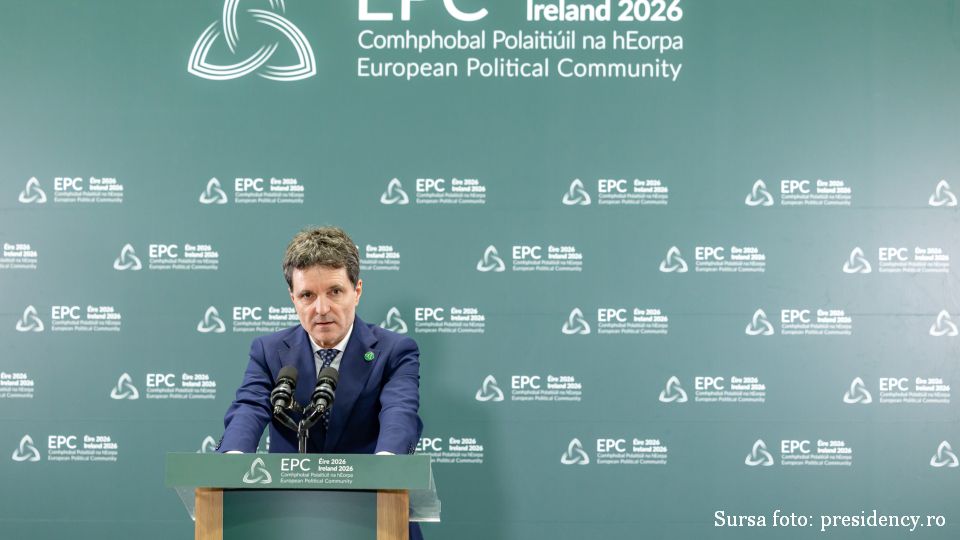
The European Political Community summit was held in Dublin, Ireland, on Thursday, bringing together heads of state and government from across the continent. Romania was represented by President Nicuşor Dan, who took part in several meetings and round-table discussions in various formats, focusing on security issues.
Nicuşor Dan: “The Black Sea was mentioned on several occasions as a security risk for Europe. There was discussion of the need for cooperation, with considerable emphasis on hybrid warfare and disinformation campaigns. The need to have more trading partners in a world undergoing rapid change was also highlighted. There were then several thematic round-table discussions, including one of direct relevance to us, which addressed both the security challenges facing the Republic of Moldova and its European path.”
The main issue on the summit’s agenda, however, was the war in Ukraine. European leaders sent a united message to Russia and the United States, whose representatives had met in Abu Dhabi, in the United Arab Emirates, to discuss peace proposals for Ukraine. They stressed that Europe’s security must be restored on the basis of the arrangements and principles that were in place before Moscow’s forces invaded the neighboring country.
European Council President António Costa said Europe needed to return to the security architecture that had maintained peace on the continent after the Second World War, a peace destroyed by Russia despite the fact that no one had ever threatened it.
António Costa: “Europe had a functioning European security architecture until it was first gradually undermined and ultimately destroyed by Russia’s invasion of Ukraine. The inviolability of borders, the territorial integrity of states and the peaceful settlement of disputes – these principles remain just as relevant today as they were 50 years ago. The European Union will continue to defend them, standing shoulder to shoulder with Ukraine.”
German Chancellor Friedrich Merz, for his part, said that, should European countries take part in negotiations between Ukraine and Russia, primary responsibility would rest with Germany, France and the United Kingdom, potentially joined by Italy and Poland. He argued that the so-called E3 format had proved its effectiveness as a framework for such talks. The German Chancellor said developments in the recent discussions in Abu Dhabi offered grounds for cautious optimism and raised hopes that the way might be opened towards a genuine and lasting peace on the European continent.
Ukrainian President Volodymyr Zelensky, however, warned that Europe needed to remain vigilant, as security guarantees discussed by the Americans and Russians were not confined to Ukraine but were, rather, part of a broader discussion about a new security framework between Europe and Russia.
Nicuşor Dan assured that, whatever demands Russia might put forward, Romania’s membership of the Euro-Atlantic structures would never be called into question. (EE)