
200 years since the birth of Alexandru Ioan Cuza
Alexandru Ioan Cuza was the first ruler of the united principalities of Moldavia and Wallachia.
Steliu Lambru, 30.03.2020, 14:00
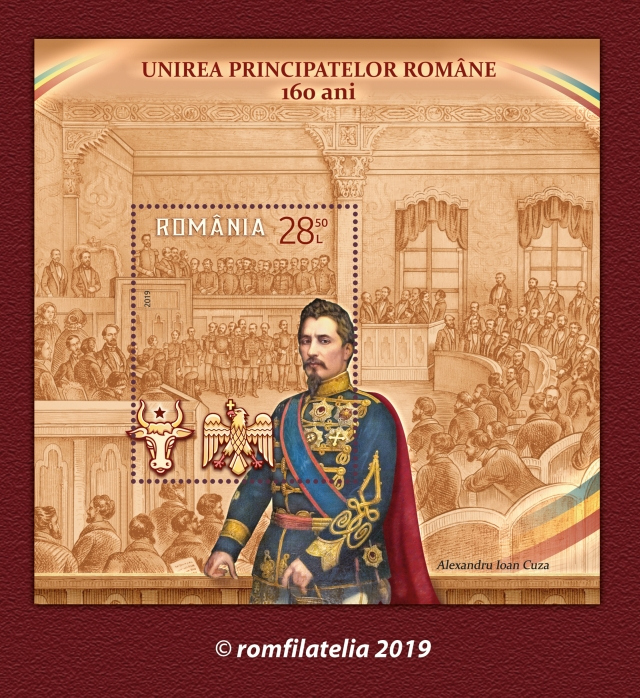
Colonel Alexandru Ioan Cuza, the first ruling prince of the
united principalities of Moldavia and Wallachia, was born on the 20th of March,
1820 in Barlad, the eastern part of today’s Romania. Cuza was the right man
at the right time, and just like the Romanian elite of that time, he was well
aware of the fact that his 7-year rule was temporary, in keeping with the
documents signed by the Great Powers who had agreed to the union of the two
Romanian principalities.
On January 24, 1859, Moldavia and Wallachia united to form
Romania and, through the election of Alexandru Ioan Cuza as ruling prince of
Moldova and Wallachia, the union became centralised. Supported by most
political actors and by the elites who fought for national emancipation and
modernisation, Cuza carried out reforms that were vital for the Romanian state,
such as the secularisation of monastic estates, the fiscal reform and the
agricultural reform. Historian Alin Ciupala, a professor with the University of
Bucharest, believes that Cuza was the man whose courage Romania badly needed
during the transition period that followed after the union of Moldavia and
Wallachia:
Alexandru Ioan Cuza was, first of all, a very brave man. He had
the courage to be a leader and carry out a mission at a very delicate time in
history, a time of uncertainty and of high hopes. He had the courage to coordinate
a coherent project to modernise Romanian society, the Romanian Principalities.
It was he who introduced a modern institution system that set Romanian society
on a path towards Europe.
Over 1859-1863 Cuza
introduced a wide range of reforms, helping build a new state, pattern on the
European modern nation-state. 1863 marks a milestone in Cuza’s reign, as his
rule turned towards authoritarianism, fueled by a profit-making camarilla which
endangered everything he had achieved that far. Alin Ciupala:
At the same time,
Cuza’s rule has a dark chapter. At a certain point Alexandru Ioan Cuza decided
to oversee the modernisation process himself. After the coup of May 2, 1864,
Cuza becomes isolated, all alone. He distances himself of all his associates,
first and foremost 1848 revolutionaries, who had gone to great lengths to have
him elected as ruling prince. His entire administration can be seen in balance
– we have to acknowledge Cuza’s achievements while at the same time recognise
his failures. His removal from the throne was
supported by the entire political class, for Cuza had gradually turned from a
moderniser into an obstacle to modernisation. Cuza’s political mistake was that
he did not understand that modernisation was not possible without liberalism.
The
Romanian elite was quick to react to Cuza’s new way of
doing politics. On 11th February 1866, seven years since he was
elected, on 24th January 1859, Cuza was removed from power by the
army and former supporters. He was followed on the throne by Carol of Hohenzollern-Sigmaringen,
the future King Carol I, during whose reign Romania would lay down firm
foundations. Alin Ciupală believes the reigns of Cuza and Carol I should not be
viewed in competition with each other:
The continuity is
important because, after the ousting of Alexandru Ioan Cuza, prince Carol and
his political supporters did absolutely nothing to repeal the measures adopted
during Cuza’s reign. On the contrary, all initiatives and projects begun by
Cuza would be continued throughout the course of the second half of the 19th
century. In fact, we need to say that after 1866, the ruling prince who was to
become King Carol I later did not make any efforts to obliterate the public
image of his predecessor, on the contrary. To a certain extent, Carol built his
own image as an outgrowth of Cuza’s image. If we read the mainstream history
textbooks, if we take a look at everything that meant Alexandru Iona Cuza’s
entering posterity, we will discover, until World War One, a great many facts
and events having Cuza at the centre. There were political interests attached
to that, that’s for sure. King Carol placing himself, chronologically, among
Romanians’ great voivodes, somehow including Cuza in his dynastic discourse, all
that revealed obvious political interests, undoubtedly foreseeable, in the long
run. During the reign of Carol I as well as during the inter-war period, the
image of Alexandru Ioan Cuza was not banned, it
was not taken out of the history of Romanians. So we can see how, gradually,
mainly the historians, but also other important actors, forgot about the flaws
of Cuza’s reign, taking into account only his accomplishments.
200 years ago,
Alexandru Ioan Cuza emerged as one of the most promising political leaders in
the history of the Romanian people. He accomplished his mission, despite his
flaws and vices, which were all too human. Cuza succeeded in placing the new
Romania on a modern and European path.


























