
Ion Ratiu or the Story of Democracy in Exile
Ion Ratiu was one of the most prominent and outstanding Romanian democratic politicians after 1990, who militated both against the fascist and communist dictatorships
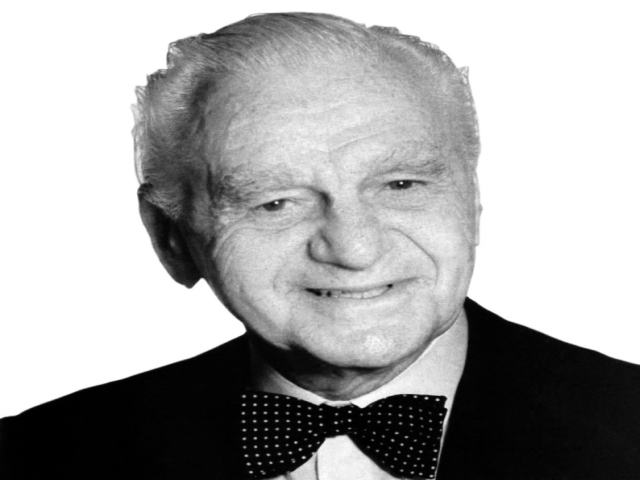
Steliu Lambru, 28.08.2017, 12:05
After his return to Romania in 1990, Ion Ratiu was one of the leaders who rebuilt the National Christian Democratic Peasant Party and contributed to the efforts of restoring a democratic climate to Romania. He was born in the Romanian Western city of Turda, on June 6, 1917, into a family of Romanian intellectuals who had fought for the national rights of the Romanians living in the Habsburg Empire and Austro-Hungary.
He got a degree in law in Cluj and in economics at Cambridge and was an active member of the National Peasant Party. In 1940 he started working as a diplomat at the Foreign Ministry and was sent to London, in February 1940, shortly before the fall of France. After the occupation of France, the main ally of Romania, Ratiu continued to work at Romanias Legation in Great Britain until early September 1940, when the power in Romania was seized by general Antonescu and the Iron Guard. An anglophile and francophile, Ratiu refused to accept the idea of Romanias joining the coalition led by Nazi Germany.
In 1985, in an interview aired on the show Actualitatea românescă (Romanian current affairs) on Radio Free Europe and kept in the archives of the Oral History Centre of the Romanian Radio Broadcasting Corporation, Ion Ratiu spoke about the circumstances which prompted him to remain in Great Britain: “After King Carol II left the country and the legionnaire state was established, I tendered my resignation, in September 1940. I went to the British Foreign Office to seek political asylum, which I was granted immediately. I was extremely fortunate to get a grant to Cambridge, where I studied for three years, getting a Master of Arts diploma in economics. While in Cambridge, I made a long series of radio broadcasts on patriotic issues regarding Transylvania, particularly after Romania lost Northern Transylvania in 1940, and I was an active member of the association of Romanian students in Great Britain.
Ion Ratiu was also involved in propaganda aimed at taking Romania out of the Axis Alliance and making it join the United Nations. But he wanted Central and Eastern Europe, including Romania, to remain under the influence of the Western democracy at the end of the war: “I was part of the International Students Council where they made me vice-president during the war, as well as the World Youth Executive Committee. We all took a concern in Europes future after the war, as we were all exiled to England. So we set up an organization, ‘Center East European Student – A New Society, namely the society of students and youth from Central and Eastern Europe. Moreover, despite my young age, I was called up to join the movement of free Romanians who opposed Romanias rallying the policies of Nazi Germany, and who advocated Romanias place amongst the Western superpowers, who had created Greater Romania. During this period I wrote press articles, I organized conferences, I also spoke on the public radio, the BBC.
Ion Ratiu became a successful businessman, and yet he did not idly stand by watching Romania get swept by communism. He set up an anti-communist organization, the World Union of Free Romanians, and started a democratic newspaper, The Free Romanian, which quickly became one of the most influential publications of Romanian exile.
Ion Ratiu: “We started editing a news bulletin ever since 1955 in English, which we brought out on a weekly basis. We called it Free Romanian Press and it was aimed at keeping the press and influential politicians from the West and England in particular in the loop with respect to the developments in Romania. 20 years on we turned this paper into a more sophisticated mimeographed publication, which bore the same name, except it was a sort of monthly booklet published in English and French. In 1965 we founded the Acarda Cultural Association of Romanians in England. Although it was labeled a cultural association, according to our Transylvanian tradition from the past, it was as much a political organization as it was cultural, which we used to voice our aspirations.
In 1985 Ion Ratiu was confident that only by uniting could Romanians restore democracy. Therefore his organization addressed everyone who wanted to get involved in this effort.
Ion Ratiu: “In 1980, together with Prof. Brutus Coste from America, we appealed to the general public that it was high time we did something to earn our country a worthy representation in the West. There was a Romanian Committee that was functional up until 1975. We thought that this is a fight worth taking, so we mustered our efforts and set up the World Union of Free Romanians in 1984. From the very onset we made it a point about making our organization non-political, and called on all Romanians who wanted to do something for the country to come join us, irrespective of the party they were members of. It doesnt mean parties should stop existing altogether. On the contrary, we need parties, as there is no democracy without political parties.
Returning to Romania in 1990, Ion Ratiu continued to foster his democratic beliefs and principles to the extent that he became a symbol of morality. He died on January 17, 2000 in London and was buried in his native town, Turda, as per his request.


























