
The Civic Alliance
After 1989, Romania was short of a forum for exchanging ideas and promoting political initiatives.
Steliu Lambru, 25.09.2017, 13:05
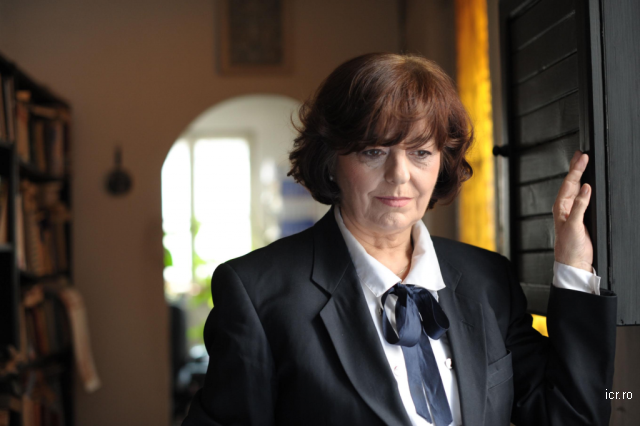
After 1989, Romania was short of a forum for exchanging ideas and promoting political initiatives. The Civic Alliance therefore emerged to fill this gap, functioning both as a non-governmental organization and as a forum for debating ideas. The Alliance also served as a springboard for upcoming opposition politicians who used it to take a stand against the National Salvation Front, which had taken the place of the communist party. On November 7, 1990, the Civic Alliance was founded through the efforts of such organizations and associations as the Group for Social Dialogue, the “November 15” Association in Brasov, the University Solidarity, the “Timisoara” Society, the “Agora” Society in Iasi, the Independent Group for Democracy, the Pro Democratia Association. Writer Ana Blandiana, dissident of the communist regime, was instrumental for the establishment of the Civic Alliance.
She recalls the context prior to the setup of the alliance: “After the miner raids of June 1990, while students were still being picked up by the police, we decided it was high time we took action. Even if we had been unsuccessful, we would at least have done something. So we put an ad in the ‘Romania Libera’ newspaper”. It is very unfair that nowadays nobody talks about Bacanu and the ‘Romania Libera’ newspaper as it was back then. Without this newspaper, which was selling in hundreds of thousands of copies, there would have been no Opposition whatsoever in Romania. This was our very home. Rallies with hundreds of thousands of participants would start with a 10 square centimeter ad on the front page of ‘Romania Libera,’ reading, for instance, ‘Thursday 16.00 hrs, University Square.’ This small ad would bring so many people to the streets, that the entire boulevard between University Square and Victory Square would be filled. All this with just one ad, there was no Facebook back then. When we thought about putting an ad in ‘Romania Libera,’ we figured several hundreds of people would show up. Instead, there were hundreds of thousands. And then there was the so-called ‘white rally,’ when we told people to come dressed in white clothes and carry a flower in their hands, to prove that we were not violent. That was a turning point.”
The Civic Alliance also embraced a national education goal: that of talking about the country’s communist past, in the form of a Memorial for the victims of communism, hosted by the Sighet penitentiary.
Ana Blandiana: “On behalf of the Civil Alliance I traveled to Strasbourg and presented my idea for a Memorial, in fact the first Memorial for the victims of communism in the world. It was 1993, I had been in Krakow for a conference and I went to visit Auschwitz, which is located very close. So I visited Auschwitz and then returned to Strasbourg, where I was to hold another conference before the Parliamentary Assembly. It so happened that after the conference I was invited to a dinner, and with a little help from someone, which I initially took as pure coincidence, I was seated next to the Council of Europe’s Secretary General, Catherine Lalumiere. A day before, I had received a note from professor Enver, a Human Rights director, saying that he and his wife Sanda Cioranescu, would enjoy meeting me for a talk. This is how the Memorial started, out of the discussion with Catherine Lalumiere. I later found out it was professor Enver who arranged that I would sit next to her at the dinner table.”
Those were the years when the united Europe was trying to find itself, years when all people were fighting to eradicate the totalitarian past. Ana Blandiana: “I had never talked with husband before about setting up a Memorial. I was returning from Auschwitz, where a scandal had just ended. The Council of Europe had decided to open an international center for studies on Nazism. During the conversation I asked if they had also considered setting up an international center on communism, about which very little was known back then. Talking about Europe, about the union that needed to take place between the East and the West, I said we should not only unite our public policies and economies, but also our obsessions. And for that, we first need to identify them.”
But there were still difficulties and people were still naïve about a lot of things. Ana Blandiana recalls the rather awkward beginning of the Sighet Memorial: “Now I realize how comical it may sound, but I had never thought about the funds that would be necessary to set up the Sighet Memorial. We thought they would build it and that was all. To be honest, I had never imagined we would do something. But, when we received the leaflets, we saw they printed what we had written in the project and added a new chapter: how the money was to be raised, in a completely unrealistic way for us, specifying how many percentage points would be offered by the local authorities, how many by the central authorities and how many the business sector. And, at that time, we were the number one enemy in Romania, so it was out of the question to receive a dime from either the local or central authorities. One of the conditions set by the Council of Europe was to set up a foundation, the Civil Academy Foundation. It was simple to do that, we set it up, and the idea which brought us to light was to open branches of the foundation in the cities where Romanians living in exile were domiciled: in Munich, Paris, New York and Los Angeles. The little money we managed to raise was collected from the Romanians living abroad.”
The Civic Alliance is today part of the rewritten history of the 1990s. It is a part of history that should be reminded to all those who believe everything is in vain, to those who further believe in democracy.


























