
The Phanariot Manuscript
Some historians like to think of their occupation as a precise science. Others believe that history can be made more relevant through literary procedures. It is the case of Doina Rusti, who has recently published her novel The Phanariot Manuscript
Steliu Lambru, 19.10.2015, 14:04
Some historians like to think of their occupation as a precise science. Others, however, believe that history can be familiar, which would make it no less interesting. They also believe it can be made more relevant through literary procedures, by creating fiction that helps bring to life past eras, morays and mentalities. Historic fiction as a current holds historic novels to be as important for knowing the past as history based on figures and data.
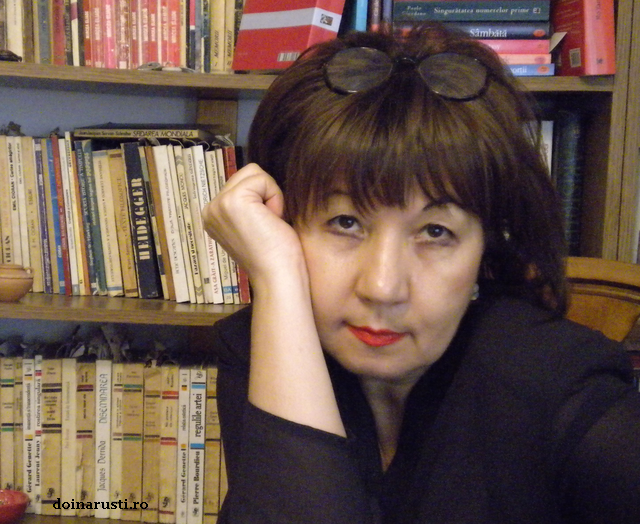
There are many literary productions, especially novels, based on authentic historical sources which make history exciting. Doina Rusti is a writer who has read hundreds of documents dating back to the 1770-1830 period, in order to write the newly published novel “The Phanariot Manuscript”. She uncovered there the story of a young man seeking his fortune in Bucharest. Many more lives and destinies, which weave in and out, are entangled in his story. One of the characters Doina Rusti features is Prince Alexandru Moruzi, who lived between 1750 and 1816.
Doina Rusti: “I am interested in Moruzi, a Phanariot ruler. He was a prince with a very interesting life, who has left behind perhaps the largest number of documents. Moruzi was of Greek extraction and married a Romanian, he held the throne in Wallachia and Moldavia for several short stints, and what got my attention was the fact that he dictated his ideas almost daily. He left behind a whole lot of documents, allowing us to find out what life was like in the Phanariot period. He had a terrible fate, because he was imprisoned by the Turks and sent as a galley slave, working the oars. This character pervades the novel, and at some point I set aside the story of the main character in order to talk about Moruzi’s shadow that looms over Bucharest and became my main character.”
Early 19th century Bucharest was an amalgam of languages and ethnic groups, a Babel tower. One of the major characters in the book was Delizorzo, an alien in that Wallachian melting pot.
Doina Rusti: “Many of the Greeks who came here were in fact Aromanians, Vlachs or Megleno-Romanians, they knew Romanian well, and almost all of them had some connection to the Romanian world. In fact, this is why they were coming here in the first place, they knew Romanian and could get by. One of them was a Metropolitan bishop, the one who overthrew Metropolitan Filaret, and his name was preserved to this day. Filaret was overthrown by Dositei Filiti, known by the moniker of Delizorzo. This Greek came to the Romanian principalities, with a Greek cultural background. He was born of a Greek father and an Albanian mother, who was in fact Vlach. This combination was quite commonplace in the Balkans. Delizorzo was the nickname that the bishop got from the inhabitants of Bucharest, a name I left as such in the novel, and which I had a very hard time working out. It is a funny little name, half Turkish and half Greek. ‘Deli’ means ‘crazy’ in Turkish, but it was meant in a good way, as an endearment, so the name meant ‘crazy Zorzo’. ‘Zorzos’ was a common name in the Balkans, and it sounded so funny to Romanians that they turned it into a nickname. He was quite scatterbrained, like a nutty professor.”
The young man who came to Bucharest to better his station was provided by Doina Rusti with the experiences of another character, a contemporary: “This character, which I found in a manuscript, amazed me by his concise story. He was a Vlach who came to Bucharest setting himself up for great things, who claimed he was a Greek, a foreigner, the son of Radu, a typically Romanian name. In the original manuscript he was called Ion, son of Radu. It was much better to pass for Greek than for Vlach. This Vlach who pretends to be Greek came to be the slave of Doicescu, a nobleman. His is a story of love, desperation and slavery. Ion, son of Radu, came to Bucharest, where he was mistaken for Leun, a character mentioned in many documents. I made the connection between Ion, son of Radu, and Leun not because this happened to Ion, but because the documents mentioning Leun are so numerous. Leun was a butler, by all accounts French, a lad of 17, who was serving Count Khasatov, the first Russian consul to Bucharest. This Leon, which even Prince Moruzi called ‘Leun’, disappeared one night. There are lots of written documents from the prince himself, ordering for ‘the knave Leun’ to be found, to the point where one starts wondering why the city guard was looking for him. We know he wore green garb, fairly off color, tight pants, so-called ‘German clothing’, and probably had a ponytail. I found a document in which I finally found out what Leun did. Moruzi himself said that when he was apprehended he was taken to a Bucharest trader, as the trader’s daughter was waiting for him. The boy was supposed to marry her, but he fled, which angered the entire city of Bucharest, because no one could comprehend how a servant could refuse such an honorable proposition. Which is why they were desperately seeking him, to get him married, and he had fled the arranged marriage. I transferred this story from a real document to my story of Ion, son of Radu. Ion comes to Bucharest to make it big, he did not want to join the Greek liberation army, led by General Lambros, he wanted to live his life, because Ion, son of Radu, was just 17 years old.”
Historical documents can be as confusing as the reality they supposedly represent, just like literary works. They are the stories of people, ambiguous and incomplete.


























