A safer online environment for children
One in six children is bullied online, and one in eight children bullies another child online.
Corina Cristea, 01.05.2026, 12:05
Digital technology can offer children incredible opportunities. They can learn faster through interactive tools. They can stay connected with their friends and families. They can access a wealth of knowledge and explore the world far beyond the walls of the classroom. These technologies can also help them develop valuable life skills. The flip side is that these benefits come with risks. And the data on children’s online safety is extremely concerning—one in six children is bullied online, and one in eight children bullies another child online. Parents are the ones concerned with creating a safer online environment for children, but this cannot be the sole responsibility of any one person or institution; rather, it must be a joint effort among parents, educators, technology companies, and society as a whole.
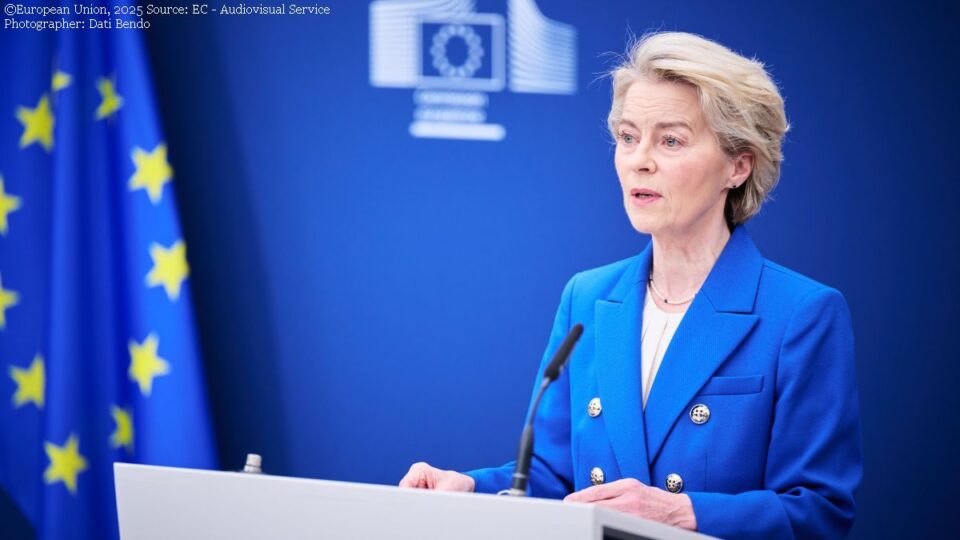
The first step: digital education. Experts emphasize that children must be taught from an early age how the internet works and what dangers may arise; according to them, concepts such as protecting personal data, recognizing misleading content, and avoiding interactions with strangers are fundamental. Committed to preventing children’s online exposure to harmful and illegal content, as well as the grooming of minors for sexual purposes, the European Commission is now proposing an innovative solution—an app to verify users’ ages using a passport or ID card when they access online platforms. Ursula von der Leyen, President of the European Commission:
“It is our duty to protect our children in the online world, just as we do in the offline world. And to do that effectively, we need a harmonised European approach. One core topic is the question: how can we ensure that there is a Europe-wide technical solution for age verification? Today, I can announce that we have the answer. Our European age verification app is technically ready and soon available for citizens to use. This app will allow users to prove their age when accessing online platforms. Just like shops ask for proof of age for people buying alcoholic beverages in a shop.”
Children have never spent so much time looking at screens, Ursula von der Leyen adds, and the more time they spend online, the more likely they are to be exposed to harmful and illegal content, as well as to manipulation by online predators. This environment does not benefit young, developing minds, so we have listened carefully to parents who lack adequate solutions to protect their children—explains the European official, noting that the app can be used on any device—phone, tablet, or computer. Once again, Ursula von der Leyen:
“First, it is user-friendly. You download the app. You set it up with your passport or ID card. You then prove your age when accessing online services. Second, it respects the highest privacy standards in the world. Users will prove their age without revealing any other personal information. Put simply, it is completely anonymous: users cannot be tracked. Third, the app works on any device – phone, tablet, computer, you name it. And, finally, it is fully open source – everyone can check the code. This means that our partner countries can also use it. This is very important that this can be used by our global partners. But more importantly, online platforms can easily rely on our age verification app. So there are no more excuses. Europe offers a free and easy to use solution that can shield our children from harmful and illegal content. And we see more of our Member States making great progress. France, Denmark, Greece, Italy, Spain, Cyprus and Ireland are front runners. They are planning to integrate the app into their national wallets. And I hope more Member States and private sector will follow so that every citizen can soon use the app. ”
It is not only the European Union that is taking steps in this direction. Just a few days ago, a law banning access to social media for people under 15 was passed by the Turkish parliament. Under this law, minors under this age will be prohibited from registering on social media, and digital platforms will be required to implement age verification systems. Parents will have tools to monitor screen time and online spending, while in “emergency situations,” major social media platforms will be required to intervene within one hour of harmful content being disseminated. The law will take effect six months after its publication in the Official Gazette. In Romania, the Senate approved the “digital age of coming to age” law last October, which restricts access to social media for young people under 16. (MI)