Animest.21 – 21 Years of Animation
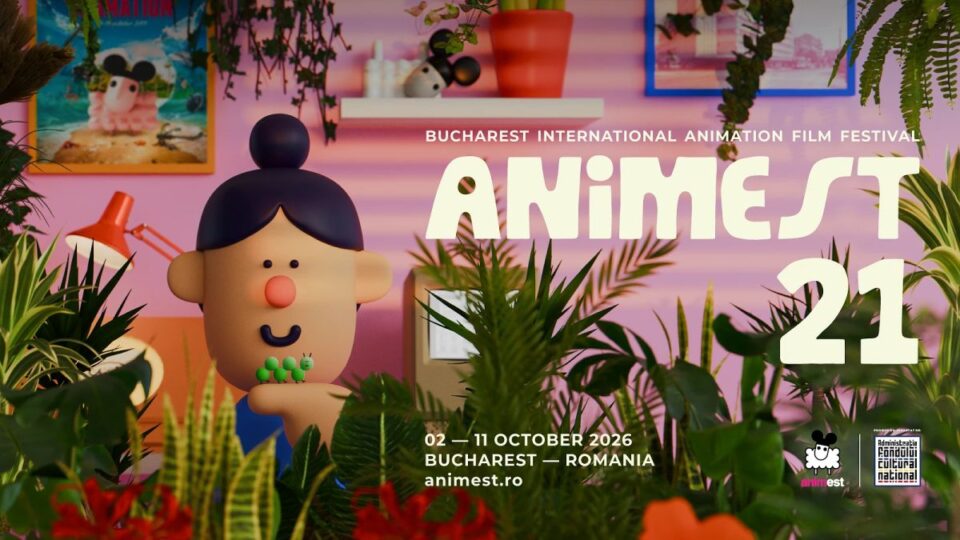
The Animest International Animation Film Festival has recently closed its gates in Bucharest. The 21st edition of the festival comprised ten days of screenings, competitions and events dedicated to animation.
Corina Sabău, 17.10.2026, 12:03
The Animest International Animation Film Festival has recently closed its gates in Bucharest. The 21st edition of the festival comprised ten days of screenings, competitions and events dedicated to animation.
Over the past two decades, Animest has grown alongside its audience. Some of those who attended the early editions now return with their own children, while new generations are discovering that animation is by no means just for younger viewers.
Ligia Soare, the festival’s international relations manager and a member of its selection team, has been involved with Animest since its launch in 2006:
“When I think about our audience, one of the wonderful things about organising a festival that has been running for so many years is watching the audience grow alongside it. People who started out as volunteers, or who first came to Animest as children, now return with their own children. We also have people travelling to Bucharest especially for the festival, as well as a large number of students. In fact, when we chose the dates for Animest, we wanted to make sure students would already be back in Bucharest. And they really do make up an important part of our audience.”
As the audience has evolved, so too has the festival programme. Spanning ten days and two weekends, Animest offered films and events for different age groups, ranging from programmes for children to screenings intended exclusively for adults.
The overarching theme of the 2026 edition was NATURE. But the concept goes well beyond the environment, ecology and climate change. The organisers have broadened its scope to include human nature, exploring how animation filmmakers portray our inner lives, emotions, fears and vulnerabilities.
Laura Ducu Stamatescu, who is in charge of communications at Animest, explains:
“When we talk about nature, we obviously mean the natural environment, but also human nature. In recent years, and perhaps more than ever this year, we’ve noticed that an increasing number of filmmakers are exploring our inner worlds, the human psyche and the mechanisms that shape us from within. Human nature has therefore become an increasingly prominent theme in animation.”
The theme also has a practical dimension. The festival team addressed sustainability not only through its choice of films, but also through the way it organised a ten-day international event.
Animest has joined a European initiative encouraging festivals to monitor their use of resources and reduce their environmental impact, from how guests travel to the materials and resources used during the event.
But perhaps one of the most striking developments over the festival’s more than two decades of existence has been the transformation of Romanian animation.
In its early years, there were relatively few Romanian productions, and a single filmmaker would often take on several roles, from directing and screenwriting to animation and other stages of production.
Today, many films are made by larger teams, international co-productions are becoming part of the landscape, and the festival brings together students, established professionals and artists entering animation from other creative fields.
This year’s Romanian competition features ten short films, all receiving their national premieres. Their diversity makes it difficult to identify any single defining characteristic of Romanian animation.
Ligia Soare: “I don’t know whether there’s a particular label you could put on a film and say, ‘This is Romanian animation.’ And I think that’s a good thing, because it reflects the diversity of subjects, techniques and experiences. We don’t necessarily see the same filmmakers in the national short film competition every year. Of course, some do return, perhaps annually or every two or three years, because making an animated film takes time, costs money and often involves a large team.”
The growth of Romanian animation has also brought new opportunities on the international stage. Since 2017, Animest has been part of the network of festivals whose awards can qualify films for consideration at the Academy Awards. For Romanian animation, this is particularly significant, offering a potential route to international recognition for films that lack the budgets or festival exposure enjoyed by major productions.
And the scale of that transformation is reflected in Animest’s own history: from a handful of Romanian animated films in its early editions to a dedicated national competition and productions now brought to life by teams of animators, directors, editors and sound specialists.
After 21 editions, Animest has become something of a barometer of the changes in Romanian animation. Its audience has grown, its filmmakers have become increasingly diverse, and Romanian animated films are now gaining a level of international exposure that would have been difficult to imagine when the festival first began. (MI)