The European budget between crises and reform
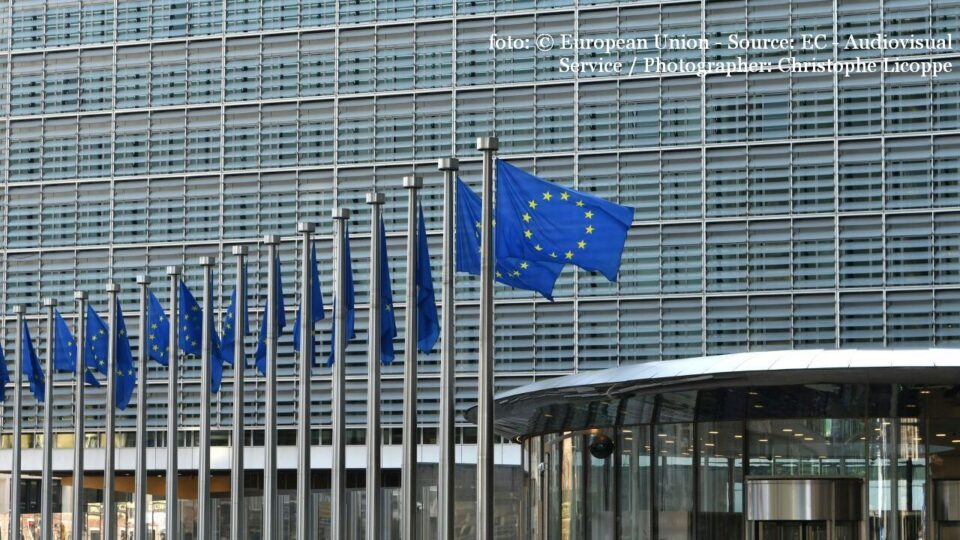
The European Union’s budget for 2028–2034 is taking shape against a backdrop of geopolitical crises, economic pressures and new strategic priorities, all of which are complicating negotiations between member states.
Corina Cristea, 23.10.2026, 13:00
The European Union’s budget for 2028–2034 is taking shape against a backdrop of geopolitical crises, economic pressures and new strategic priorities, all of which are complicating negotiations between member states.
The talks come at a time when Europe needs to invest more in defence and security, reduce its strategic dependencies, close the competitiveness gap with the United States and China, and step up innovation and the energy transition. At the same time, it must continue to support agriculture, development in less prosperous regions, and economic convergence between member states.
Negotiations have been under way for several months, but are still far from complete. The European Commission’s initial proposal — a budget of almost two trillion euros for 2028–2034 — has been rejected by net contributors, led by Germany, which provides a quarter of the EU’s budget, along with the Netherlands, Sweden and other northern European countries.
Also on the table is a proposal from the Irish presidency of the Council of the EU for an eight per cent cut, bringing the budget to 1.62 trillion euros. Net contributors, however, consider this reduction insufficient and are calling for tougher austerity measures.
For their part, the European Parliament and net beneficiary countries, including Romania, Italy, Poland and Greece, firmly reject the proposal, arguing that an eight per cent cut would seriously undermine cohesion funding and the Common Agricultural Policy.
The negotiations are about more than agreeing on a figure and dividing it among the 27 member states. Analysts say that what is also at stake is a vision for the Union’s future: what kind of Europe we want to build, which priorities we fund and, above all, how we share the costs and benefits of European integration.
Political scientist Marius Ghincea explains:
“On the one hand, there’s the question of whether to allocate more money or less. Obviously, some countries want more money, while others want less. Those that have to contribute, the net contributors, want to allocate less, given the growing demands at home in countries such as Germany.
“On the other hand, there’s the question of how to allocate funding across different priorities. For countries in north-western Europe, the priorities are clearly competitiveness and technological and economic development. They are at the cutting edge of knowledge and economic and technological development, so they want to remain competitive with the United States and China in those areas where they can still do so.
“Countries in Central and Eastern Europe and southern Europe, meanwhile, have other priorities: closing development gaps, spending on agriculture — in countries such as Romania, Poland and France — and cohesion spending.
“Countries such as Romania have done very little over the past 20 years to narrow the enormous gaps between poor and rich regions. If we look at what has happened in Romania over the past two decades, those gaps have actually widened. We have focused on growth centres and have more or less abandoned the outlying regions of our countries. And that translates into different priorities and objectives at European level.”
One of the most significant shifts in the EU’s thinking is the growing emphasis on competitiveness. Europe needs to invest in research, artificial intelligence, clean technologies, energy infrastructure, digitalisation and strategic industrial capacity.
This focus addresses a real problem: the EU risks losing ground in global economic competition unless European businesses have access to financing, competitively priced energy, modern infrastructure and an environment that encourages innovation.
Former European Commissioner Leonard Orban outlines Romania’s approach to the EU’s long-term budget:
“For us, it’s essential that substantial funding should remain available for these two policies: cohesion policy and the Common Agricultural Policy. Most of the money we have drawn from the EU — and we have drawn a great deal since joining — has come through these two policies.
“Of course, competitiveness matters to us too. But we know very well that we are more likely to access cohesion and agricultural funding, and much less likely to access funding for competitiveness. That’s precisely why we place so much emphasis on these two policies.
“And there’s something else I’d like to say. In the end, the budget will be adopted and, even with a cut of 200 billion euros, Romania will still receive substantial funding for 2028–2034. Under the Commission’s proposal, Romania would receive around 60 billion euros. Even if the overall budget were cut by 200 billion euros compared with the Commission’s proposal, Romania would receive more than 50 billion — more than it receives under the long-term budget for 2021–2027.
“In my view, this really is Romania’s last chance: the last time it will receive funding on such a substantial scale. After that, Romania will, of course, have to draw more funding from other areas and rely less on the traditional policies.”
Figures show that, in the almost 20 years since it joined the European Union, Romania has received 110 billion euros and contributed 36 billion. (MI)