Concerns Regarding Energy Prices
The upcoming winter promises to be a significant test for European energy security and for Romania’s ability to meet its energy needs at affordable costs.
Corina Cristea and Radio România Internațional, 30.10.2026, 13:50
Energy prices, the risk of further price hikes, and the capacity of European states to meet their electricity demand during the cold season were the primary topics discussed on Thursday by European Union Energy Ministers, who met in Luxembourg. These discussions were held against a complex international backdrop, marked by geopolitical tensions and pressures on fuel markets. The European Commission warns that, while energy supplies are not currently under threat across the Union, the costs are becoming increasingly difficult for households and businesses to bear.
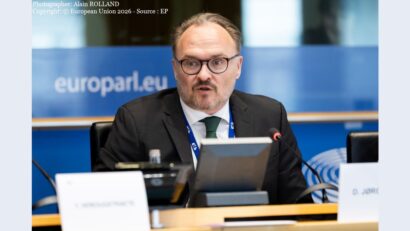
One cause for concern stems from the natural gas market, where wholesale prices have surpassed the 100 euro per megawatt hour threshold, the highest level since December 2022, a period when Europe was grappling with the impact of reduced Russian supplies. Nevertheless, according to European Commissioner Dan Jorgensen, the situation is better, at least in terms of supply, because the Union has reduced gas consumption by nearly 20%, and Europe now relies on a more diverse range of suppliers.
In another move, the European official said the crisis is more severe because it also involves oil and oil products. Having sufficient volume is of little use if gasoline for vehicles or gas for home heating is too expensive; it does not matter if the supply is there if the price is so high that many cannot afford it. Commissioner Jorgensen stated that 50 million Europeans faced difficulties with heating costs last winter, and that number could now rise. This trend is linked, among other things, to the consequences of the conflict in the Middle East and uncertainties regarding international supply.
Against this backdrop, European ministers have examined measures to ease the pressure on electricity bills and help stabilize fuel markets. At the same time, Brussels aims to make the tariff system more transparent and efficient, ensuring better control over costs associated with energy transmission and distribution. The proposal also includes fiscal measures under which electricity would be taxed at a lower rate than natural gas. The ministers, including Romania’s Dumitru Chisăliță, supported, in principle, the reduction of total energy system costs, while also calling for flexibility to allow each state to adapt tariff methodologies to their own specific circumstances.
While efforts are underway at the European level to lower prices and strengthen energy security, Romania faces an additional challenge that could place further strain on its national system. The National Committee for Emergency Situations has decided to extend the state of alert regarding the operation of the Cernavodă Nuclear Power Plant for another 30 days due to persistently low water levels on the Danube. Consequently, the power plant’s two units, which covered approximately 20% of energy demand and have been shut down since the summer, cannot be brought back online in November. This further complicates the situation for Romania, especially with the cold season approaching.