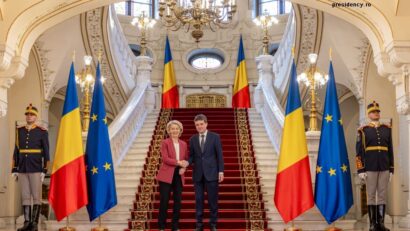
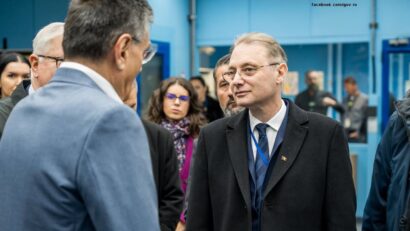
Europe and defence spending
Joint military procurement and financial support for Ukraine were the main topics discussed by European finance ministers, who met in Brussels in the presence of NATO Secretary General Mark Rutte.
Florentin Căpitănescu, 10.11.2026, 13:50
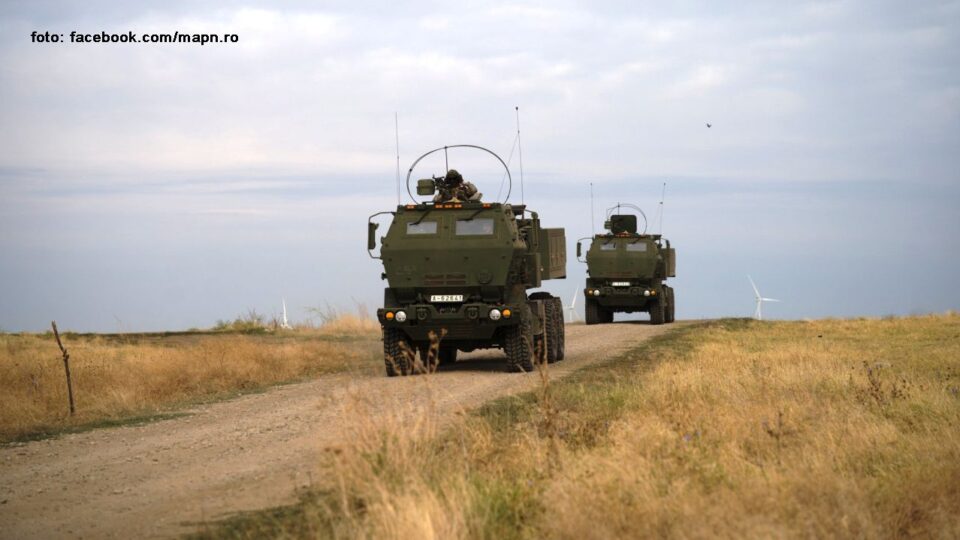
European states are boosting their defence budgets but continue to purchase armaments separately, thereby missing out on the cost savings that joint procurement would offer. This topic was discussed in Brussels by the finance ministers of European Union member states during an inclusive-format Eurogroup meeting that was also attended by Romania’s Finance Minister Alexandru Nazare, as well as NATO Secretary General Mark Rutte.
The European Commission previously warned that the global economic situation is unstable and highlighted that joint procurement could spell as significant costs savings for national budgets. Despite this instability, which drives up borrowing costs and investment expenses, the European Defence Agency said that only 24% of equipment procurement by member states last year was conducted jointly, falling short of the 40% target. The European Commission argues that through approach states may pay higher prices than they would through joint orders, purchase of equipment that performs identical functions or end up using incompatible defence systems.
Another subject tackled by EU finance ministers was financial aid for Ukraine, as the European Union seeks ways to provide an additional 45 billion euros to this country, on top of the 90 billion euro loan package already approved for the 2026–2027 period. This represents the contribution the European Union estimates it should provide to cover Kyiv’s additional financing gap, which is estimated at some 70 billion euros for next year. According to European Commissioner for Economy Valdis Dombrovskis, the European Union should cover roughly two-thirds of the 70 billion euro difference. These funds are in addition to the 90 billion euros worth of European loan package from last year, of which 45 billion euros were allocated for 2026 and another 45 for next year.
Commissioner Valdis Dombrovskis noted that one possibility being considered is a loan with guarantees in the form of Russian sovereign assets that have been frozen by the European Union. Under this arrangement, Ukraine would only be required to repay the funds once Russia has paid war reparations.
Meanwhile, on the sidelines of the Eurogroup meeting, Minister Nazare held a meeting with NATO Secretary General Mark Rutte during which he emphasised that security and defence are shared interests among all European states and that countries on the front line facing these risks, such as Romania, must be supported through appropriate financing mechanisms. Nazare also spoke about the security situation in the Black Sea and the growing risks to navigation in the area, in light of recent drone attacks on commercial vessels and which were attributed to the Russian Federation.