Heroes of the anti-communist resistance: Elisabeta Rizea
An iconic figure of the struggle against communism was a peasant, Elisabeta Rizea from the village of Nucşoara.
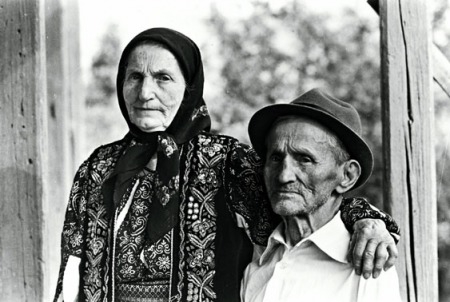
Steliu Lambru, 29.07.2013, 14:35
As early as the autumn of 1944 anti-communist and anti-Soviet resistance groups were formed in the Romanian mountains. Soldiers, students, peasants, workers, men and women alike joined these partisan groups, which operated particularly in the Carpathians. It was only after 1989 that silence was broken in this respect, and Romanians found out about the participation of women in the anti-communist resistance movement. The iconic figure of the struggle for a principled life was a peasant, Elisabeta Rizea from the village of Nucşoara, in the central Romanian county of Argeş, who became famous thanks to a television documentary called The Memorial of Suffering.
If we look strictly at the facts, we could say that nothing of what Elisabeta Rizea did falls into the category of heroic acts. She did not fight on any front, saved no one from death, did not sacrifice herself for anyone else. What she did however was to stand by her principles, something that today we are tempted to see as relative values. Elisabeta Rizea did not lie, did not inform the political police on her neighbours and acquaintances, did not lose her faith that justice would eventually prevail. Elisabeta Rizea was on the side of those who fought for justice and truth, and she helped them as best as she could: she gave them food and protected them from enemies.
Elisabeta Rizea was the best symbol of the decent peasant defending her small universe, that is property, family and faith. She paid for that serving 12 years in jail. The Oral History Centre of Radio Romania had the honour to interview Elisabeta Rizea in 2000, when she was 88 years old, asking her how she had kept in touch with the Arsenescu-Arnautoiu group of partisans:
Elisabeta Rizea: “I have no connection with politics, I’m a straightforward woman. If I’m Romanian, why should I side with another country and not with my Romanians? I didn’t meet the partisans. I had a willow tree with a hollow in it and that was my mailbox. If I saw an army passing by, I wrote on the note: “Beware! The army is passing by!” When Securitate officers came by, as they tracked me down, I put a water mug in the wall. They would talk while sitting at the table here and I would listen to them from the other room. And then, I would hurry away along the path. I had a ladder there, would get down the ladder and go to the hollow to put the note in. And the boys and captain Arnautoiu would look for the note in the willow hollow and read it. I wrote where the army was, where I had put food for them, anything I could do.”
According to her confession, when she was being investigated, she was hooked by the hair and beaten until she lost consciousness. At that point, she remembers crossing herself with her tongue, praying God to give her strength not to say anything of what she knew. It is the oath that a straightforward man does not break. Elisabeta Rizea also recalls the visits that the Securitate officers would pay to her before her arrest.
Elisabeta Rizea: “There was a wooden footbridge, not a cement one and the Securitate officer had his boots on. And when I was hearing boots, my heart started pounding ready to break out of my chest. I told myself: now they’ll grab me and I’ll get shot. That’s how I felt, why lie about it? I was raising the wick on the lamp, and they came in and asked me about them. I was telling them I don’t know, I don’t know anything. And I told them nothing, it didn’t work with me. I was swearing on the bible and cross laid out on the table. I was taking the cross in my hand and swore on the Holy Gospel. Colonel Arsenescu was there, just like Toma Arnautoiu, there were some doctors too. People with book learning, all of them. And I swore I would never betray them. That’s what I did.”
Over 200 years ago, Irish philosopher and statesman Edmund Burke said that for evil to triumph it is enough for good people to do nothing. In the case of Elisabeta Rizea, it was precisely good people who supported evil ones. Neighbours kept an eye on her and reported to the Securitate everything she was doing in her courtyard. She was jailed, and was released in 1963, managing to survive the political regime that scarred her existence.
The impact that Elisabeta Rizea had on Romanian public opinion was great, especially between 1990 and 2000. This could be seen from the place she got in the ranking made by Romanian public television for the TV contest called Great Romanians. She came in 58th. When there was a proposal to build a monument of the anti-communist national resistance, Elisabeta Rizea was the first name on the list, and got the most support from Romanian civic organizations.
In 2003, at 91, Elisabeta Rizea passed away, and left a trace of dignity in history. It is a small example of how a person can be tormented, but never defeated.