Tragedies of the Romanian Revolution: Otopeni
The 1989 Revolution was the most important event in the second half of the 20th century in Romania.
Steliu Lambru, 22.12.2014, 13:20
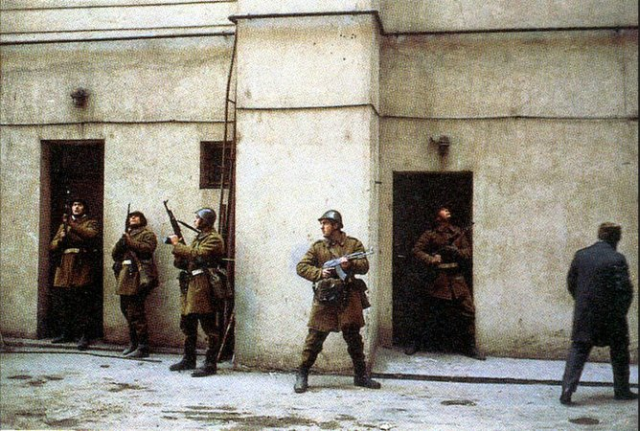
The Romanian anti-Communist Revolution of December 1989 was the most important event in the second half of the 20th century in Romania. Such a genuine outburst of mass energy had never been seen before by most Romanians. Something unique was happening and each and every Romanian felt they had to take part in the renewal of Romania.
However, the uplifting moments generated by people finally getting the strength to fight and regain their freedom were marred by some tragic events. One such event was the massacre in Otopeni, on December 23rd. Following a terrible misunderstanding, the airport defense unit opened fire on a convoy of three trucks, killing 50 soldiers who were coming to upsize the unit. Taken for terrorists, those soldiers paid with their lives the poor training of the people in charge with defending the airport, the many flaws in communication, contradicting orders, people’s overexcitement and the impact of rumors. 25 years on, we tried to recall that black day in Romania’s history, together with historian Serban Pavelescu.
Serban Pavelescu: “The incident of December 23rd 1989 should be a textbook lesson for the soldiers undergoing training. 18 years of investigations have shown that there was a combination of factors that led to the tragedy. More precisely, the defense unit in charge of ensuring security at the Otopeni airport was made up of several subunits, some of them subordinated to the National Defense Ministry and others to the Border Police, the Military Aviation Directorate and citizen guards respectively. Many of those people were not properly trained, and others were just about to get that training. The most valuable and best-trained units were seen as conspicuous and disarmed. I’m talking about the subunit belonging to the Special Anti-Terror Unit and the Interior Ministry’s subunits, in charge with regular airport security.”
Serban Pavelescu also described the security elements deployed at the airport and the facts that eventually triggered the tragedy:
Serban Pavelescu: “There were chains of shooters both on the first floor of the old terminal and on ground, on the building of the Civil Aviation Division, which was guarding the entry to the terminal. They had light infantry armament, and also heavy armament, such as an amphibious armored vehicles and 14.5-mm caliber heavy machine guns. The unit had been set up 48 hours earlier, people were tired, they had been on permanent alert, and faced with several incidents, which we don’t know whether they were real or not. They were, however, perceived as real by those in charge. People were overexcited and, as the military prosecutors’ investigation would later reveal, they were also badly led. Communication between the defense unit and those supposed to coordinate from the Civil Aviation Division’s building was extremely poor.”
At dawn, on December 23rd, the Campina brigade, made up of graduates of the School of noncommissioned officers in the town of Campina, was heading for the Otopeni airport.
Serban Pavelescu: “The Campina brigade had received orders from the commander of the security troops, general Grigore Ghita, to head for the airport. But those at the airport, who had already been alerted through anonymous calls, through the Romanian television and even through the regular chain of command that they were about to be attacked, were expecting the aids to arrive from the other side. What’s sure is that instead of entering the bypath leading to the freight terminal of the airport, which was a parallel road to the one leading to the old terminal, the brigade entered perpendicularly to the defense line.”
The terrible outcome of that move was the logical effect of these circumstances.
Serban Pavelescu: “At around 7 o’clock am, it was still dark. It was a spectral sort of light, people were extremely tired, and they had had several alarms during the night. Against that background, captain Zorila was overzealous and opened warning fire to stop the coming trucks. The problem was that, once the fire opened, those who were on the Civil Aviation’s building thought they were being attacked. There was no real communication with those in the terminal and those in the first line. Therefore, they too started shooting. There followed a cannonade that was hard to stop. The surviving soldiers of the Campina brigade shouted they surrendered, got off the trucks and were disarmed, their arms up. Then another gunshot was heard. Nobody could tell whether it was real, but to those in the unit it sounded real. And the effect was just like we saw everything during those days of revolution. It was enough to just hear a gunshot for a cannonade to start right away, without any clear target. So, this is how the second phase of the massacre started, with the Campina soldiers as targets of another fire, this time a longer one, lasting for about 10 minutes. And then, again, when the surviving soldiers were taken over, the bus carrying members of civil services came, and there followed another cannonade, resulting in the death of seven more people.”
The people who died in Otopeni 25 years ago were heroes, as they did not hesitate to go wherever they were needed, no matter how great the danger was.