Fiscal Reforms in the interwar Romania
A look at historical changes in Romania in terms of the tax regime.
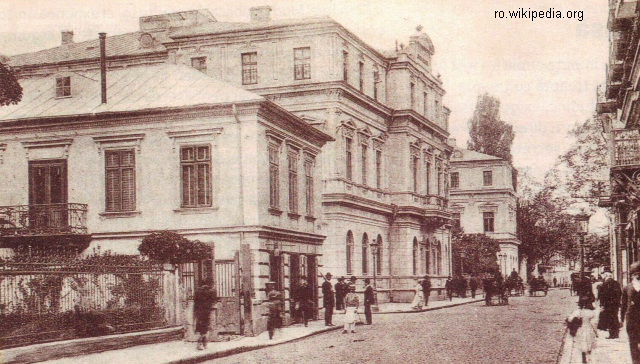
Monica Chiorpec, 23.02.2015, 13:07
Romania’s territory doubled in size after the historical provinces of Bessarabia, Bukovina, Banat and Transylvania had united with the old kingdom of Muntenia in the aftermath of WWI.
However, the Greater Romania, as the new kingdom was also known, was facing a difficult economic and financial situation, with a weak budget into which the Central Bank kept pumping depreciating currency in a bid to achieve stability. After the country’s default on foreign debt its entire administrative system went into a tailspin. The country’s Finance Minister at that time Vintila Bratianu was facing a difficult task but resolved to carry on the implementation of an economic recovery plan initially drawn up by his predecessor Nicolae Titulescu. Here is historian Ioan Scurtu with more on the fiscal reform Romania resorted to back in the 1920s.
“Nicolae Titulescu was the first Finance Minister to have proposed a law that introduced the progressive tax principle, that is according to incomes, as well as the comprehensive business income tax. Under the law – which had been very complex, intricate and difficult to implement – those with incomes from several businesses had to pay accumulated business tax. Bratianu practically borrowed the basic ideas for the economic reform from Nicolae Titulescu and out of his initiative, a new and simplified version of Titulescu law was adopted in February 1923.”
Vintila Bratianu’s financial policy focused on modernizing Romania’s tax system and complying with the principle of the budget balance. The draft law on direct contributions, drawn up under his strict guidance and voted in Parliament in 1923, met all the requirements in the process of streamlining Romania’s fiscal system. It had a positive impact on the value and the structure of budget incomes. The new system of dividing incomes was a big step forward in strengthening the financial situation of the interwar Romania. Here is historian Ioan Scurtu with details.
“The law stipulated special protection for industrial activity incomes. Vintila Bratianu was the supporter of a policy called ‘on our own’, which was aimed at strengthening the economy and particularly the industry. Vintila Bratianu said that after the war Romania regained its territories and political independence but it also needed economic independence. He believed that a country could not have political independence without an independent economy. And the reform I’ve just mentioned was aimed at bolstering Romania’s economic development, particularly in the field of industry. That happened during the Liberal governance of Romania, the longest in the entire interwar period – between January 1922 until the end of March 1926, to be precise. This period was characterized by the adoption of a new Constitution stipulating the nationalization of the soil resources. An entire legislation was issued to allow for the implementation of the new Liberal policy focusing on rapid economic development. I would like to mention that in 1928, a decade after the unification of the Romanian provinces, the country’s industrial development was nearly two times higher than prior to the war.”
The finance minister was facing two main challenges back then, namely to capitalize on the economic potential of the Danube border and on Romania’s crude oil resources. Vintila Bratianu was the first to notice the difficulties caused by the massive inflow of foreign capital into the country’s oil industry and also the first politician to have identified the main coordinates of a national energy policy. Under the Liberal principle ‘on our own’, Bratianu insisted on the optimum use of the country’s oil resources against the rising demand at both domestic and international level.
“Nicolae Titulescu’s reform was important, because it had set a certain direction to follow. And Bratianu carried his reforms forward, indicating where state budget money must go after pensions and salaries had been paid – although few benefited from state pensions at that time. He didn’t focus on paying state debts, but on ensuring investment mainly by granting loans to various business ventures that could produce goods that did not exist on the manufacturing market in Romania at the time. This is the case of the machine-building industry – the Malaxa factory, the Aeronautic Industry and other major businesses in Romania whose foundations were laid in the interwar period.”
Finance Minister Vintila Bratianu believed that capitalizing on the country’s natural resources was a key element in reducing an economy’s reliance on foreign capital. The economic policy measures backed by the Liberal government between 1918 and 1940 largely contributed to the stabilization of the Romanian currency.