France and Greater Romania
It is said by experts that Central and Eastern Europe past 1918 was a creation of France, and to a large extent that is true
Steliu Lambru, 10.09.2018, 13:24
The states that emerged on the map of Europe after WWI owe their existence to France to a large extent, countries like Poland, Romania, Czechoslovakia and Yugoslavia, which emerged as self standing states after the Great War.
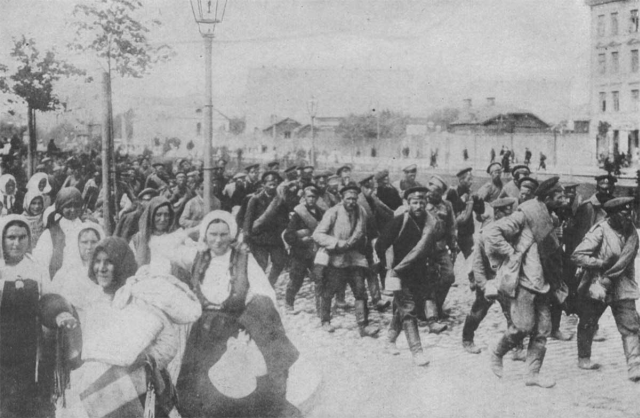
In late 1918, things were less than certain. The Austro-Hungarian territories inhabited by many ethnic groups, including Romanians, were under dispute, and each political actor bargaining over them had their own arguments in the peace process. France was the peace keeper in the west of what is now Romania, and played a decisive role in drawing the borders of the Kingdom of Romania. French general Henri Mathias Berthelot was a major figure in the negotiations on behalf of Romania.
Historian Aurel Ardelean from the Vasile Goldis Western University of Arad outlined for us the very complicated situation in 1918: “In late 1918 and early 1919, the situation in the western part of Greater Romania was by no means tranquil. Upon entering the war, Romania was told that it would be able to liberate the western territories, but after the war a large part of them, mainly the Banat region, was under de facto Serbian occupation. Ion Bratianu, then prime minister, also acting as foreign minister, sent a telegram to French ambassador Saint Aulaire on 22 December, stating that the Serbian forces were holding as prisoners hundreds of Romanians from Banat. The city of Arad was full of refugees that took shelter there for fear of the Serbian forces. The Serbian military leadership headquartered in Timisoara had dismantled the Romanian National Council in the district of Timis, as well as the Romanian national guard units. As Bratianu wrote at the time, ‘The Romanian people is very angry at the Serbian army, which it used to admire and which it was close to during its tribulations.’
General Berthelot had arrived in Romania as head of the French military mission in October 1916, and had to leave in March 1918 after Romania signed the Buftea Treaty in defeat. He went back in October 1918, heading a new French military mission, and went to Banat and western Transylvania in order to have a personal account of the facts on the ground.
Aurel Ardelean: “The installation of the Romanian administration was not without impediments. ‘The martyrdom of Romanians in Transylvania is well known to me. I feel a deep love for you, and I assure you that you have the full support from us in setting up Greater Romania definitively. These are the words of General Henri Mathias Berthelot, commander of Allied troops on the Danube, head of the French military mission to Romania, addressing the delegation led by Vasile Goldis, which was in Bucharest to hand over to King Ferdinand I the documents of the union. This was the spirit that characterized the visit made by the French general to Arad in and western Romania between 1918 and 1919. The press in Arad at the time, especially the ‘Românul newspaper, documents at length the visit at a time when the Romanian administration was trying to take over Arad, Transylvania, and Banat in a difficult and protracted process.
The delegation headed by General Berthelot was supposed to pacify a former war zone, plagued by hatred and frustration: “Around the time that the general was expected in Arad, Romanians eager to see him were attacked by Hungarian provocateurs, who opened fire on them, trampling their flags, and leaving behind many victims. As the ‘Românul newspaper put it, ‘Let the Hungarians know that the fate of Romanians and Hungarians will not be decided by the protests of these mindless individuals, but by the Peace Congress. Until then, both sides have to hold their peace. The International Tribunal will hand out justice. As a matter of fact, the French General called his sojourn ‘The Peace Tour’, as a practical solution for ethnic strife, by occupying the area with French troops.
The role of French troops was to keep the peace, and General Berthelot played his part to a dot. Aurel Ardelean again: “Perusing through the press of the time, we find out that General Berthelot matched his words with deeds. In the magazine ‘Church and School’, issued on December 23, 1918, in the general information section, we find the following: ‘French troops in Banat. As a result of the bloody protests, French troops deployed in Arad upon orders of General Berthelot to enforce public order and security. French soldiers are guarding the headquarters of the Românul newspaper.’ The following piece of news stated: ‘The Romanian army will also occupy Oradea Mare, Arad and Sighetul Marmatiei. A French colonel handed the Hungarian government a note from General Berthelot letting it know that the Romanian armed forces had the right to cross the dividing line and occupy the cities of Cluj, Dej, Satu Mare, Oradea, Radna, Arad, Marghita, and Sighetul Marmatiei.’ This operation will last until the arrival of French troops.
The peace treaty drew lines around ethnic groups, in line with the principles and aspirations of the young nations. Romania also settled its borders, with the help of France.