Alternative Romania
Alternative history, also called 'uchronia', has been imagined by many authors so far, generating a rich corpus of literature.
Ștefan Baciu, 19.11.2018, 13:41
People often wonder what history would be like if it happened differently, what individuals, societies, and nations would be like. Alternative history, also called uchronia, has been imagined by many authors so far, generating a rich corpus of literature. The first to use the term uchronia was French writer and philosopher Charles Renouvier, who used it as the title of a book he published in 1876. Since then, countless such books have been written, depicting fictitious history.
The Romanian literary critic and comparative literature professor Virgil Nemoianu, who taught at several universities in the United States, undertook such an exercise in trying to imagine what Romania would have looked like if the union of 1918 had never taken place.
Here he is talking about it: “Reading all these historical novels, I eventually got to alternative history. This is based on events that never happened, and that are even absurd, such as the intervention of extraterrestrial beings into WWII. The popular fiction writer Harry Turtledove, for instance, wrote a novel called Ruled Britannia. In it, he imagines how things would have been had the Invincible Armada conquered England in 1588. As a result, Queen Elisabeth was imprisoned in the Tower of London, and England reverted to Catholicism. Lope de Vega was a young lieutenant who started hanging around Shakespeare to learn drama. However, in that world some politicians put together a revolt, which eventually prevailed. The writer has another novel, called The Two Georges, in which George III of Britain and George Washington reach an understanding, so that the US never breaks apart from the UK.”
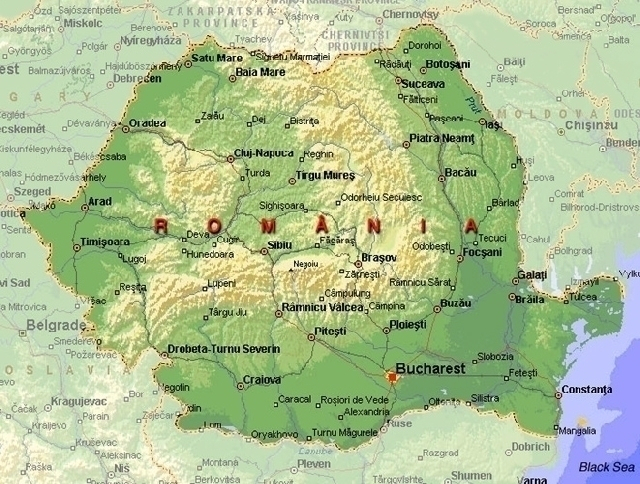
1918 was the year when Greater Romania formed following the union of the Kingdom of Romania and Transylvania, Banat and Bukovina, a situation which is now taken for granted. Virgil Nemoianu doesnt believe that another course of history is absurd.
Here he is talking about it: “You can find, in the world and in Europe, plenty of different states that speak a single language. How would things stand if they had turned up otherwise? First of all, Romanians for 1000 years have been at the crossroads, with pressure from all sides, from imperial powers, from the east, south, and west. We had at least 3 kinds of pressure, 3 kinds of influence, modifying the way of being and morays in each of these countries. In the Old Kingdom there were French and Russian influences while on the other side of the Carpathians there was the German influence, in spite of the Hungarian dominance. How would these states have developed otherwise? I imagine that the transfer of people from one side of the Carpathians to the other would have been simple and fruitful. There was a transfer, of course. Even after Greater Romania was formed, there were reportedly opposite tendencies. On the one hand, there was this allurement of Central Europe, and on the other hand, that of the Balkan Confederation made up of countries Romania felt connected with, such as Yugoslavia, Bulgaria and Greece.”
Today’s Romania is made up of two different geo-cultural spaces, the extra-Carpathian space that was influenced by the Ottoman Empire and the Christian-Orthodox religion, and the central European space, where the influence of Hungary, of the Habsburg Monarchy and of Catholicism was dominant.
Starting from these realities, Virgil Nemoianu has built his alternative history of multiple Romania: “The internal nature of the two states would have been different. We can imagine that the trans-Carpathian area would have undergone more intense urbanization, would have probably had a center-left political orientation, as there was a well-rooted Social Democratic tradition there and a good financial network, with relatively small banks and emerging industries. This imaginary state could have been similar to what Slovakia, Slovenia and Croatia are today. The Old Kingdom would have been probably stronger, from an intellectual point of view, because there were very good universities with a solid intellectual tradition and could have had a very advanced agriculture. It could have looked southwards, towards the Balkans, with much more confidence. From a religious point of view, in the imaginary trans-Carpathian state there was a certain kind of cooperation between Orthodox and Greek-Catholic believers, but there were conflicts as well as and friendships. The Old Kingdom was purer from an Orthodox point of view, therefore closer to the Balkans and the East. I also believe that a far right group would have been set up in a different way. Of course, there would have been disadvantages. The unified Romania had a certain economic weight in the inter-war period, even in the Communist period. From an intellectual and cultural point of view, we can speak of cooperation and contacts between the two sides of the Carpathians. I don’t mean to imply that it would have been better if the two sides had been separated, if there had been two Romanian states. What I mean is that there would have been good things as well as bad things. That is why I have imagined a multiple Romania.”
History happened as we know it today, because it was the best formula that people could find at the time. Uchronia does nothing but imagine scenarios and is nothing but a literary game. Multiple Romania or alternative Romania is based on different views on the world, which we can also see today, but it is a version that does not offer credibility.