RRI Live!

Listen to Radio Romania International Live

Nicolae Iorga

In a 2006 contest organized by the public television, Nicolae Iorga came in 17th out of 100 personalities most admired by Romanians
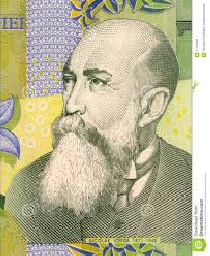
Nicolae Iorga
Nicolae Iorga

, 20.01.2020, 13:19

Nicolae Iorga was born in Botosani, north-eastern Romania, in 1871. He studied history at
universities in Romania, Italy, France and Germany. He spoke several languages
and he approached various historical themes and subjects and was also
interested in the philosophy of history. He wrote some 20,000 articles and 1200
volumes and brochures. He was the cultural representative of the Samanatorist
ideology, which glorified the Romanian peasant. From a political point of view,
he was a conservative, an anti-Semite and promoter of authoritarianism. In 1910
he funded the Nationalist Democratic Party, together with lawyer AC Cuza, and
stood for Romania’s joining the Entente in WWI. He was close to the future king
Carol II, and he became prime-minister in 1931. He was very much convinced that
he had the exceptional mission of being the educator of the nation.


In
1999, Historian Eliza Campus gave an
interview to the Romanian Radio Broadcasting Corporation’s Oral History Center,
speaking of Nicolae Iorga as a role model, both personally and professionally.


I met him at the History Faculty and we established a very good
relationship from the very beginning. My father had just died, so I was in
mourning, wearing black clothes, and he asked me whether I needed help, lessons or something to earn
some money. Since then, we became close. He would always invite me to his
place, to study in his library, and we were really close until I graduated.


Nicolae
Iorga was an old-fashioned, 19th century type of nationalist, so he
got into conflict with the legionnaires, who were Fascist radicalists. As a
result of this conflict, their leader, Corneliu Zelea Codreanu, died in 1938.
In 1996, journalist Pan Vizirescu, an admirer of Iorga, tried to explain the
circumstances in which the conflict between the two parties occurred:


After the killing of Codreanu, at a conference held at the Royal
Foundations, Mr. Iorga said in front of the audience: ‘I wanted to advise the
legionnaires, as a parent, not to cut their heads off’. It was a big difference
between his advice and what Carol did.


Literary
historian Gabriel Tepelea saw Nicolae Iorga for the first time on December 1st,
1933, when he was only 17. Tepelea told the public television that he had seen
the historian at the public meeting of the National Revival Front, a
totalitarian party controlled by King Carol II. A devout democrat, Tepelea
believes that sometimes a person’s intellectual capacity does not match their
character, and Iorga was such a person.


I remember Iorga, with a patriarch’s beard, dressed up in a blue uniform,
as royal adviser, member of the National Revival Front. There are many
outstanding cultural figures who have not been able to say no to their own
ambitions, and in Iorga’s case, he could not stand up to both the king’s and
his own personal ambitions. So they resorted to some measures used by
dictators, such as dismantling political parties, abolishing democracy and
neglecting traditional alliances.


Engineer
Paul Stiubei recalled, back in 1994, how Iorga spoke on the public radio in
1940.


He had a text, but he would always derail from the text and digress. I
attended many of his public conferences, and he would always do the same, and
innuendos were his favorite. I remember that, one time, he came here and the
General Director Nicolae Sarateanu told me to let him operate the recording. He
was afraid that Iorga would say something against the Germans, as back then Romania
was pro-Germany.


On
November 27, 1940, Nicolae Iorga was taken to Strejnicu forest and killed by
legionnaires.



Sighet Memorial (Photo: Mariana Chirita/ RRI)
The History Show Monday, 18 May 2026

Romulus Rusan

The name of the writer Romulus Rusan is synonymous with the recovery of the memory from the years of communism, a memory that suffered severely...

Romulus Rusan
RRI
The History Show Monday, 11 May 2026

Romania and the Group of 77

From 1945 until well after 1958,  the year the Red Army withdrew, Romanian diplomacy, like that of all other socialist states in Central and Eastern...

Romania and the Group of 77
banner-Pro-Memoria.-960x540-1.jpg
The History Show Monday, 04 May 2026

The Royal Hunts

Hunting also carried a magical‑religious dimension, served as a marker of belonging to an elite, and functioned as a symbol of authority embodied...

The Royal Hunts
History Show
The History Show Monday, 27 April 2026

Pharmaceuticals in the Phanariot era

According to historians, the Phanariot era in the Romanian Principalities began in 1718 and ended more than a century later, in 1822. It is named...

Pharmaceuticals in the Phanariot era
The History Show Monday, 20 April 2026

Feminism in Romania after World War II

After 1945, the feminist movement in Romania was subordinated to the policies of the communist regime and ideology dictated what should be done....

Feminism in Romania after World War II
The History Show Monday, 13 April 2026

Aron Pumnul High School in Chernivtsi (Cernăuți)

School is what has mostly shaped human beings starting with the 18th century, when humanity began to understand that only through education can human...

Aron Pumnul High School in Chernivtsi (Cernăuți)
The History Show Monday, 06 April 2026

Medicine in Old Romanian Literature

The period between 1508 and 1830 is the time when historians believe that early printed books were produced in the Romanian-speaking world. Just as...

Medicine in Old Romanian Literature
The History Show Monday, 30 March 2026

210 years of Catholic education in Bucharest

In Moldavia, Catholic confessional education was introduced earlier, being linked to the presence of the Catholic bishoprics at the end of the 13th...

210 years of Catholic education in Bucharest

Partners

Muzeul Național al Țăranului Român Muzeul Național al Țăranului Român
Liga Studentilor Romani din Strainatate - LSRS Liga Studentilor Romani din Strainatate - LSRS
Modernism | The Leading Romanian Art Magazine Online Modernism | The Leading Romanian Art Magazine Online
Institului European din România Institului European din România
Institutul Francez din România – Bucureşti Institutul Francez din România – Bucureşti
Muzeul Național de Artă al României Muzeul Național de Artă al României
Le petit Journal Le petit Journal
Radio Prague International Radio Prague International
Muzeul Național de Istorie a României Muzeul Național de Istorie a României
ARCUB ARCUB
Radio Canada International Radio Canada International
Muzeul Național al Satului „Dimitrie Gusti” Muzeul Național al Satului „Dimitrie Gusti”
SWI swissinfo.ch SWI swissinfo.ch
UBB Radio ONLINE UBB Radio ONLINE
Strona główna - English Section - polskieradio.pl Strona główna - English Section - polskieradio.pl
creart - Centrul de Creație Artă și Tradiție al Municipiului Bucuresti creart - Centrul de Creație Artă și Tradiție al Municipiului Bucuresti
italradio italradio
Institutul Confucius Institutul Confucius
BUCPRESS - știri din Cernăuți BUCPRESS - știri din Cernăuți

Affiliates

Euranet Plus Euranet Plus
AIB | the trade association for international broadcasters AIB | the trade association for international broadcasters
Digital Radio Mondiale Digital Radio Mondiale
News and current affairs from Germany and around the world News and current affairs from Germany and around the world
Comunità radiotelevisiva italofona Comunità radiotelevisiva italofona

Providers

RADIOCOM RADIOCOM
Zeno Media - The Everything Audio Company Zeno Media - The Everything Audio Company