Unknown victims of the Romanian communist secret police
Set up on August 30, 1948, by Decree 221, the General Department of State Security, known as the Securitate, was the essence of the countrys repressive communist system.
Ștefan Baciu, 15.02.2020, 14:00
Set up on August 30, 1948, by Decree 221, the General Department of State Security, known as the Securitate, was the essence of the country’s repressive communist system. Structured after the Soviet model, the dreaded Securitate, together with the Red Army, the communist party, the police, the prosecutor’s office and the security forces acted as a military force, as a spearhead against the so-called “enemies of the people”, that is against everything that had been good in capitalist Romania — the political, military, economic, intellectual elites and the common people who would not accept humiliation.
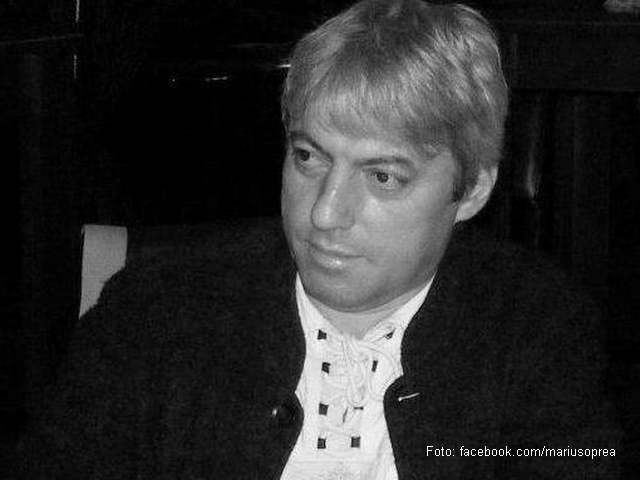
Historian Marius Oprea, set up the Institute for the Investigation of Communist Crimes and in 2006 he started looking for the unidentified victims of the Securitate. He believes that around 8000 people were executed without trial. Only 37 of them have been identified so far. Marius Oprea has presented the case of some of the people that he managed to identify in the 14 years since he took up this work.
Marius Oprea: “On Capsei Hill, in a beautiful area of the Apuseni Mountains, in western Romania, we found Nicolae Selagea. He was one of the last survivors of a partisan group headed by Nicolae Dabija that on February 2nd 1949 had been attacked by the Securitate. 25 partisan were surrounded, but 7 of them managed to escape. Nicolae Selagea was among them, but he was eventually captured and killed on the spot. He was buried in the place where he was killed, under a country road connecting several houses on Capsei Hill. How did we find the place? After they killed Nicolae Dabija, the Securitate agents had his boy, who was 6 at the time, guard his father’s body until they would send some people to bury him. They didn’t even bother to do it themselves. The boy stood by his father’s body until the next day, when some people from the village were finally sent to bury him there, under that country road. When we set up the institute, the son of Nicolae Dabija came to us and asked us to help him unbury his father’s corpse. He indicated the place and we found him. After 70 years, the son was finally able to give his father a proper Christian funeral.”
Every story of an execution by the Securitate unveils a ruined life and the shock and pain felt by the family. Historian Marius Oprea tells us the story of Andrei Mester, another victim of the terrible secret police: “Andrei Mester was part of the elite of the village of Salciua, in Alba County, western Romania. He was a master tanner and he was the godfather of around 40 families on Aries Valley. He was highly respected in the area but he had a problem: he was firmly against collectivization. Consequently, a day before the Saint Mary fair he was arrested, executed and his body placed at the entrance to the fair. A tag was attached to his chest, saying “Who does what he did will end up like he did.” His only fault had been to oppose collectivization and he paid for it with his life. The policemen who guarded his body agreed to give it to his wife in exchange for money. He was buried in the family’s back yard. Andrei Mester is the only one, of the people executed, who received a proper burial.”
The public exposure of the people executed had the purpose to terrify people, as fear was the main weapon of the oppressive communist regime. Marius Oprea: “Petru Anculia and Gheorghe Urdareanu were partisans, just like Selagea. They were members of a group led by colonel Uta, also executed in 1949. Four partisans were executed at the time, but we managed to find only two of them, as they were buried in separate graves. I hope one day we will also find the other two. We found the first two quite quickly, on one of the sides of the cemetery. They were one on top of the other, in a very unusual position, with the arms almost stretched. We eventually found out why. After being killed by the Securitate the four of them were crucified in the park in front of the town hall in Teregova, Caras Severin county, in south-western Romania. They where were held like that for 27 days. Villagers in the area were forced to come and watch the horrific scene. Each of them had a tag attached, saying ‘criminal’. Petru Anculia had his legs tied with hardwire and chains and his shoes were made of rubber and not leather. They were simple peasants who only wanted to protect their essence, their faith and their land.”
The first thing that Marius Oprea and his team are doing when they find victims of the Securitate executed without a trial is to bring a priest to perform a religious service. It is the only thing they can do, to honor the memory of some extraordinary people who had the courage to oppose the communist plague.
(Translated by Elena Enache)