The portrait of a Romanian pilgrim in 2013
The modern pilgrim: on a quest for meaning or seeking a new form of human contact?
România Internațional, 10.11.2013, 13:54
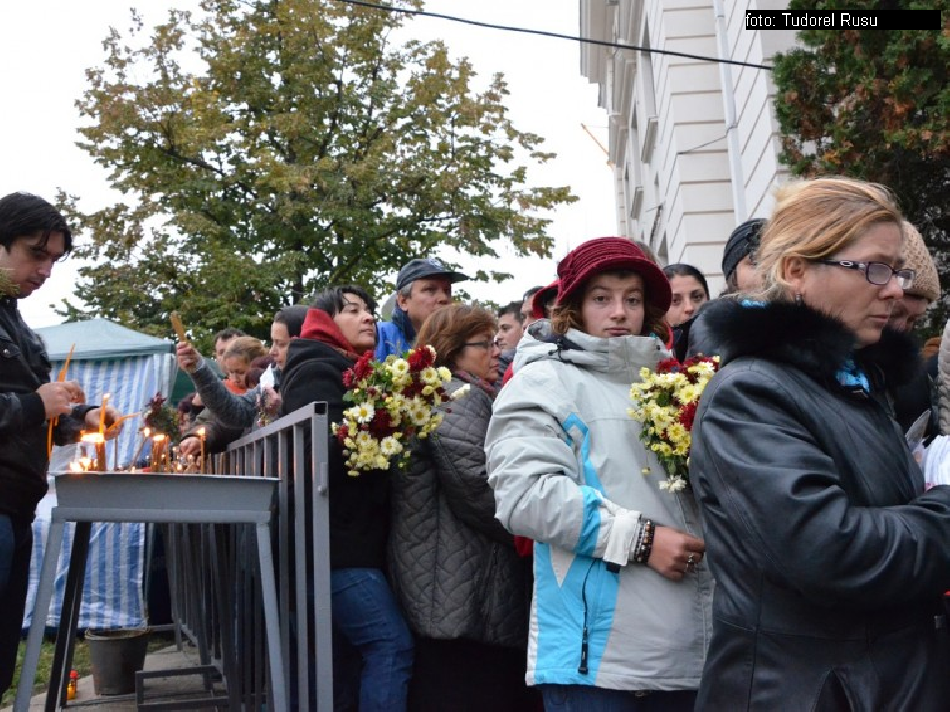
Every year on the 14th of October, on St Paraskevi Feast Day, hundreds of thousands of people take part in a pilgrimage to Iasi, in north-eastern Romania. Another important pilgrimage takes place on the 26th of October, this time to Bucharest, on St Demetrius Feast Day. There are other pilgrimages throughout the year, for example to Nicula, in the central county of Cluj, on the Assumption of Virgin Mary, to Prislop, in Hunedoara, also in the west, at the end of November, and to the monasteries in northern Moldova, at any time of the year.
Television channels never miss an opportunity to cover these pilgrimages in their programmes, even though all reports sound very much the same: long queues, hopes, small miracles, people coming from all parts of the country. But what drives all these people? Why are they so eager to stand in line for hours and even days to touch the chests containing the relics of the saints? Researcher Mirel Banica draws a portrait of a contemporary Romanian pilgrim:
“Most of these pilgrims are women in their 60s, many of them retired, not well-off, living alone, either because their children have left home or because their husbands died, who decided to go on a pilgrimage with a group of friends or neighbours. They usually travel by bus, instead of walking, as traditional pilgrims used to do. That kind of pilgrim no longer exists today in Romania. Villages are facing problems such as an aging population and migration. The pilgrims of the old times who used to travel by horse and cart together with their entire family are rarely seen today. A new type of pilgrim has emerged, mostly originating from former small industrial towns.”
People wait for hours in line to touch the relics of the saints. The queue, says Mirel Banica, is an important component of the Orthodox pilgrimage, which unlike the Catholic pilgrimage, stretches in time rather than space. People spend a lot of time in a crowded place, speak, laugh, pray together and share each other’s food. For a detached observer, the serpent-like queue formed by people may seem comical:
“From a distance, this long line may look strange, but if you join it you get to find out about people’s personal tragedies and life stories. In fact, you find out more about the stories and tragedies of today’s Romania. People are looking for a meaning to their existence. These are people in their 60s who have lived for most of their lives in communism and don’t know what to put in its place in terms of values, ideas, prospects. Standing in line we see a country torn by migration, poverty and sickness, but we also see a corporate Romania with young people who earn well and who go on these pilgrimages as if taking a personal development course or to overcome their fear of fatigue. People come here on pilgrimage for the most diverse of reasons. They come here to get healed, and don’t think that they haven’t undergone treatment before, most of them apply to classical medicine. Then there are people who come here just to pray for their peers, for their children and grandchildren, even for themselves. This is a form of socialising, they sing and have fun together, there is no shame in that. The church tends to emphasise exclusively the spiritual dimension of pilgrimage. Well, pilgrims are just regular people, they are not bearded fundamentalists, or saints spreading wings. No, they are just people who travel together, pray, read, eat, all these are forms of socialisation that actually raise the quality of their lives. There are others who come here out of pure curiosity the first time, then they start liking it, and start coming time and again, because pilgrimage is addictive.”
We asked Mirel Banica what could create this addiction. He explained it was simply emotion, but, as opposed to the feeling you get on an arena at a concert, this is sacred emotion:
“This is the feeling of therapeutic wellness that comes from the sacred, you can’t put it in words, it has to be experienced. People feel free, unhindered and voice their feelings as they come. You have no idea what it is like to be among 80,000 people who start singing together Saint Nicholas’ hymn at midnight with lit candles in their hands. It is a sacred emotion, which you cannot feel in any other big gathering of people.”
It is not easy to stand for hours on end, so close to so many people. Once pilgrims reach the holy relics, however, their emotions just wipe out anything outside that experience:
“The people standing in line know that this short lived suffering is a sort of symbolic payment they give to a deity one cannot see, cannot touch, but in which they believe. If you speak to them, you see they don’t remember much about those moments when they pass close to the reliquary; they are usually very tired, and generally vent strong emotions when they reach it, they cry, some with sadness, some with joy, some out of sheer exhaustion, it takes a long time for them to get back their bearings.”
Nevertheless, each year they come back. I asked Mirel Banica to express in a few words the phenomenon of pilgrimage, which he says is very important in understanding society at large:
“This is Romanian society’s response to the awfully fast changes that have occurred after 1989 in Romanian society. It shows that a lot of our fellow citizens are trying to give meaning to their lives. Pilgrimage provides meaning in a world they cannot come to grips with, where they often can no longer integrate, and one they are not content in. We don’t know how this form of spirituality will evolve, it could go up and down.”