Romanian Caves
Today we invite you on a tour of the best known caves in Romania.
România Internațional, 06.06.2013, 14:15
In 1920, Romanian explorer Emil Racoviţă set up in Romania the first speleological institute in the world. 108 speleology clubs with over 10,000 members have been founded since then, making possible the discovery, exploration and the scientific research of over 12,600 caves. In today’s edition of TG we’ll bring to your attention historical data and natural curiosities, inviting you on a tour of the best known caves in Romania. Accompanying us on this journey will be Daniela Bordea, a scientific researcher at the “Emil Racovita” National Institute of Speleology, the Cluj-Napoca Department, Marius Florea, a member of the Salvaspeo Bihor, Oradea Mountain Rescue Service and Viorel Lascu, spelelogist and former president of the Romanian Federation of Speleology.
The Apuseni Mountains in western Romania are the favourite location for cave lovers. They can design one day, two day or one week routes to visit spectacular caves, which are not situated at great distances from one another. The Meziad cave was re-arranged for visitors last year, as Daniela Bordea, scientific researcher at the “Emil Racovita” National Institute of Speleology, has told us.
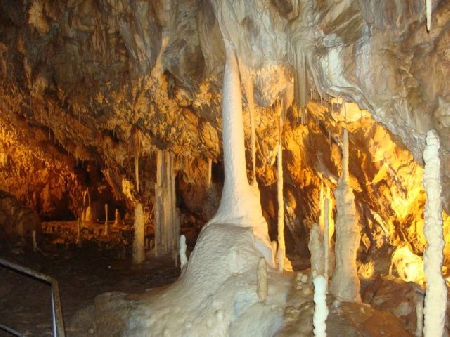
The Meziad cave stands out mainly due to the magnificence of its huge, 20m high galleries, boasting karstic formations, stalactites, stalagmites and columns. It is worth noting that the cave also hosts large colonies of bats, protected under the law. Even though the tourist route avoids these colonies, you can come across solitary bats in the cave. Light is cast on paleonthological vestiges such as the cave bear as well as on the archaeological vestiges in the cave. Fragments of ceramics and other traces of human settlements dating back to the Bronze Age have also been identified.”
The Meziad Cave enjoys artificial lighting, giving tourists the opportunity to see the spectacularly huge empty space underground. The Meziad Cave is located near the Crystal Cave and in the proximity of the Bears’ Cave. Tourists can take a one day tour of the three caves, says Marius Florea, a member of the Salvaspeo Bihor, Oradea Mountain Rescue Service, which was kind enough to give us details about the Crystal Cave.
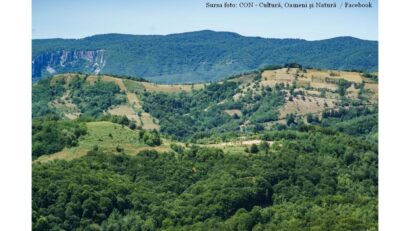
The name of the cave speaks for itself. The karstic relief is prevailing. There are relatively small mountains, similar to smooth hills, dotted with karst elements. Visitors can see ‘diolinas’, a sort of holes, which announce the existence of underground galleries. The access to the cave is possible though an artificial mine gallery, as the cave does not have a natural entrance. It is precisely due to the absence of a natural entrance that particularly beautiful crystals formed in the cave. The cave is not a big one. It benefits from electricity and has stairways. Inside the cave, apart from these crystals, tourists can visit a small mining museum. Each group of tourists is accompanied by a guide which tells stories about each segment of the mine and cave.”
The star of the caves lies also in Apuseni: the Bears’ Cave, which is also famous for its paleontologic heritage. Viorel Lascu is a speleologist and a former president of the Romanian federation of Speleology, and will now be speaking about this unique place.
” Here we can find relics of the cave bear, of the cave lion, which currently are subject to research. The area is not open to the public, yet visitors can’t miss it if they visit the exhibition at the cave entrance. It is a unique subterranean tourist route, with a completely modern layout. What is unique about the cave is the fact that the subterranean scenery has a very special value; there are ultra transparent lime stones, the white colour of the cave is immaculate. A long, long time ago, lots of animals found themselves stranded into the cave because of an avalanche. The landscape is terrifying since the traces they left can seldom be seen in a similar cave.”
In Romania, people have been doing cave diving since 1980. 33 years have since passed, yet little is known about cave diving and cave divers are still in limited numbers. Yet they DO exist, speleologist Marius Florea says.
” A new group has been formed here, and we also receive in Romania a group that travels quite often from Hungary. They are cave divers, but let me just point out that it is something very difficult, and can be successfully achieved only after serious preparation. I should like to warmly recommend River Cerna Valley’s Domogled National Park. There we can find lots of caves, and we also have a karstic relief. And here I should also like to mention the Ponorici-Cioclovina cave system, which is a karstic system made of minimums two caves communicating with one another. You can also visit them, but taking a walk through them can be difficult. The tourist needs a survival protection equipment: a lighting system and, which is a must, specialized guiding. You cannot just take a walk in Ponorici-Cioclovina. Romania is one of the very few countries that still has a wild nature, a fauna with big-size carnivorous animals which are still at large, and its relief still delights through its great number of forms: gorges, valleys, caves, alpine ridges. Anyone who loves nature has a lot to do in the Romanian Carpathians. “
So whether you specialize in speleology or just want to admire the subterranean beauties, the western part of Romania will surely not disappoint you. On the Internet, you’re just one click away from a great number of travel agents ready to offer help in case you want to have a personalized holiday, so that you can make the most of Romanian caves’ beauty.