
RRI Live!

Listen to Radio Romania International Live

Photographer Iosif Berman

After the Great War Iosif Berman was Romanias first professional reporter.
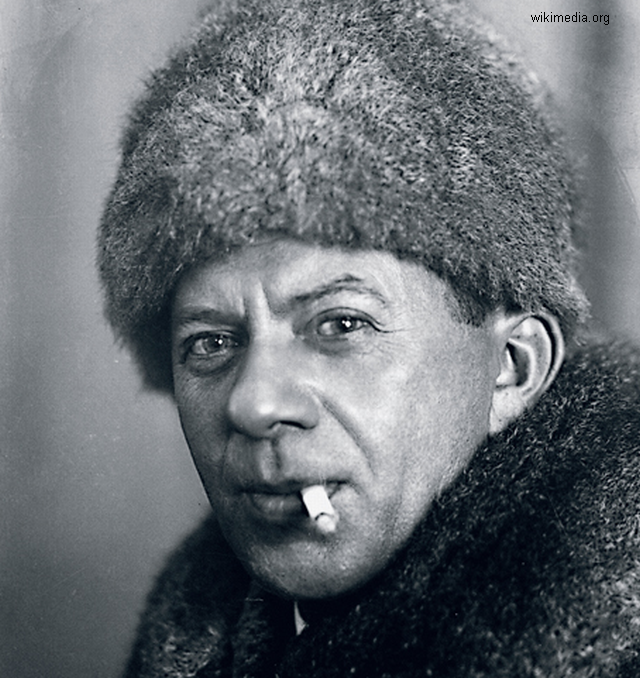
Photographer Iosif Berman

, 01.02.2014, 12:00

Born on January 17, 1892 into a Jewish family in the town of Burdujeni, northern Romania, Iosif’s love affair with photography started very early. Back in the time of WWI, he accompanied Romanian troops right up to the frontline as a war correspondent. After the war he settled in Bucharest where he began the most fruitful cooperation of his career, with journalist Filip Brunea-Fox, a man his peers dubbed the ‘Prince of the Reporting’. Between 1924 and 1938 the two worked for two newspapers, ‘Adevarul’ (the Truth in Romanian) and ‘Dimineata’ (The Morning Post). Researcher Anca Aurelia Ciuciu with the Centre for the Studies of the Jewish People in Romania, has more on Bergman’s career.


Anca Aurelia Ciuciu: “On the one hand, Berman presented the upper class, including the royal family, as he was the latter’s official photographer, but also wrote about the life of the needy, covering aspects of life in the slums of Bucharest. He was a photographer whose stories could be easily understood without descriptive texts, because his photos were extremely descriptive and for a good reason. He used to spend weeks doing research before taking a snapshot and talked to people beforehand. A photo of someone you know and understand is worth a thousand words. Even the way he approached his subjects is different. Most of the time, the people in his photos are smiling, and that actually gave a headache to the communist propaganda machine, which was trying to use some snapshots he took while doing monographic campaigns around the country together with sociologist Dimitrie Gusti. They were pictures of happy people and were completely useless to the communists striving hard to prove how unhappy people were before coming to power”.


The glee, humanity and tenderness of poor neighborhoods were the highlights of photos taken by Iosif Berman as illustration to articles written by Brunea-Fox. He worked his photos as any artist would.


Anca-Aurelia Ciuciu: “He did not just carry out an analysis of the protagonist, a lot of aesthetic prep work was also involved. He was keen on shadows and shapes, he was known as ‘the cloud chaser’. He was passionate about photography and the latest trends in photographic depiction. He was a perfectionist, he spent a lot of time in the dark room to perfect details to the last. From his family we found out his work days were very long.”


His talent and perfectionism earned him collaborations with foreign publications. Berman was a New York Times correspondent, he worked with the Associated Press, and contributed photos to National Geographic. They were recently discovered and reprinted by the Romanian edition of National Geographic. In the early 1940s he sent abroad photos covering domestic politics, at that time chiefly the rise of the fascist Iron Guard.


Anca Ciuciu: “In the 1940s he tried to work for foreign press agencies and sent them photos which were not published in Romania. This was before the ban slapped on him because he was Jewish. He was not very successful, because he could not work after 1940. He was barred from owning a camera, because it was considered a propaganda tool, and this is why he fell ill. Berman died shortly after this ban.”


A victim of the racist legislation of the era, the photographer fell ill. His kidney ailment killed him in 1941, in September. Right now Iosif Berman’s photography archive is spread all over the world, and his works are hosted by a large number of museums and private collections. His archive of negatives is no longer in mint condition. Many of them shattered during the great earthquake of 1977, and some of them are owned by the Romanian Peasant Museum, namely those photos taken during campaigns undertaken alongside Dimitrie Gusti.
RRI Encyclopedia
RRI Encyclopaedia Saturday, 31 January 2026

Romania’s Strongest Trade Bank before WWII

Marmorosh-Blank used to be one of Romania’s strongest banking institutions before 1945. It functioned under two generations of bankers, the first...

Romania’s Strongest Trade Bank before WWII
Sergiu Celibidache (1912-1996)
RRI Encyclopaedia Saturday, 24 January 2026

Archaeology in Glina, near Bucharest

Under the visible layer of today’s Bucharest and the capital’s surroundings lie much older traces of human habitation, which predate the...

Archaeology in Glina, near Bucharest
RRI Encyclopedia
RRI Encyclopaedia Sunday, 18 January 2026

Monuments from Soviet-occupied Bucharest

On pedestals, in imposing poses, they have to convey inspiring messages across generations. War heroes and heroines, kings and queens, politicians,...

Monuments from Soviet-occupied Bucharest
RRI Encyclopedia
RRI Encyclopaedia Sunday, 11 January 2026

The Corneşti Iarcuri Citadel

Just a few kilometers from Timișoara (western Romania), in the town of Cornești in the Banat Area, there are traces of one of the most spectacular...

The Corneşti Iarcuri Citadel
RRI Encyclopaedia Sunday, 04 January 2026

Ion Monoran

The Romanian Revolution of December 1989 created modern heroes—the heroes of the anti-communist civic movements whose goal was for human beings to...

Ion Monoran
RRI Encyclopaedia Saturday, 27 December 2025

The Museum of Flutes from around the World

Ion Puican The Museum of Flutes from around the World is a cultural project initiated by the ISVOR Cultural Association, dedicated to the...

The Museum of Flutes from around the World
RRI Encyclopaedia Saturday, 20 December 2025

The Bucharest of Yesterday in Postcards

The transformations we see in today’s Bucharest are effects of the communist regime, of the bulldozers and cranes that tried to legitimize an...

The Bucharest of Yesterday in Postcards
RRI Encyclopaedia Sunday, 14 December 2025

The “Prof. Nicolae Minovici” Museum in Bucharest

  The building that houses the “Prof. Nicolae Minovici, Ph.D.” Folk Art Museum, affiliated to the Bucharest City Museum (MMB), is known to...

The “Prof. Nicolae Minovici” Museum in Bucharest

Partners

Muzeul Național al Țăranului Român Muzeul Național al Țăranului Român
Liga Studentilor Romani din Strainatate - LSRS Liga Studentilor Romani din Strainatate - LSRS
Modernism | The Leading Romanian Art Magazine Online Modernism | The Leading Romanian Art Magazine Online
Institului European din România Institului European din România
Institutul Francez din România – Bucureşti Institutul Francez din România – Bucureşti
Muzeul Național de Artă al României Muzeul Național de Artă al României
Le petit Journal Le petit Journal
Radio Prague International Radio Prague International
Muzeul Național de Istorie a României Muzeul Național de Istorie a României
ARCUB ARCUB
Radio Canada International Radio Canada International
Muzeul Național al Satului „Dimitrie Gusti” Muzeul Național al Satului „Dimitrie Gusti”
SWI swissinfo.ch SWI swissinfo.ch
UBB Radio ONLINE UBB Radio ONLINE
Strona główna - English Section - polskieradio.pl Strona główna - English Section - polskieradio.pl
creart - Centrul de Creație Artă și Tradiție al Municipiului Bucuresti creart - Centrul de Creație Artă și Tradiție al Municipiului Bucuresti
italradio italradio
Institutul Confucius Institutul Confucius
BUCPRESS - știri din Cernăuți BUCPRESS - știri din Cernăuți

Affiliates

Euranet Plus Euranet Plus
AIB | the trade association for international broadcasters AIB | the trade association for international broadcasters
Digital Radio Mondiale Digital Radio Mondiale
News and current affairs from Germany and around the world News and current affairs from Germany and around the world
Comunità radiotelevisiva italofona Comunità radiotelevisiva italofona

Providers

RADIOCOM RADIOCOM
Zeno Media - The Everything Audio Company Zeno Media - The Everything Audio Company

























