
RRI Live!

Listen to Radio Romania International Live

Romanian Motorcycles

Motorcycling, like many other ‘cyclisms, is more than a hobby, its a way of life. Passionate riders can be recognized by their specialized gear, the helmets, the leather outfits, the boots, the goggles, the knee and elbow pads. Bikers are part of a grou
Romanian Motorcycles

, 15.11.2014, 14:40

The history of Romanian motorcycles begins before WWII. Tohan Industrial Works was founded in 1938 in Zarnesti, in central Romania, as a subsidiary of the Malaxa group. It specialized in making bicycles and motorcycles. Tohan products became famous during the war, when they made munitions, pyrotechnics and rockets for the Romanian army. After 1948, when the factory got nationalized, Tohan continued making bicycles. Before 1945, Romania had mostly German and French motorcycles, while during the war the most popular by far were Zündapp.


After 1945, the Romanian market was flooded by Soviet products, many of them copies of Western-manufactured goods. One of these products was the IMZ-Ural motorcycle, which started being made in 1939 under license from BMW. Another Soviet motorcycle on the Romanian market was the Minsk, in addition to Javas and CZs, made in Czechoslovakia, as well as MZs, made in East Germany.


The star among Romanian motorcycles was the Mobra 50, which went into serial production in 1971, on the assembly lines at Tohan Industrial Works. Previously, Tohan had tested successfully another light motorcycle, the Carpati, which it produced in the late 1960s. The Mobra had a 50 cc engine, and was made at Metrom Brasov, not far from Tohan Zarnesti.


The name Mobra was a portmanteau of Mo from Motorcycle and Bra, from Brasov. The Mobra had 4 HP, four gears, and a top speed of 70 km/h. It had excellent fuel consumption, at 2.7 liters per hundred kilometers, and autonomy of 450 km. It sat two, and in 1971 it cost 6325 lei, the then equivalent of 530 USD. It was an austere machine, with minimal design and performance, a true product of socialist industry. It had two versions, the Mobra 50 Super and the Mini-Mobra. It had a very noisy engine, but that did not hinder its popularity. However, it was the butt of countless jokes, which were in fact jokes aimed at the economic system it was a product of, in which quality was not a priority.


An improved model was the Hoinar (The Wanderer). It went into production in 1976, and was discontinued in 1994 as obsolete, but also as a victim of the collapse of industry. The Hoinar was similar to the Mobra: two-stroke air-cooled engine, 49 cc capacity, with 5 gears. It topped 70 km/h, and had an autonomy of 450 km as well.


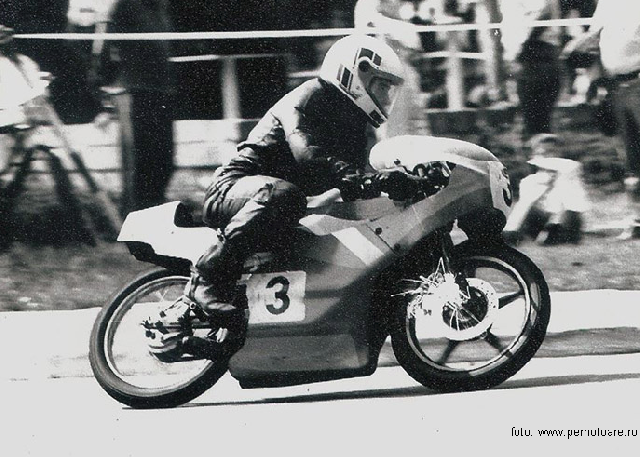
The Mobra also ran in competitions. Octavian Vrajitoru ran on a Mobra, and won 19 national champion titles and one Balkan championship title. There was also a hybrid being used in competitions, a machine with a Mobra engine mounted on a CZ frame. It only ran in the 50 cc class, because that was the only engine made by Metrom Brasov. Today it would be classed as a scooter, and would not be considered a true motorcycle.


Romanian motorcycles, however, also have a lesser-known history. Engineer Sorin Tulea designed a motorcycle while he was doing time as a political prisoner in the infamous Aiud prison. He and two other inmates, engineer Adrian Stambuleanu and Commander Costel Nicoau, were provided with the materiel necessary to design a motorcycle from scratch. To everyone’s amazement, they did a crack job. Miraculously, the motorcycle has been preserved, and is on display at the Sighet Victims of Communism Memorial.


As many other socialist industry products, the Mobra still has its nostalgic fans, but less and less people own a Mobra, and even less use it. The Mobra shared the fate of the famous Trabant, and ironically the passage of time made them more valuable for some.


Ion Dumitrana (AI geerated image)
RRI Encyclopaedia Sunday, 22 March 2026

Engraver and illustrator Ion Dumitrana

Ion Dumitrana (1923-1976) was one of the most important Romanian stamp artists, creating hundreds of postage stamp designs in the second half of the...

Engraver and illustrator Ion Dumitrana
Lo scultore Frederic Storck
RRI Encyclopaedia Sunday, 15 March 2026

Princely and Royal Thrones

  A symbol of royal authority, thrones held a central place in the representations of power in the Romanian space. Before 1945, they were a...

Princely and Royal Thrones
RRI Encyclopedia
RRI Encyclopaedia Sunday, 08 March 2026

The George Severeanu Museum

The George Severeanu Museum is located in Bucharest, in a house built at the beginning of the 20th century and forms part of the Bucharest...

The George Severeanu Museum
Sergiu Celibidache (1912-1996)
RRI Encyclopaedia Sunday, 01 March 2026

Diplomat Grigore Gafencu

Grigore Gafencu served his country without reservation and sought to promote its interests both in his official capacities and during his exile after...

Diplomat Grigore Gafencu
RRI Encyclopaedia Saturday, 21 February 2026

A Scholar of international repute – Traian Săvulescu

Traian Săvulescu used to be one of the leading figures of the Romanian science in the 20th century, a biologist, botanist, professor and president...

A Scholar of international repute – Traian Săvulescu
RRI Encyclopaedia Sunday, 15 February 2026

General Henri Cihoski (1871-1950)

The history of the Romanians was also written by foreigners, just as Romanians are present in the history of other nations. Although a numerically...

General Henri Cihoski (1871-1950)
RRI Encyclopaedia Saturday, 07 February 2026

The ancient city of Callatis

Callatis was an active commercial, cultural and spiritual center for over a millennium, spanning the Greek, Roman and Roman-Byzantine periods....

The ancient city of Callatis
RRI Encyclopaedia Saturday, 31 January 2026

Romania’s Strongest Trade Bank before WWII

Marmorosh-Blank used to be one of Romania’s strongest banking institutions before 1945. It functioned under two generations of bankers, the first...

Romania’s Strongest Trade Bank before WWII

Partners

Muzeul Național al Țăranului Român Muzeul Național al Țăranului Român
Liga Studentilor Romani din Strainatate - LSRS Liga Studentilor Romani din Strainatate - LSRS
Modernism | The Leading Romanian Art Magazine Online Modernism | The Leading Romanian Art Magazine Online
Institului European din România Institului European din România
Institutul Francez din România – Bucureşti Institutul Francez din România – Bucureşti
Muzeul Național de Artă al României Muzeul Național de Artă al României
Le petit Journal Le petit Journal
Radio Prague International Radio Prague International
Muzeul Național de Istorie a României Muzeul Național de Istorie a României
ARCUB ARCUB
Radio Canada International Radio Canada International
Muzeul Național al Satului „Dimitrie Gusti” Muzeul Național al Satului „Dimitrie Gusti”
SWI swissinfo.ch SWI swissinfo.ch
UBB Radio ONLINE UBB Radio ONLINE
Strona główna - English Section - polskieradio.pl Strona główna - English Section - polskieradio.pl
creart - Centrul de Creație Artă și Tradiție al Municipiului Bucuresti creart - Centrul de Creație Artă și Tradiție al Municipiului Bucuresti
italradio italradio
Institutul Confucius Institutul Confucius
BUCPRESS - știri din Cernăuți BUCPRESS - știri din Cernăuți

Affiliates

Euranet Plus Euranet Plus
AIB | the trade association for international broadcasters AIB | the trade association for international broadcasters
Digital Radio Mondiale Digital Radio Mondiale
News and current affairs from Germany and around the world News and current affairs from Germany and around the world
Comunità radiotelevisiva italofona Comunità radiotelevisiva italofona

Providers

RADIOCOM RADIOCOM
Zeno Media - The Everything Audio Company Zeno Media - The Everything Audio Company























