Romania and Tito
Before 1989, Romanians looked enviously at the Yugoslavs
Steliu Lambru, 14.04.2025, 13:09
The feeling of friendship between nations, especially socialist ones, was assiduously cultivated by communist propaganda and many people still believe in it. But the lessons of history prove the opposite: when a nation needed help from a nation considered friendly, it most often did not receive it.
Before 1989, Romanians looked enviously at the Yugoslavs and appreciated their leader Josip Broz Tito. Compared to most leaders of socialist Europe, the Yugoslav leader posed as a liberal: he allowed his own citizens to travel to Western Europe without restrictions, the shortages in the neighboring country across the Danube were not maddening, Yugoslav citizens could even have small businesses. Essential goods passed from Yugoslavia to Romania, immediately absorbed by the Romanian market, which had great shortages. And the programs of Yugoslav television were followed with passion by Romanians who could receive it. Therefore, the wars in the former Yugoslavia after 1989 came as a big surprise to most Romanians.
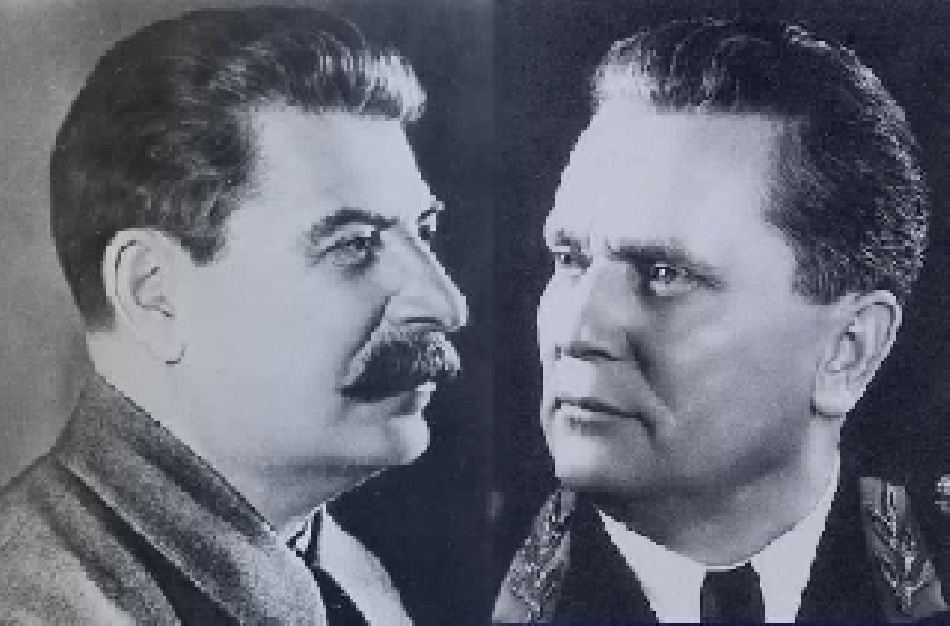
Romania and Yugoslavia had been close before 1945, and before the establishment of communism. Both countries were part of the regional security alliances the Little Entente, signed in 1921, and the Balkan Entente, signed in 1934. And Queen Maria of Yugoslavia, the wife of King Alexander I of Yugoslavia, was the daughter of King Ferdinand I of Romania and his wife Maria. The close relations between Romania and Yugoslavia, however, would deteriorate suddenly in 1948, when a rift arose between Stalin and Tito. All the satellite countries of the Soviet Union sided with Stalin, calling Tito a traitor to the cause of socialism and an agent of Western imperialism. Romania was no exception, with provocations taking place on the border between the two that today seem ridiculous. Diplomat Eduard Mezincescu, interviewed by the History Center of the Romanian Broadcasting Corporation in 1994, was the protagonist of such an episode in the summer of 1949.
“We were determined to destroy the Yugoslavs, of course, and one of the weapons that was very intelligently used for this purpose was myself. Alexandru Drăghici, the Minister of the Interior, who had inherited the Administrative-Political Section from the Central Committee of the RCP, this section dealt with logistical issues, called me. But behind this logistical facade it was a counterintelligence section. Drăghici told me: ‘Look, it has been decided that you should go and do this.’ What was it about? I went to Orşova, where the Danube flows between us and the Serbs, at the limit of territorial waters. There was a barge anchored there on which loudspeakers were mounted with a funnel towards the Yugoslav shore. On the opposite shore I was placed in front of a microphone where I was reading a vitriolic speech against Tito. They did not react, they resisted this aggression of ours as well.”
But after Stalin’s death in 1953, Romanian-Yugoslav relations normalized. In 1968, amid the intervention of Warsaw Pact troops against reforms in Czechoslovakia, and the fact that Romanian leader Nicolae Ceaușescu had opposed the intervention, there was great fear in Bucharest that the Soviets would intervene in Romania as well. Thus, the Romanians were looking for allies, and Tito seemed to be one of them. Diplomat Ion Datcu was a special envoy of the Romanian government to Australia, and in 1994 he recounted how he witnessed a statement by Iosif Broz Tito.
“I had a meeting with the press where the questions were ‘how do we resist and how long can we resist Soviet pressure?’ And I said that just as we resisted for so many hundreds of years, we will resist. I didn’t know exactly what was happening, I imagined that the worst was over, meaning that it was now impossible for the Soviets to proceed with a second invasion. I remember an observation by Tito, smiling. It was at a discussion that I also participated in where he told us ‘If we should thank you, it’s just that between Prut and Bega the Soviet tanks have to travel for about a few dozen hours.’ So we were a buffer state for Yugoslavia. Although the Yugoslavs had also started thinking about it then, I can tell you for sure.”
Paul Niculescu-Mizil was a close friend of Nicolae Ceaușescu. In 1997, he remembered that Romania, in 1968, was alone in the face of the Soviet threat.
“Our Chinese friends, Qiu En Lai personally, came to the Romanian embassy and said ‘We will do it, we will fix it.’ But, at the same time, Mao Tze Dun made the historic statement ‘The fire is not extinguished from afar!’ And I understood very well that the Chinese will not put their skin in the game for this beleaguered Romania, no matter how good friends we are! I personally went to Tito, Ceauşescu sent me to Tito several times to inform us. And Tito, do you know what he told me when I asked him ‘what if something happens and we have to resort to weapons and we will be in a complicated situation?’ Do you know what Yugoslavia’s position was? That they would take in the Romanian leadership, giving them asylum, but without any weapons! Not even cutting weapons, that is, not even pocket knives! So, don’t even get me started on brave people like these.”
The relations between Romania and Tito’s Yugoslavia were those of their time. And the new times mean that realism in friendly relations between nations is a good lesson.