The 1989 Revolution started in Timişoara
Romanians look back at the anti-Communist Revolution that changed the destiny of their country
Bogdan Matei, 16.12.2025, 13:50
Forced in at the end of World War II by the Soviet occupation troops, the communist dictatorship in Romania lasted for almost half a century and, like a giant with feet of clay, collapsed in a week.
Fed up with the extreme austerity imposed by Nicolae Ceauşescu’s regime, with hunger, cold and darkness, frustrated with the lack of fundamental freedoms and encouraged by the collapse of the communist dictatorships in other Eastern European countries, Romanians only needed a spark to take to the streets.
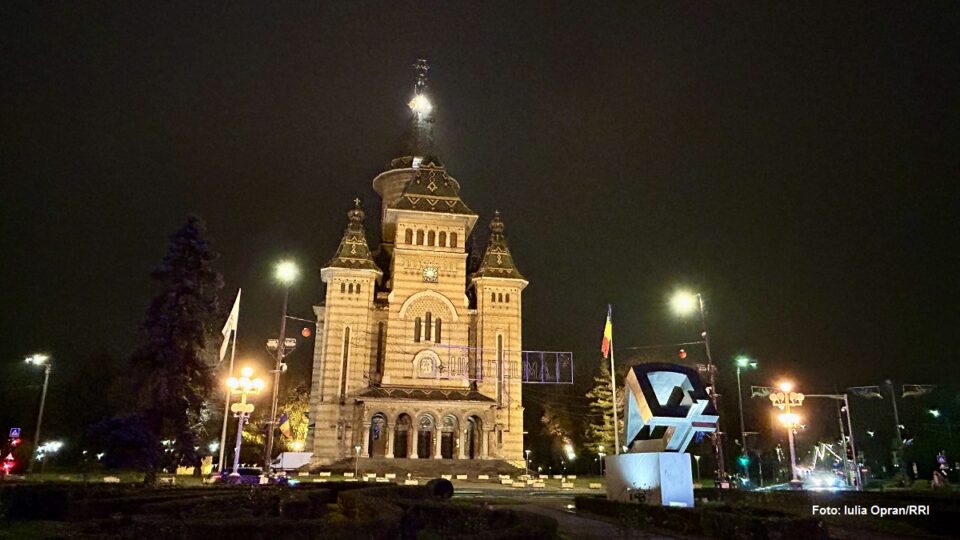
On December 16, 1989, the protest of a few dozen supporters of the Hungarian Protestant pastor László Tőkés, whom the authorities wanted to deport from Timişoara (west), turned into a real uprising. Hundreds, then thousands, then tens of thousands of Timişoara residents of various ethnicities and confessions joined the original demonstrators.
Arrests followed, and then the army, the Securitate (the regime’s political police) and the police opened fire on demonstrators. Factories, plants, the University went on strike, workers and students joined in the protests, and the army pulled back to barracks. On December 20, Timişoara became the first Romanian city free from communism.
On December 21, the Revolution also swept through other major cities in the west and centre of the country and culminated with massive protests in Bucharest, which the communists tried once again to suppress violently. On the 22nd, Ceauşescu fled from the communist party’s central committee headquarters, besieged by hundreds of thousands of people. Captured, summarily tried and executed on December 25th, he left behind a ruined and bloodied country.
Over 1,100 people died between December 16 and 25, 1989, most of them after Ceauşescu’s escape. At the time, the deaths were blamed on alleged “terrorists,” dictatorship loyalists whose identity has not been established to this day.
But the military prosecutors who investigated the Revolution Case accuse Ion Iliescu, a 1970s Ceausescu government official fallen out of grace and perceived at the time as the political leader of the regime change, of having created a genuine psychosis that led to the loss of human lives. The massacre designed to legitimise the new power had the expected effect. In May 1990, in the first free post-1989 elections, Ion Iliescu won the presidential elections by a staggering 85% of the votes. His party, called the National Salvation Front, won two-thirds of the seats in the newly created Parliament.
Prosecutors also claim that the Iliescu team was set up as “a dissident group whose goal was to remove the former president Nicolae Ceausescu, but to keep Romania in the Soviet sphere of influence.”
Today a member of the European Union and NATO and deeply attached to Western democratic values, the country itself is the best proof that the pro-Moscow plot has failed. (AMP)