Four years of war in Ukraine
Russia’s unjustified and unprovoked aggression against Ukraine has entered its fifth year.
Corina Cristea, 24.02.2026, 14:00
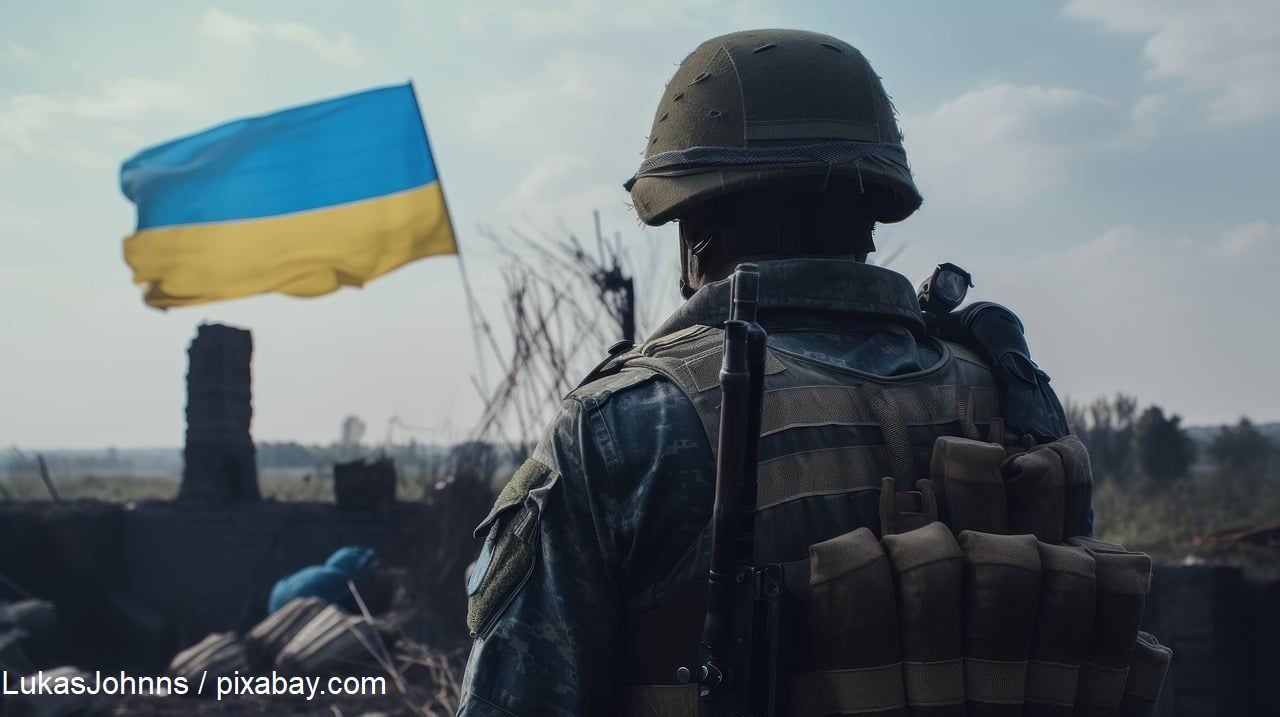
The fourth anniversary of Vladimir Putin’s full-scale invasion finds Moscow and Kyiv as far from a peaceful resolution as ever. With the frontline in a stalemate and the return of US President Donald Trump to power, international focus has shifted toward negotiations aimed at bringing both parties to a peace agreement. However, such a deal currently appears impossible to realize: the primary sticking point remains the territorial concessions demanded by Moscow, which Kyiv continues to reject with equal vehemence.
Meanwhile, what the Kremlin leader labeled a “special military operation” in 2022 has devolved into a war of attrition with massive military, economic, and humanitarian consequences.
A report by the Center for Strategic and International Studies estimates that while official figures provided by both sides are much lower, the total combined military losses—including those killed, wounded, or missing—for both Ukrainian and Russian forces range between 1.8 and 2 million people. Two-thirds of these casualties are estimated to be among Russian forces. According to UN monitoring, there are over 15,000 confirmed civilian victims. Furthermore, nearly 4 million people are internally displaced within Ukraine and almost 6 million Ukrainians have fled abroad.
A portion of these refugees have found safety in Romania. As a member of the EU and NATO, as well as a neighboring country, Romania has stood by Ukraine since the beginning of the conflict. In Bucharest, the Chamber of Deputies observed a moment of silence to honor the memory of Ukrainian citizens killed in the conflict.
To mark four years of this unprovoked war, several civic organizations held public events across various Romanian cities. In the southeastern city of Constanța, Ukrainian refugees commemorated the victims, reaffirmed their faith in justice and a peaceful future, and thanked Romania for its humanitarian and military support.
For Romania, the four years since the outbreak of war have brought an “economic earthquake” characterized by high inflation, budgetary pressures, and major energy costs. However, economic consultant Adrian Negrescu notes it has also led to a strategic repositioning, transforming the country into a logistic and energy hub in Eastern Europe.
The most significant issue was driven by skyrocketing energy prices, which acted as a “hidden tax” on household incomes and eroded purchasing power. The proximity to the front lines did not drive away foreign capital. Instead, investors seeking the stability of NATO relocated production capacities from Russia and Ukraine to secure neighboring countries.
Looking ahead, analysts suggest Romania faces a historic opportunity to serve as the primary logistics platform for Ukraine’s reconstruction—a process valued at approximately $1.4 trillion. (VP)