NATO Allies test firepower on the Eastern Flank
Romania has recently hosted sections of the Dynamic Front 2026 exercise
Agenția Media a Armatei, 11.03.2026, 13:40
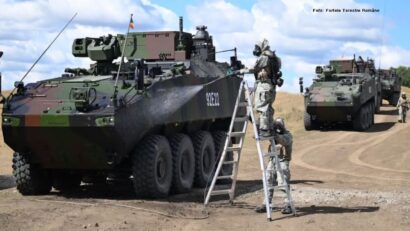
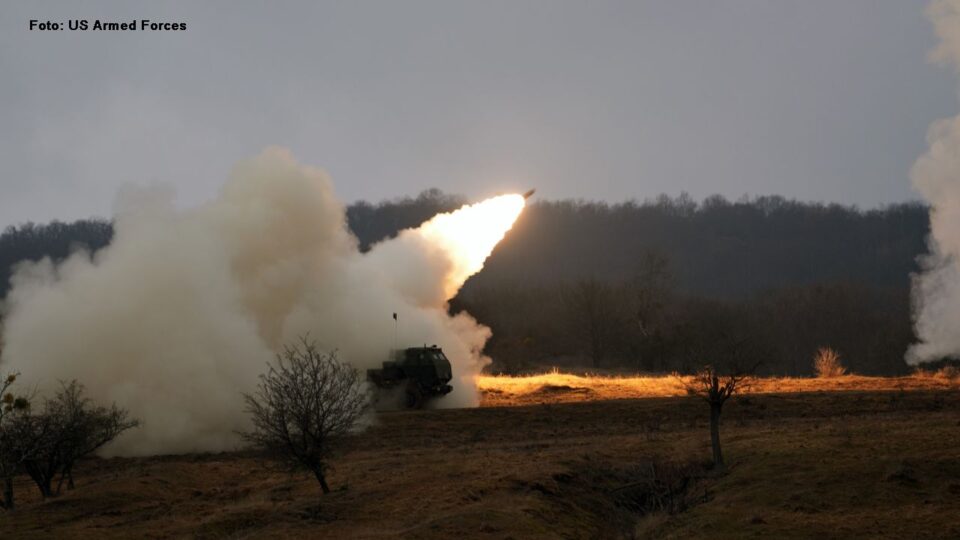
Romania has recently hosted sections of the Dynamic Front 2026 exercise, the largest artillery exercise of the US Army conducted in Europe. Romanian soldiers trained alongside NATO Allies and partners in the Cincu and Capu Midia training grounds, in a complex scenario that tested coordination, reaction speed and interoperability between the participating forces.
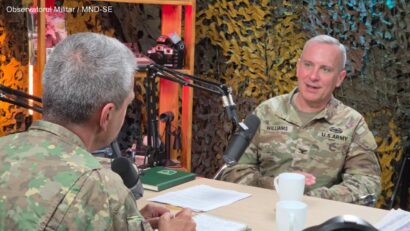
Brigadier General Steve Carpenter, the Commanding General of the 56th Artillery Command, US Army Europe-Africa, explained why this exercise is so important for the preparation and coordination of Allied forces. Dynamic Front is our main firing exercise, he said, as it gives us the opportunity to practice our regional plans and, at the same time, to develop initiatives aligned with the line of deterrence on the eastern flank. During this edition of the Dynamic Front exercise, troops from 24 NATO member states trained together within this program, taking part in the activities carried out during the exercise, he added.
Members of the 8th Operational-Tactical Missile Brigade, a structure of the Romanian Land Forces, trained together with NATO allies. Colonel Costel-Sorin Bălan, the brigade commander, told us about the training goals and the certification obtained during the exercise: “A key training objective for us within Dynamic Front was to test and validate the sensor-to-shooter procedure, designed to reduce response times and improve the effects on targets, both at a tactical and operational level, allowing the Allied forces to act faster and more effectively together. Dynamic Front 26 was an excellent platform for assessing the combat readiness of the 8th Operational-Tactical Missile Brigade, according to NATO standards, and I am proud to say that during this exercise the brigade obtained this certification.”
For the French military, Dynamic Front 26 was an important opportunity to work closely with Allies. General Regis Anthonioz, commander of France’s 2nd Armoured Brigade, told us why these joint exercises are so important for France: “For us, this is a crucial step, because we want to strengthen technical and tactical cooperation and integration with our NATO Allies. It is always an excellent opportunity to train together and prepare to act as a joint force. Through this exercise, France demonstrates, alongside its Allies, the ability to integrate and act effectively within the Alliance.”
Another important component of Dynamic Front 26 took place at Capu Midia, in the Black Sea area. Major Martin Grusek, from the 3rd Artillery Training Battalion of the German Armed Forces, gave us details about the exercise and the challenges of organising the firing of missile systems: “As part of the Dynamic Front exercise, our goal was to train together with other nations. Here we have the opportunity to launch GMLRS missiles in the Black Sea area, which is not possible in Germany. Therefore, we were able to train and operate together, and this is very important for us. The biggest challenge was ensuring safety in all aspects. For example, when launching at sea, an extensive safety zone is required behind the impact area. Things are well organised here, and the exercise took place in very good conditions.”
Dynamic Front 26 proved that interoperability and joint training remain essential elements for the security of NATO’s eastern flank. Through training conducted in several countries and by integrating modern artillery systems, the Allies are strengthening their ability to act quickly and in a coordinated manner in complex situations. A clear signal that collective defence is built through cooperation and constant training. (AMP)