Romania and NATO forces mobility
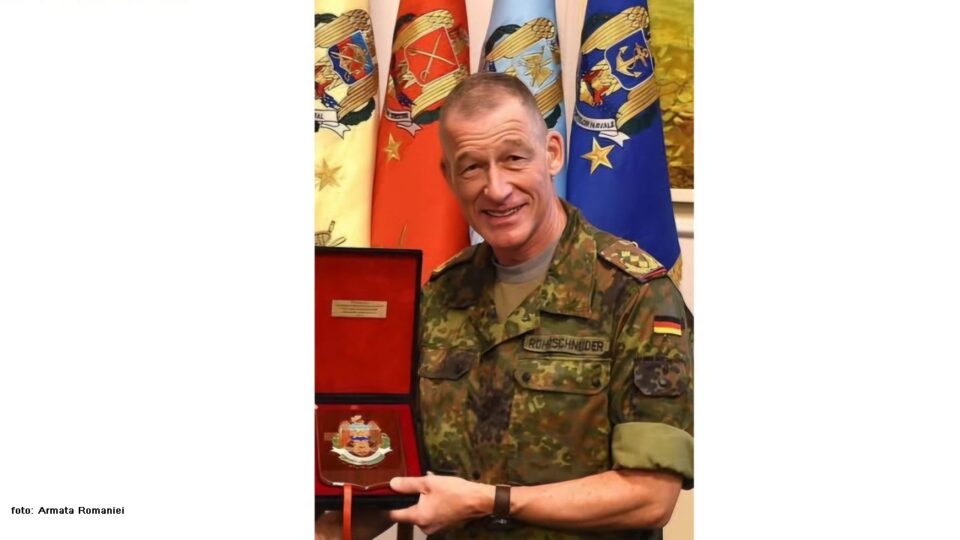
An interview with JSEC Commander Lt. General Kai Rohrschneider.
Agenția Media a Armatei, 16.09.2026, 14:00
For NATO to respond rapidly to any threat, allied forces must be able to reach where they are needed and be sustained once on the ground. This pillar of defense is managed by the Joint Support and Enabling Command – JSEC. The JSEC Commander, Lieutenant General Kai Rohrschneider, recently visited Romania for discussions with military and civilian authorities regarding allied force mobility.
“As Commander of the Joint Support and Enabling Command, I mobilize NATO’s territory. This means that together with all allies, we ensure we can transport the necessary forces and resources at the right time, with the right speed, in the right place, to counter any threat at the NATO level. Currently, we are focusing on two subjects. The first is next year, with the main event being the major exercise Steadfast Defender 27. Romania has an important contribution to this event through its own exercises. Second, we are working on expanding the reinforcement and sustainment network, our NATO instrument to accomplish all of this. That is why I came here, to Romania. We had an intensive dialogue with Romanian military and civilian authorities about how we can do this as best as possible,” the North Atlantic Alliance official said.
For NATO, military mobility also means cooperation between military and civilian authorities. Romania plays a major role, primarily due to its geographical position in southeastern Europe. It is also one of the countries that must be prepared to host allied forces, Lieutenant General Rohrschneider added:
“Romania’s position in NATO is, first of all, important from a geographical standpoint. In southeastern Europe, I believe Romania is in a critical position for the Alliance to ensure deterrence and defense. Therefore, cooperation with Romania, mainly as a host nation, is very important. There are many things to discuss about how we can do this, what Romania can offer, but also about what the sending nations need to bring into Romania. This is the second very important question for us.”
Steadfast Defender 27 will bring together numerous national exercises conducted within NATO. For JSEC, it is also an opportunity to verify how the movement and sustainment of allied forces function, the NATO official said:
“Steadfast Defender 27 is actually a broad framework for numerous national exercises. Nations train within NATO, and we try to coordinate this. My command coordinates, in particular, the deployment of forces to their training areas and their redeployment. Then come the issues related to sustainment, because these are real questions. They are relevant in all situations. They will be relevant in a crisis, and, although we hope it won’t happen, even in a conflict. For us, this is a unique opportunity to test this system.”
Lieutenant General Kai Rohrschneider visited Romania for the third time. He noted that he was impressed by the professionalism of Romanian soldiers and the way civil and military authorities work together. For Romanian service members contributing to the defense of the eastern flank, he had a simple message:
“First of all, thank you very much for your service, for everything you have done. And the other thing is: keep going. You are extraordinary. I think you are doing an excellent job.”
In defending the eastern flank, reaction speed can make all the difference. And for NATO forces to act, they must arrive quickly where they are needed and be sustained. Romania is one of the vital links in this mechanism. Because defense begins with preparation, and relies on the ability to act on time. (VP)